
CISTERCIANS OF THE STRICT OBSERVANCE (Trappists). A reform of the Cistercian Order that began in 1599 at the abbey of Charmoy in France under Abbot Arnolfini. It was soon introduced also at the abbey of Clairvaux under Abbot Denis Largentier. The movement spread rapidly to other monasteries and was viewed sympathetically by the Abbot of Cîteaux; however, the General Chapter of 1618 was more reserved, concerned to preserve the unity of the Order. Meanwhile, the "strict observance" had arisen, even if not as a distinct congregation, and it exercised a salutary influence on the restoration of discipline throughout the Order. After Largentier’s death, it began to prevail over the "common observance," encouraged by Cardinals de La Rochefoucauld and Richelieu. To settle certain disputes that had arisen, Alexander VII summoned representatives of the two "observances" to Rome, resulting in the promulgation of the bull *In suprema* on 19 April 1666. This bull carefully delineated the discipline for both "observances," approved the "strict observance," and recommended its expansion; it also regulated the relations between the two branches. At that time, the "strict observance" numbered more than fifty monasteries of men and several of women.
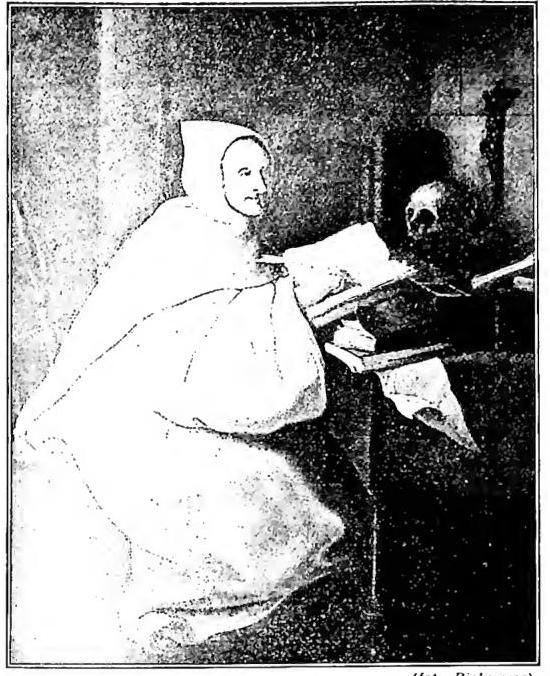
One of its representatives in Rome had been the Abbot of the monastery of La Trappe (diocese of Séez), Armand-Jean Le Bouthillier de Rancé (1626–1700), who, finding the bull *In suprema* too moderate, introduced into his monastery a stricter reform, reinstating many observances of the ancient Cîteaux. Though this new reform met with critics, it had even more admirers, and many souls found in La Trappe the ardently desired life of self-denial and sacrifice. Innocent XI was the first to praise its regulations.
La Trappe thus became a center radiating a severe monastic life until the French Revolution, when Dom Augustin de Lestrange, former novice master, managed to flee to Switzerland with twenty-four religious and establish himself at the charterhouse of Val-Sainte, which Pius VI raised to the status of an abbey. There Lestrange introduced regulations even stricter than those of Rancé. Owing to the occupation of Switzerland by French troops, he was forced to abandon Val-Sainte, and after many hardships, following Napoleon’s downfall, he returned to France and reoccupied the ancient monasteries of the Order, more or less ruined, including La Trappe. In 1808, the monastery of Darfeld in Westphalia, formed by monks from Val-Sainte who followed Rancé’s regulations more than Lestrange’s, was raised to the status of an independent abbey. It made new foundations in France, so that by 1814 there were two branches derived from La Trappe. Relations between them, as between monasteries of the same branch, were not well regulated. After Lestrange’s death in 1827, Rome took up the matter, resulting in a juridical union of these two branches in France in 1834. This was the first time that monasteries of the strict observance were gathered into a distinct congregation, though still part of the Cistercian Order. Lestrange’s regulations were definitively abandoned, but the union lasted only until 1847, when separation occurred again. In 1836, the Congregation of the Strict Observance of Westmalle arose in Belgium, an offshoot of Val-Sainte–Darfeld. Thus there were three distinct branches of the strict observance: that of La Trappe, that of Sept-Fons, and that of Westmalle. Soon, however, the need for a merger was felt, and at a meeting held in Rome on 1 October 1891, all the superiors of the three families decided to unite into an independent Order with its own Abbot General. Leo XIII approved this decision, and thus was born the Order of Cistercians of Our Lady of La Trappe, soon renamed the Order of Cistercians Regular of the Strict Observance.
This union proved most felicitous and aimed to restore as far as possible the primitive Cistercian spirit, as clearly manifested in the Constitutions of 1894, approved by the Holy See. These were slightly amended after the Code of Canon Law and approved by Pius XI on 26 January 1925.
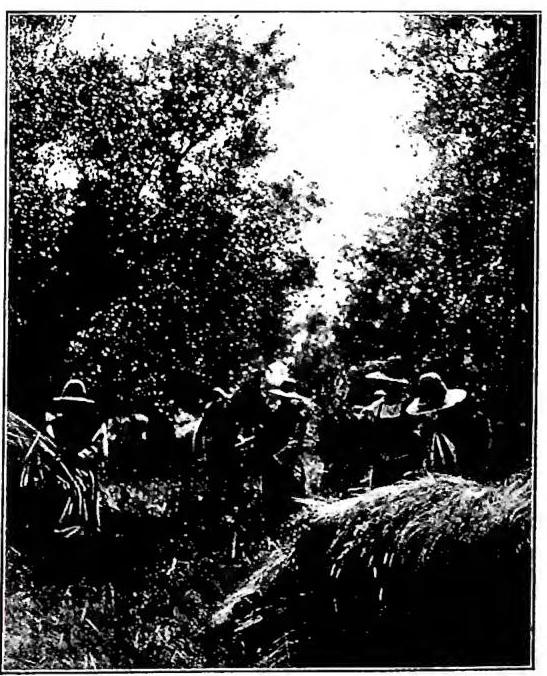
Cistercians of the Strict Observance at work harvesting. Rome, Abbey of Le Frattocchie.
The supreme government of the Order belongs to the General Chapter, which, as in ancient times, meets every year on the traditional date of 12 September at the Order’s motherhouse, Cîteaux, which has been recovered. During the year, the Abbot General with the Definitorium, resident in Rome, acts in place of the General Chapter. Since 1898, the Abbot General, while remaining in Rome, has been titular of Cîteaux, where he has an auxiliary abbot. Following the ancient system of the *Charta caritatis*, the Order is not divided into provinces but into motherhouses and dependent houses, the latter founded by the former. The houses are autonomous; however, the motherhouse has the right to make the regular annual visitation of the dependent house and other rights “sede vacante,” with the result of a strict unity of observance. Studies, little esteemed by Rancé, faithfully follow the directives of the Holy See. The return to ancient Cîteaux marked a full revival in chant, liturgy, architecture, and spirituality. The life of the Trappist is eminently contemplative, and the Divine Office constitutes the monks’ principal occupation, to which they devote five or six hours a day, including the conventual Mass; the rest of the day is given to spiritual reading and manual labor. The Order numbers more than sixty monasteries spread throughout almost the entire world, with about three hundred religious. In Italy, there are the abbeys of Tre Fontane and Le Frattocchie (Rome). There are also about thirty monasteries of nuns with more than 1,300 members.