
### DEMONIAC MANIFESTATIONS
Given the existence of the devil, the question arises whether, beyond the indirect or moral operations of which he is undoubtedly capable in his work of tempting and inciting to evil, Satan has the power and freedom to interfere—and in fact does interfere—in the order of nature with physical and biological manifestations, including those proper to psychic life.
#### I. THE FACTS
On this point, no reasonable doubt can be admitted, as is evident from several arguments, for example, from historical testimony and the scientific examination of the facts.
Historically, it is clear that in all ages many phenomena were attributed to the devil or, in general, to malevolent spirits. Even if we make ample allowance for these claims—attributing a great number to ignorance, suggestion, or error—we cannot, however, dismiss the entire matter simplistically. The attestations are not merely those of uneducated people gathered in periods of scientific darkness; they often come from eminent individuals, from scientists of clear repute, even from our own time. Furthermore, it cannot be admitted that such widespread attestation in time and space lacks serious foundation without thereby contradicting the very foundations and most certain methods of scientific historical research.
Moreover, within the field of history, the testimony of Sacred Scripture intervenes: from the Gospels, it is evident that Jesus healed many possessed individuals, declaring them as such and clearly distinguishing them from ordinary sufferers (Mk 1:23–28; Mt 8:28–34; 9:32–34; 12:22; 15:22–28; Lk 6:18–19; 7:21; 9:37–44; 13:12–17; etc.). This assertion is of immense value; it is irrefutable for Christians, since for them the word of Christ is the very word of God. But it is also absolutely certain for anyone, considering that the Gospels constitute a body of authentic documents whose truth is therefore beyond reproach.
The other element of proof arises from the intrinsic, scientifically conducted examination of certain facts, that is, from the "experimental material," both past and present. To the question of whether such inquiry has yielded evident proof of diabolical action, the answer must be affirmative, with reference to the bibliography for authentic accounts of scientific examinations conducted on this matter and their results.
Having established in general the reality of diabolical action, it remains to examine the technical terminology used regarding the devil’s activity in the physical, biological, and psychic orders. It can be classified as follows:
a) Local diabolical infestation: the action of the devil upon inferior organized nature (plants and animals).
b) Personal diabolical infestation (in French: *obsession*): a series of temptations more violent and continuous than ordinary temptations. It is external if it acts upon the subject’s external senses (e.g., through real apparitions, meaning a real modification of the external environment of the subject, or the real insertion into the external environment of an "objective form"). It is internal when it operates upon the internal senses (e.g., the imagination), producing internal impressions. In the same subject, it can be simultaneously both external and internal.
c) Diabolical possession (in French: *possession*): "consists of two elements: the presence of the devil in the body of the possessed and the dominion he exercises over that body and, through it, over the soul. The latter point needs explanation. The devil is not united to the body as the soul is; he is, with respect to the soul, merely an external mover, and if he acts upon it, he does so only through the body in which he dwells. He can act directly upon the limbs of the body, causing all sorts of movements, and indirectly upon the faculties insofar as they depend upon the body in their operation" (A. Tanqueray, *Compendio di teologia ascetica e mistica*, 7th ed., Rome-Tournai-Paris 1928, p. 940).
Regarding local diabolical infestation in the Gospels, the episode of the swine invaded by demons may be cited (Mt 17:14–17; Mk 5:2–13; Lk 8:27–33). Moreover, many cases are found in the lives of certain saints (St. John of the Cross, St. Teresa of Avila, St. John Bosco, the Curé of Ars, etc.).
Concerning personal infestation and diabolical possession, the Synoptics recount Jesus’ repeated encounters with the possessed and their liberation at His divine command (Mt 8:16; 12:22; 15:22; 17:14–17; Mk 1:23–26; 5:2–13; 9:16; Lk 4:33–35; 6:18; 7:21; 8:2, 27–33; 9:39, 43; etc.). The Acts of the Apostles (5:16; 8:7; 16:16–18) attest to the persistence of the phenomenon of possession even after the Ascension of Jesus.
Based on the criteria of inquiry used to identify, when present, diabolical action—and which will be discussed further below—it is beyond doubt that many of the so-called "medical" and more generally "metapsychic" phenomena have as their cause the direct action of Satan (v. METAPSYCHICS; SPIRITISM).
Thus, on the basis of the facts, and especially following the example of the Divine Master, the Church, from apostolic times onward, has continued to admit the possibility of diabolical infestation and possession, seeking the liberation of the possessed through spiritual means, particularly exorcism. Guided, however, by profound wisdom, the Church acknowledges the possibility of error, namely, that manifestations of a purely natural order—such as nervous or psychic illnesses—may be mistaken for demonic manifestations; conversely, cases of authentic diabolical vexation may be confused with the aforementioned illnesses. The Roman Ritual bears witness to this prudence (*De exorcizandis a daemonio*, nos. 3–7), which sets forth the criteria for distinction and instructs the exorcist: first and foremost, not to easily believe that someone is possessed by a demon.
#### II. DIAGNOSTIC CRITERIA
First and foremost, in every case, for diabolical action to be admitted, the phenomena must manifest in such a way as to exclude any other possible cause. Such a judgment, when it can be made—despite its negative character—is certainly sufficient for a rigorous diagnosis. The exclusion of other causes besides the demon is not simple; rather, it requires the utmost caution and depth of doctrine. For this reason, the references provided here can only be summary.
God will be excluded whenever the manifestations, whether by their purpose and intrinsic content (immoral, impious) or by the circumstances in which they occur (spiritualist séances, etc.), are incompatible with the attributes of God (infinite wisdom, majesty, etc.). Similar criteria apply to good spirits (angels) and to the souls of the dead, even the damned, if one holds, as Revelation teaches, that any action they may exercise upon winds and other earthly creatures cannot occur without a positive intervention of God. Likewise, the action of the living cannot be admitted when the phenomena reveal a material and intellectual content beyond the capabilities of the living person: such, for example, seems certainly to be the case with "xenoglossia," especially when it occurs in children who, due to their age, are incapable of speaking.
Certainly, the application of these negative criteria cannot be made without the aid of positive norms capable of dispelling errors, since, for individual phenomena, they determine—on the basis of science—what exceeds or does not exceed the possibilities of human nature.
In light of modern investigations, special manifestations involving the exercise of particular psychic activities—even if uncommon to every individual, such as telepathy, psychometry, etc. (v. CLARIVOYANCE)—cannot, for example, be considered preternatural, nor can the many physical phenomena (telekinesis) found in median case studies. Such phenomena, though marvelous, are now regarded as natural in character or, with high probability, due to natural causes (v. Boyer, *Cursus philosophiae*, 2nd ed., Rome 1944, p. 229).
For these reasons, in the current state of our knowledge, it does not seem that the physical and psychological criteria enumerated in the Roman Ritual can be accepted wholesale, without discrimination: “...the signs of an obsessing demon are: speaking in an unknown language with many words, or understanding one who speaks; revealing distant and hidden things; displaying strength beyond one’s age or natural condition... and other such things, which, when many occur together, are greater indications.” Today... “the progress of metapsychics no longer allows us to use the criteria of possession as they were used in the 16th century... We are obliged to be more reserved” (R. Dalbiez, in *Études carmélitaines*, 23 [1938, 11], p. 229).
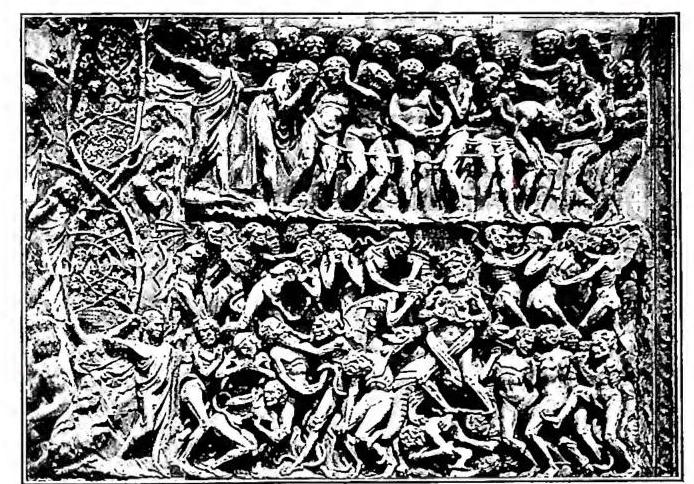
This caution is all the more advisable when one considers how, with the progress of medical science, phenomena once suspected of being diabolical have been confirmed as natural. It will therefore be necessary for the exorcist, to avoid harmful misunderstandings, to consult upright physicians thoroughly versed in the science of nervous and mental diseases. Regarding these illnesses, it must be said that their symptomatology—particularly in the eyes of a layperson—can assume such extraordinary and inexplicable characteristics as to appear preternatural. Thus, illusions and hallucinations may be mistaken for apparitions, incubi, commands, or demonic threats; delusions may follow one another and concatenate in an apparently logical and plausible construction that can accompany an individual’s life without disturbing his normal daily activity, so that his life retains a certain semblance of normality—this is particularly true in systematized lucid delusions, characteristic of paranoia. “Demonomania” belongs to these forms, which can be confused with obsession and diabolical possession: forms in which confusion is easy due to the calm, circumstantial, coherent, and repeated assertions of the subject, who appears all the more normal to the layperson the more violent frenzies, convulsive attacks, and episodes of suspended consciousness (“trances”)—commonly presumed attributes of the declared madman—are absent from his symptomatology.
Neuro-psychasthenic forms (v. NEUROASTHENIA) can give rise to morbid pictures interpretable as demonic possession, particularly in the form of personal diabolical infestation. The obsessive idea (v. OBSESSIVE PSYCHOSIS) that forcibly lodges itself in the individual’s consciousness, painfully and invincibly, to which is added in phobia the anguished fear that it might come true; the obsessive impulses that seem irresistibly to drive the subject—despite all contrary will—to perform a detested action or to prevent the execution of what he strongly desires, may be regarded as vexatious actions of the demon. In particular, hysteria is a prime instigator of pseudo-demoniacal pictures, to which—without exaggeration—can be attributed the great majority of cases of false obsession and infestation: in every case of presumed diabolical action, it is good practice to investigate whether the individual shows signs of the aforementioned neurosis. The characteristic tendency to imitation and suggestion (“placidity”), to systematized lying (v. MYTHOMANIA), to dissociations of consciousness, to curious disturbances of sensitivity, to convulsive crises, are the basic elements with which hysteria constructs the pictures of false demonic possession, often characterized by theatrical and exhibitionistic forms. Another disease capable of generating misunderstandings is epilepsy, of which one must take into account not only the major convulsive crises but also the forms of “petit mal,” absences, episodic violent impulses, and demential states.
In broad outline, the fundamental criteria for guiding the diagnosis of demonic possession have been indicated; however, at this point it must be added that in not a few cases it is impossible to establish a differential investigation capable of attaining certainty, since there can exist pictures that present identical external manifestations while differing only in their determining cause—one preternatural, the other natural. A study of two outwardly similar cases healed by Jesus suffices to convince us of this: the blind man of Bethsaida (Mk. 8:22-26) and the mute demoniac (Mt. 12:22); in the former, He obtained the cure miraculously by healing, while in the latter the effect was achieved by freeing the inferno from diabolical infestation. Yet what was so easy for the discerning wisdom of Jesus may even be impossible for us in our uncertainty. In such an event, the truly wise rule to follow is first to presume that the phenomena are natural, applying the “principle of economy,” according to which recourse to a preternatural explanation—and the consequent therapy—should be made only when the natural explanation proves entirely insufficient.
In cases of doubt, therefore, when the means of cure suggested by medicine have failed—which cannot be taken as absolute proof, given the limitations of medical art—the prudent exorcist will proceed cautiously, gradually intensifying the exorcisms as the natural remedies prove ineffective, and always avoiding those outwardly suggestive and impressive forms that could harmfully affect the psychic equilibrium of the afflicted, should he be merely a neuropath.
III. THE VARIOUS FORMS OF DEMONIC POSSESSION
One usually observes a violent overexcitement of the nervous system, both in its vegetative activity and in the life of relation, with a more or less great enhancement—at times truly extraordinary—of sensitive, intellectual, and volitional functions, and often an inexplicable development of the subject’s physical energy, capable of manifesting an agility, strength, and suddenness of action more than bestial. Not infrequently all this is framed within the lines of a readily recognizable natural illness, as is also evident from the Gospel, in the case of the epileptic demoniac (Mt. 4:24; 17:14); in the different forms of localized paralysis and contractions (Lk. 13:11-16), of blindness, deafness, muteness (Mt. 9:32; 12:22; Mk. 7:32; 9:24), and of those afflicted by manic agitation (Mk. 1:26; 9:17-21; Lk. 9:39).To these pseudo-natural forms are often joined prodigious phenomena, such as the strangest and most unexpected aspects of clairvoyance, xenoglossy, levitation of the body, etc.