
KYOTO, APOSTOLIC PREFECTURE OF. — Located in the western part of the island of Hondo (southern Japan), it comprises the civil prefectures of Kyoto, Shiga, Nara, and Mie. It has an area of 7,350 sq. km and a population of 5,000,000 inhabitants. Erected on 17 June 1937 from the territory of the first two aforementioned civil provinces, the other two were subsequently annexed by decree of Propaganda on 11 July 1939, all four being detached from the diocese of Osaka. It remained entrusted to the Society for Foreign Missions of the United States of America (Maryknoll) until 10 October 1940, when it passed to the Japanese secular clergy with the appointment of an apostolic administrator. The Maryknoll missionaries remain to this day as auxiliaries, joined now by the Clerics of St. Viator, Canadians.
The civil prefecture of Kyoto is considered one of the most important in Japan, especially from the historical and cultural standpoint. The city of Kyoto was the capital of Japan for nearly twelve centuries (795–1869) and the emperor’s coronation ceremony is still performed there. It is the center of Japanese Buddhism; of the 88 principal Buddhist temples in all Japan, 36 are in Kyoto. It is the city most frequented by tourists. In 1555 St. Francis Xavier landed there but could not remain because of local disturbances. In 1584 the Jesuit Fr. Figuercido baptized the famous physician Manase Dosan, whose example influenced the conversion of as many as 800 of his disciples. In Kyoto also worked Fr. Baldassare de Torres, and Fr. Carlo Spinola founded an academy of sciences; both were burned alive at Nagasaki, in 1626 and 1633 respectively.
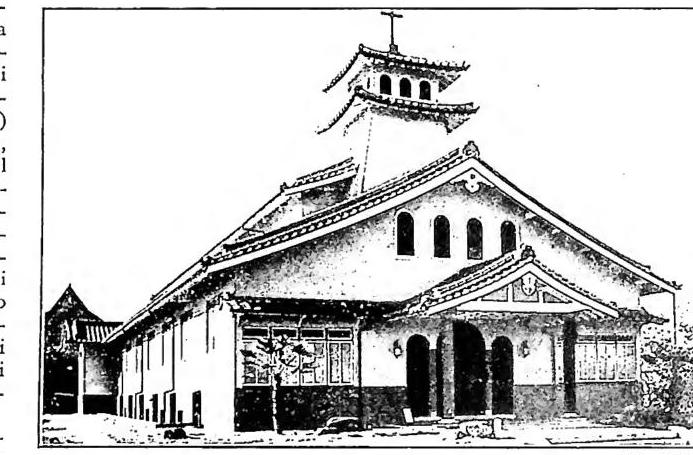
This mission has 3,017 Catholics; 1,900 catechumens; 6 native priests and 23 foreign priests; 4 foreign brothers; 16 native sisters and 23 foreign sisters; 7 major and 2 minor seminarians; 46 catechists; one elementary school; one middle school; one church and 9 chapels; one hospital; one orphanage; 5 dispensaries. Kyoto is the city of residence of the Ordinary.