
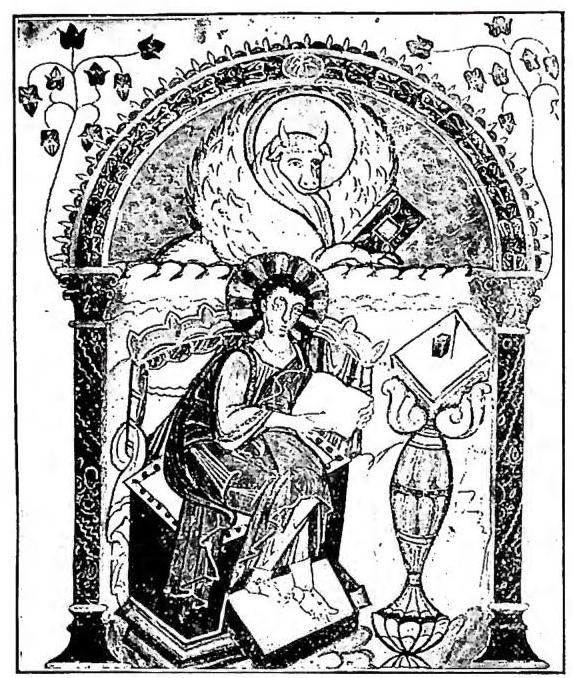
LORSCHE. – A celebrated Benedictine abbey, which later passed for a brief period to the Cistercians and then to the Premonstratensians, located in the diocese of Mainz, not far from Worms; it is now destroyed.
The act of foundation bears the date of 12 July 764, the year in which Count Cancor and his mother Williswinda had a church with an attached monastery erected on their property, on an island (now disappeared) of the Weschnitz River, dedicating it to St Peter. The government was entrusted to Chrodegang (elsewhere Ruthgang or Adalang), Archbishop of Metz, who brought some Benedictines from the abbey of Gorze, which he had founded, and obtained from Pope Paul I the translation to the new monastery of the body of St Nazarius, martyr under Diocletian, to whom the abbey was then dedicated (12 July 765). The following year the archbishop ceded the government to his brother Gundeland. The rapid development of the community, to which immunities and royal protection were granted as early as 772, prompted the move of the seat and abbatial government to L., which took place in 774; the original site remained a priory of L. until the 12th century (the last mention is from 1179), under the name of Altenmünster. Despite an initial reform introduced towards the end of the 11th century by Adalbero, Bishop of Augsburg, the monastery experienced a period of decline under commendatory abbots (c. 890–974), the last of whom, Bruno the Great, later Archbishop of Cologne, brought the Gorze reform there and ushered in a great age of splendour for L., both religious and cultural, while its temporal domains were also expanding to include territories in Holland, the Ardennes, Alsace, and Lorraine, not to mention the at least ten dependent provostships. By the end of the 11th century decline had set in, a decline in which the repercussions of the Investiture Controversy and the tendency of the Archbishops of Mainz to annex ever larger territories to their see were not uninvolved. Nor did the introduction of the Hirsau reform, modelled on that of Cluny, succeed in reviving the fortunes of L., which