

MICROBIOLOGY. — Microbiology studies living beings that are extremely small, invisible to the naked eye and only visible through special optical devices (various types of microscopes), which are known as microorganisms or microbes (from the Greek *mikros*, small). These do not constitute a specific zoological or botanical group, but include beings belonging both to the animal and plant kingdoms, whose nature is not always well-defined and whose classification is difficult.
The microbiological era began at the start of the sixteenth century with the new trend expressed by Girolamo Fracastoro (1478–1553), who, with remarkable intuition, asserted that the transmission of infectious diseases occurs through animated corpuscles capable of rapid multiplication, which he called *seminaria*, i.e., germs. These ideas of Fracastoro were taken up in the following century and developed by others, such as Pier Giovanni Faber, physician of Montpellier, Father Athanasius Kircher, and Augusto Hauptman of Frankfurt, who in his *Tractatus de vita mortis imagine* even went so far as to claim that the cause of infectious diseases lies in the presence of true worm-like creatures in the blood of the sick. However, it was only in the second half of the seventeenth century (1675) that the existence of these tiny beings was confirmed by the Dutch naturalist Van Leeuwenhoek (1632–1723). This scholar, who was particularly skilled in the construction of microscopes, using a simple microscope of his own making, consisting of a small biconcave lens that allowed magnifications of about 270 times, was able to observe and describe in vegetable infusions, in putrid waters, in tartar of the teeth, in saliva, and in the feces of man and various animals, some extremely small elements having the form of straight or curved rods, filaments, spirals, and small spheres. Van Leeuwenhoek also succeeded in determining the size of these elements, which he called “animalcules,” by comparing them with grains of dust having a diameter of a quarter of a millimeter. Unfortunately, neither this researcher nor others who made similar observations understood their true significance, so that a long time passed before microbes were recognized as agents of infectious diseases and as producers of fermentations and other natural phenomena. Nevertheless, the idea that these tiny beings were capable of multiple actions was taking root in the minds of many scholars even in the absence of experimental proof, which was not long in coming, especially through the work of Italian biologists.
First among these must be mentioned the memorable experiments of Lazzaro Spallanzani (1729–99), who, in order to demonstrate the fallacy of the theory of spontaneous generation, which was based on the principle of *corruptio unius, generatio alterius*, succeeded in showing that animalcules did not arise spontaneously in decomposing liquids but were themselves the cause of putrefactive processes. Subsequently (1824), the Italian Vincenzo Sette succeeded in demonstrating that the reddening observed on some foodstuffs (polenta and bread) in the province of Padua was of microbial origin and that the germ responsible for the phenomenon was a small microorganism that was called *zoogalactina interofa*. To the same conclusions came another Italian, Bartolomeo Bizio, who in the same period had studied a similar phenomenon in Venice.
Far more important is the contribution made to microbiological studies by Agostino Bassi of Lodi (1773–1856), to whose genius we owe the first clear demonstration of the pathogenic properties of microbes and of the modes of transmission of infectious diseases. Indeed, this tanner devoted himself for more than thirty years, following a rigorous experimental method, to the study of a disease of silkworms called *mal del calcino*, because the diseased silkworms appear wrapped in a thick whitish layer that resembles lime, and he succeeded in demonstrating that this disease was not to be attributed to particular atmospheric conditions or to food or to other aspects of silkworm breeding, as was then thought, but was caused by a specific microorganism. Bassi also established that this microbe was a cryptogam and that the whitish matter, the cause of contagion, consisted of the dense vegetation of the parasite. Moreover, he precisely expressed the concept that even human diseases, such as plague, cholera, and smallpox, were determined by “vegetable or animal parasites” that “feed on the blood of the individual and whose extreme thinness does not allow us to see them.” Later, Pasteur established the precise relationships between microorganisms and various fermentation processes as well as between microorganisms and the diseases they cause, at the same time laying down the fundamental principles of microbiological technique. Almost simultaneously, another great figure, Robert Koch, made further decisive contributions to microbiological studies, introducing new techniques and discovering the tubercle bacillus.
Today, microbiology, although still a young science, having barely more than a century of existence, has assumed enormous importance. Indeed, the knowledge we possess regarding the morphological and functional characteristics of the various microorganisms has led to a satisfactory clarification of their complex biology and of their intimate relationships with the life of man and other living beings. On the other hand, the precise knowledge of the mechanisms by which these microscopic beings bring about immense transformations of organic matter has permitted notable practical applications in various sectors of industry, particularly in agriculture and in chemistry. Thus, microbiology encompasses various fields of study: pure biology, medicine, veterinary science, and industry, thereby representing a fundamental part of biology, of human and veterinary medicine, of agriculture, and of chemistry.
Microorganisms, although all sharing the characteristic of extreme smallness that renders them invisible to the naked eye, differ from one another in size, since some, the largest, are on the order of a micron, that is, a thousandth of a millimeter, while others, the smallest, are on the order of a millimicron, that is, a millionth of a millimeter. The largest microorganisms are easily observable with ordinary microscopes, also called optical microscopes; the smallest, which are a thousand times smaller, cannot, in the vast majority of cases, be observed even with the aid of the most powerful optical microscopes, and have such an elementary structure that any attempt at definition, classification, and investigation into their nature is rendered difficult. These beings are called ultramicrobes, infraziruses, ultraziruses, or simply viruses, and the science that studies them is currently called virology (v. virus).
Microbes, named by van Leeuwenhoek, who first observed them, as "little animals," were for a very long time still considered to belong to the animal kingdom because, in the vast majority of cases, they appeared to be endowed with movement. Only when, around the middle of the last century, it was shown that many microorganisms, for example, that of anthrax, were immobile and further investigations into their nature were carried out, was it established that they belong for the most part to the plant kingdom, and that there are also some belonging to the animal kingdom: the former are called protophytes and the latter protozoa. There are, however, microbes, such as, for example, spirochetes, for which there still remain many uncertainties regarding their belonging to one or the other kingdom. In view of these difficulties, Haeckel proposed grouping all unicellular beings into a single category, calling them protists (from the Greek πρόστιχος) precisely to indicate that they are the first among all organisms, from which multicellular animals and plants would have originated.
Among the protophytes, myxomycetes and unicellular algae have little importance for microbiological studies, at least as far as our present state of knowledge is concerned; more important are bacteria and fungi, indeed the importance of bacteria in relation to other microorganisms is such that for a long time all microbes, even those of the animal kingdom, were included under this name.
Bacteria are unicellular plant organisms without chlorophyll, of extremely small size, being on the order of a micron in size, and the smallest measuring even less than half a micron. From a systematic point of view, bacteria occupy an intermediate position between unicellular algae and fungi.
The morphological study of bacteria is carried out by means of the optical microscope, which is an instrument whose main part consists of two lens systems arranged so as to achieve a twofold magnification of the object to be observed. Today, we have at our disposal perfected microscopes that can produce an image of bacteria magnified up to 2,500 times. For particular investigations, we can also resort to the electron supermicroscope, which allows magnifications of up to more than 500,000 times. Bacteria appear in the form of small spheres or straight or curved rods: the spherical forms are called cocci and, in turn, are called micrococci if they appear isolated, diplococci if joined in pairs, tetrads if joined in fours, sarcinae if joined in eights with a cubic arrangement, streptococci if arranged in a row like the links of a chain, staphylococci if joined in irregular clusters like bunches of grapes. Bacteria in the form of straight rods represent the bacteria properly so called (from the Greek βακτήριον, little rod) or bacilli, and can appear isolated or variously grouped and arranged; sometimes they form short chains, taking the name of streptobacilli. Bacteria in the form of curved rods are called vibrios if their body presents a single curvature like a comma, and spirilla if the curvatures are more numerous. Closely related to the spirilla in form are the spirochetes. Bacterial cells, whatever their shape, have a very simple structure, consisting of a small mass of cytoplasm, very rich in various nuclear substances, bounded by a thin wall. Many bacteria are provided on their surface with very fine, very long filaments, sometimes two or three times the length of the bacterium itself, called cilia, which, depending on the bacterial species, number from one to about a hundred and are variously arranged around the entire bacterial body, at one end or at both ends. The cilia represent the locomotive organs of bacteria, imparting to them true translational movements. Bacterial cells feed by taking from the environment the substances necessary for metabolic processes; these pass through the cell wall by means of complex osmotic and enzymatic mechanisms. As regards respiratory processes, bacteria are divided into three groups: aerobes, which live only in the presence of atmospheric oxygen; anaerobes, which live in the absence of air, oxygen being harmful to them; and finally facultative aerobes, capable of living both in the presence and absence of air.
Bacteria reproduce by simple fission or scissiparity, which takes place in the following manner: the bacterial cell increases in volume by elongating, then narrows in the middle and a dividing septum forms perpendicular to the major axis, leading to the division of the mother cell into two daughter cells. These may completely detach, giving rise to two isolated bacteria, or may remain united to form the various cellular aggregates. If environmental conditions are favorable to bacterial life due to the presence of sufficient quantities of nutrient substances, the degree of humidity and temperature, and other factors, the entire process of scissiparity of the mother cell into two daughter cells takes place rapidly, in twenty to thirty minutes; and since the daughter cells immediately enter a reproductive phase in their turn, each giving rise to two other cells, it follows that the rate of bacterial multiplication proceeds according to a geometric progression, reaching very high values in a short time. This makes it possible for these small, similar beings to perform truly colossal tasks, such as the various transformations of organic substances observed in nature.
The conditions that favor bacterial multiplication are not the same for all species; indeed, they vary for each one, and sometimes it happens that a factor which facilitates the multiplication of one species markedly hinders that of another. An example is the fact that the presence of oxygen, which favors the multiplication of aerobes, markedly hinders that of anaerobes.

MICROBIOLOGIA — Optical microscope.

Temperature also greatly influence bacterial multiplication, since each species requires specific thermal conditions for its development. The majority of bacteria thrive between 15° and 40° C, but there are some, such as psychrophiles, that prefer low temperatures near zero, and others that can develop even at high temperatures (up to 70°–80° C). The latter bacteria, called thermophiles, represent an exception to biological laws, as they are able to live and multiply at temperatures above those at which the proteins of living organisms coagulate. Almost all bacteria perish at temperatures near 60° C, while they tolerate low temperatures well, at which they can remain for months in a latent state of life until the temperature rises again to higher values.
From the above, it is clear that bacterial multiplication can be hindered by multiple causes, the most notable of which are scarcity of nutrients, unsuitable temperature and humidity, and the presence of substances excreted by the bacteria themselves that are harmful to them. Such unfavorable conditions create an environment unconducive to bacterial life, leading to the death of the less resistant ones and hindering the multiplication of the others. Often, certain bacterial species produce spherical or oval bodies, called endospores, which form inside the bacterial cell, one per cell. These spores, due to a thick membrane that envelops them, are highly resistant to external agents, particularly desiccation, sunlight, and high temperatures. Moreover, they are of great biological importance because they ensure the preservation of many bacterial species.
Among the biological phenomena produced by many bacteria is the production of colored substances or pigments, which diffuse into the material in which they multiply. This occurs frequently in various foods contaminated by germs: thus, milk may appear blue or yellow as a result of the reorganization within it of special chromogenic bacteria, and bread and various confections may take on a characteristic blood-red coloration due to the excessive proliferation of a small bacterium known as the prodigiosus bacterium.
Another highly interesting phenomenon is the luminescence produced by photogenic bacteria, which are found especially on codfish and other fish and impart to them a particular luminosity visible at night. These photogenic bacteria are also found on meat when putrefactive processes begin, and sometimes in sweat and urine.
Bacteria are extraordinarily widespread in the environment: they are found in the soil, where temperature, humidity, and the presence of organic substances often create extremely favorable conditions for their life; in water, to which they are carried from the soil; in the air, where they live attached to dust particles or on minute droplets of various liquids; in our food, in which they often produce serious alterations; on the skin and mucous membranes of humans and animals; on plants, clothing, and household objects. It can be said that bacteria are present everywhere; they are absent only in the upper layers of the atmosphere, far from any manifestation of animal or plant life.
Bacteria are divided into pathogenic and saprophytic: the former exert an aggressive and harmful action on the human and animal organism, while the latter live in the external environment on non-living organic matter. This distinction is not absolute but relative, since it sometimes happens that bacteria ordinarily pathogenic prove entirely devoid of any such capacity, and conversely, bacteria accustomed to saprophytic life may become pathogenic. A highly illustrative example in this regard is provided by *Bacterium coli*, which normally is a saprophytic bacterium, a habitual inhabitant of the human and animal intestine, where it lives in enormous numbers without causing any harm—in fact, contributing effectively to secondary digestion—but which, under certain conditions, can acquire a very high pathogenic power, provoking appendicitis, peritonitis, cystitis, and other serious infections.
Among pathogenic bacteria, particular importance attaches to the staphylococcus, a germ widely distributed in the external environment that can cause abscesses, phlegmons, boils, and urinary infections; the streptococcus, which is also an agent of suppurative processes as well as of erysipelas, puerperal fever, and malignant endocarditis, a very serious infection of the heart valves; the pneumococcus, which causes pneumonia; and the meningococcus, which is the cause of epidemic cerebrospinal meningitis. A bacterium notoriously known for the deaths and damage it causes is that of tuberculosis, of which there are four types: the human type, widespread throughout the world, which can lodge in any organ and tissue, giving rise to tuberculosis of the lung, intestine, bones, joints, etc.; the bovine type, which chiefly affects cattle and sometimes also humans with extrapulmonary forms; the avian type, which only exceptionally develops in humans, while it normally attacks chickens, pigeons, and other birds; and finally, there is the type affecting cold-blooded animals, which can take hold in frogs, turtles, and certain fish.
Very similar to tubercle bacilli is that discovered by Hansen, which causes in man the terrible disease of leprosy, almost absent in Italy but still affecting several million people worldwide. Two other bacteria notoriously responsible for major epidemics in the past are those of plague and cholera, which still pose a not inconsiderable danger, since foci of plague still exist in Tibet, Mongolia, and Arabia, and of cholera in India, Indochina, Malaysia, and other parts of Asia. Other pathogenic bacteria include those of typhoid and paratyphoid fevers, which cause the various clinical forms of typhoid fever; those of dysentery, which provoke the eponymous disease, especially among young children and troops operating in hot climates; and those of diphtheria, tetanus, anthrax, whooping cough, etc. Among spirochetes too, there are pathogenic ones, and the most notable is the spirochete of syphilis, which, with great likelihood, was introduced into Europe from America when Christopher Columbus and his men returned from their famous voyage. This germ, named by its discoverer Schaudin as *Treponema pallidum*, spares no part of the body, causing nephritis, hepatitis, various cardiopathies, severe affections of the nervous system such as progressive paralysis and tabes, and also producing extremely serious alterations in the unborn. A fatal prerogative of pathogenic bacteria is their ease of transmission, sometimes with a mere cough, from a sick host to a healthy individual, making him ill, so that bacterial diseases are contagious. And since many bacteria are common to man and animals, diseases transmitted from animals to man frequently occur. For example, milk from a diseased dairy animal (cow, goat) containing pathogenic bacteria, such as that of bovine tuberculosis or Malta fever, can cause the respective diseases in man.
Pathogenic bacteria penetrate the human or animal organism through the skin and various mucous membranes, more easily if there are even minor continuity lesions. Thus, the bacillus of plague and that of anthrax penetrate through intact skin or minor erosions from scratching. Sometimes pathogenic bacteria can penetrate the skin through the bite of various insects. The tubercle bacillus, instead, normally enters through the mucous membranes of the bronchi, lungs, or intestines. Another entry point for bacteria is the tonsils, whose particular anatomical structure facilitates their penetration.
Once inside the organism, bacteria begin to multiply in tissues, organs, and humors, and exert their aggressive actions, which mainly consist in the production of particular strongly toxic substances, called bacterial toxins, which are distinguished into exotoxins and endotoxins: the former are protein secretory products of bacteria and act independently of the bacteria themselves that produced them, spreading through the organism and causing severe damage to various tissues; the latter also possess high toxic capacity but are released only upon the disintegration of the bacterial body. Some germs act mainly through exotoxins, others through endotoxins, and others through both.
Among the bacteria that exert their pathogenic power through exotoxins, those of diphtheria and tetanus are particularly important. These two bacteria, once they have penetrated the human organism, show no invasive tendency but remain localized at the point of entry, where they secrete their exotoxins, which spread through the organism producing very severe lesions of the nervous system elements. A highly toxic exotoxin is the botulinic one, which, if ingested by man, produces botulism. It is interesting that the botulinic bacillus, producer of this highly active toxin, is incapable of parasitic life, i.e., of living in the human organism; it is found instead in the soil or in preserved foods, vegetable or animal, in cans, where it thrives abundantly, producing its powerful toxin, which makes the food itself harmful to man. Unfortunately, cases of botulism, even fatal ones, are not rare.
To counteract in man the harmful effects of bacterial exotoxins, antidiphtheritic, antitetanic, antibotulinic sera, etc. are advantageously used (see below). Among the best-studied endotoxins, even with regard to their chemical constitution, is that of the typhoid bacillus, which has a great elective affinity for the intestine, where it produces characteristic ulcerations. The endotoxin of the plague bacillus, instead, produces severe alterations in the circulatory apparatus and nervous tissue. The dysentery bacillus of Shiga-Kruse, instead, exerts pathogenic power through an exotoxin with elective action on nervous tissue and an endotoxin that produces severe alterations in the intestine.
The study of bacteria is now carried out using appropriate techniques, which allow knowledge of their fine structure and biological properties, their isolation from the environment by artificial cultivation in suitable nutrient media where they can develop and multiply, and experimentation on their pathogenic power in laboratory animals. Among the many classifications proposed for bacteria, the simplest is that based on morphological characters and divides them into cocci, which have a spherical or slightly oval shape, bacilli, which are rod-shaped, and spirillae, which appear as variously curved rods.
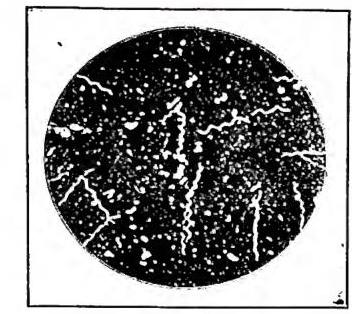
Fungi (Mycophytae in Engler’s classification) are microorganisms of the plant kingdom, like bacteria devoid of chlorophyll, consisting of a single cell or an aggregate of more cells similar or slightly different from one another; they have a well-defined cellular structure and exhibit reproductive phenomena that are sometimes very complex, so that they are to be considered among the more evolved microbial forms. They present two fundamental vegetative types with distinct morphological characteristics, one with globular cellular structure and one with filamentous structure. Fungi of the first type, also called blastomycetes or saccharomycetes, appear as large cells 6-8 microns in diameter and of rounded or oval shape, which occur singly or grouped together in conglomerates of several elements variously arranged. Each single cell consists of the cell wall or membrane, formed mainly of chitin, cellulose, and hemicellulose, the cytoplasm, with vacuoles and granules of various reserve materials, and nuclear bodies often having all the characteristics of true nuclei. Sometimes these cells elongate, assuming the filamentous type. Fungi with filamentous structure, also known as molds, appear as long filaments, called hyphae, more or less variously branched and interwoven, forming characteristic growths with the appearance of tubercles, compact tissues, or velvety felts. The individual filaments may consist of several similar cells joined together or of a single syncytial formation.
Fungi are found everywhere; they are absent only in the upper layers of the atmospheric air, far from any manifestation of animal or plant life.
Fungi reproduce by the division of a cell into two or more daughter cells, or by the production of one or more rounded or oval buds by the mother cell (budding or blastogony), or also by the process of sporification or propagation, which consists in the production of small globular or elliptical bodies, very resistant to external agents, that form either inside the cells (endospores) or outside them (exospores), assuming various arrangements in clusters, chains, or brushes, as occurs, for example, in fungi of the genus *Penicillium*, which are characterized precisely by filamentous cells, the hyphae, that bear at their tips chains of exospores giving the whole the appearance of a brush. Many fungi exhibit characteristic processes of sexual reproduction, ranging from simple autogenous fertilization, consisting in the union of two identical cells, to complex processes of heterogamy, in which there may occur a true copulation between two sexually differentiated elements, one male and one female. Fungi have a chemical composition similar to that of bacteria, being made up of a large amount of water, protein substances, fats, carbohydrates, and minimal quantities of mineral salts.
Fungi, like bacteria, are very widespread in nature: they are found in enormous numbers in water, air, soil, foodstuffs, clothing, everywhere, and as soon as environmental conditions favorable to their development occur, they enter into very active multiplication, covering the materials on which they have developed with a dense vegetation characteristically colored white, black, green, red, or yellow, thus giving rise to the well-known phenomenon of mould. This frequently appears on the walls of damp rooms, and sometimes the growth of particular moulds on walls painted with arsenic-based colors can give rise to the formation of volatile arsenic compounds that are very poisonous to people who inhale them. Even damp wood is subject to invasion by moulds, so that the wooden parts of a building, such as beams and shutters, under particular conditions of humidity, can take on a yellowish or reddish-brown coloration, become covered with minute droplets of water, and lose their normal consistency, becoming friable.
Generally fungi lack pathogenic power; however, some of them are capable of causing, in man and animals, particular morbid states, sometimes even serious ones, known by the generic name of mycoses. One of these is thrush in infants, which is an affection of the oral and pharyngeal mucous membranes, which appear covered with characteristic whitish deposits due to the proliferation of various fungi. Other mycoses of great importance because of their spread and contagiousness are the tineas, diseases of the skin, hair, and nails, produced by fungi belonging to the genera *Ctenomyces*, *Sabourudites*, *Trichophyton*, and *Epidermophyton*. The pneumoconioses and the various forms of actinomycosis also have particular importance in human pathology. In recent years studies and research on fungi have received further impetus from the fact that they produce substances (penicillin, streptomycin, etc.) possessing strong antibiotic action against many pathogenic microbes.
Among the many classifications proposed for fungi, the most widely accepted is that which divides them into two great classes: that of the Eumycetes, which includes all fungi that exhibit processes of sexual reproduction, and that of the Deuteromycetes (δυσ- [dys-], secondary), which includes all the others for which these processes of higher reproduction are not known. The class of Eumycetes is in turn divided into three subclasses (Basidiomycetes, Ascomycetes, and Phycomycetes) according to the type of sexual reproduction that gives rise, respectively, to the formation of basidia, asci, and particular zootic formations. These three subclasses are in turn divided into orders, suborders, families, etc. The class of Deuteromycetes includes three orders, characterized by different types of spore formation.
Protozoa are animal organisms formed of a single cell that performs both vegetative functions and those of the life of relation. They constitute a very heterogeneous group of great biological importance, which by some authors is even considered as a subphylum of the animal kingdom. Their size ranges from a few microns, for some species, to several tens of microns, up to 200 or more for others, so that almost all of them fall among microorganisms. Their shape is also extremely variable; and the same can be said of their structure, which is very simple, almost elementary, for some protozoa and notably complex for others. Unlike other microbes, in protozoa there is always a clear distinction between nucleus and cytoplasm, and the latter is almost always differentiated into endoplasm and ectoplasm. The endoplasm, which is inside, is more fluid, often shows vacuoles and various granules, and generally performs vegetative functions; the ectoplasm, which is outside, is denser and provides for nutritive exchanges and the functions of the life of relation. The nucleus is never lacking; indeed, many protozoa have two, one smaller, called the micronucleus, which presides over reproductive phenomena, and one larger, the macronucleus, with vegetative functions; some species have a greater number. Many protozoa are also provided with a centrosome and other organelles. The body of protozoa, exceptionally devoid of any covering, is normally delimited all around by a more or less thick membrane, which in some classes appears as a very resistant cuticle.
The type of nutrition varies in different species: for some protozoa it takes place, as for bacteria, by absorption through the cytoplasm of nutrient substances found in the surrounding liquid; for the more evolved forms there is a true holozoic type of nutrition, which consists in the taking in of minute food particles, which are brought into the interior of the cell, then digested and utilized. Movement is a very frequent phenomenon in protozoa and is produced either by small contractile fibrils or by short and slender prolongations of the cytoplasm, known as cilia and present in varying number and arrangement within the cell body, or by larger filaments called flagella, or, finally, by small ectoplasmic outgrowths shaped like clubs, thick and thin, which the protozoon itself emits and retracts; these are called pseudopodia and serve, besides for locomotion, also for the taking in of food particles. In protozoa the most varied processes of reproduction are found: simple or multiple division, in which the nucleus first and then the cytoplasm divide into two or more parts, endogenous or exogenous germination, various phenomena of sexual reproduction, including those of parthenogenetic type. Moreover, reproductive phenomena by division or germination very frequently alternate with sexual ones, giving rise to interesting biological cycles, which are of great practical importance when dealing with protozoa parasitic on man and animals. Protozoa resist external agents poorly; however, many of them, when environmental conditions become unfavorable, transform themselves into cysts, covering themselves with a particular very resistant capsule that protects them from harmful stimuli. Protozoa are very widespread in nature, being found in a saprophytic state in soil and water or as parasites in man and various animals.
Protozoa are divided into four classes: Flagellata, Rhizopoda, Ciliata or Infusoria, and Sporozoa.
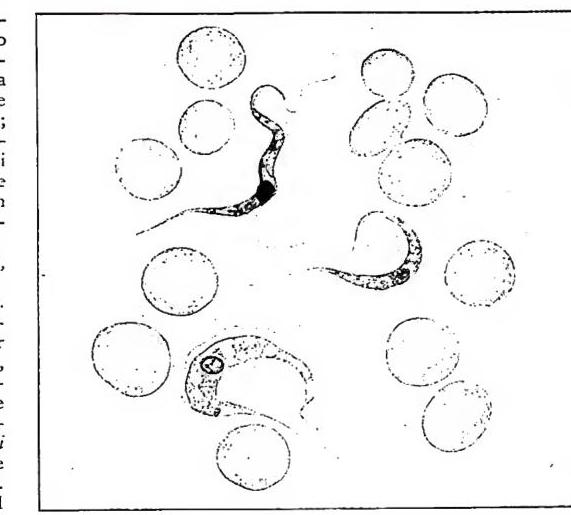
Flagellates are characterized by one or more flagella. Many species parasitic to humans belong to this class, such as *Trypanosoma gambiense*, first observed in the blood of negroes in Gambia, Africa, which causes sleeping sickness, and the *Leishmania*, which cause oriental sore, an ulcerative affliction of the skin and mucous membranes, and an acute febrile anemia accompanied by large tumors of the spleen and liver.
Rhizopods are protozoa provided with pseudopodia, which, as mentioned, serve for locomotion and the capture of food. This group includes the amoebae, which owe their name to the fact that they continuously change shape. Some of them live saprophytically in water and in the intestines of humans and other animals; others are pathogenic: thus the histolytic amoeba, which is capable of producing a severe contagious intestinal disease known as amoebic dysentery or amoebiasis, characterized by intestinal lesions with diarrhea, often bloody, and hepatic disturbances.
Among protozoa, ciliates are the most widespread, being very large and even provided with a rudimentary mouth and anal opening. Only one species, *Balantidium coli*, which lives as a commensal in the intestines of pigs, is capable of producing intestinal disturbances in humans, sometimes severe. All other ciliates live in fresh or salt water in a saprophytic state.
The class of Sporozoa, which includes the Telosporidea and Neosporidea, is characterized by the alternation of sexual reproduction with asexual reproduction. These protozoa are very small and are all parasites of vertebrates and invertebrates. Among them are the various *Plasmodia* or haematozoa of malaria, which complete their life cycle in the mosquito and in humans, in whom they produce the various forms of malarial fever.
Microbes perform in nature a series of complex transformations of organic matter, so important for the life processes of higher organisms that one may affirm that, were there no microorganisms on earth, life would cease. Microbial activity is facilitated by the fact that microbes are extremely widespread and tend to multiply rapidly, reaching in a short time an infinitely large number.
Among the many and interesting manifestations of microbial life, one of particular importance is that connected with the cycle of organic matter between the animal and plant kingdoms, brought about by numerous microorganisms and consisting of a series of processes of decomposition and reconstruction. Indeed, organic substances of animal origin, such as corpses, carrion, dregs, urine, etc., once they reach the soil, are decomposed by the many microbes present in vast numbers and transformed through successive reductions into bodies of simpler structure. Some of these, such as water and carbon dioxide, are rapidly and directly utilized by plants, while others, such as nitrogen and ammonia, are further elaborated through the intervention of specially adapted microbes, transformed into mineralized compounds (nitrites, nitrates, etc.) and utilized by plants. It is noteworthy that the gaseous nitrogen resulting from the decomposition of organic matter could not be utilized by plants without the providential intervention of nitrogen-fixing microbes; some of these, known as azotobacteria, are capable by themselves of fixing nitrogen and transforming it into usable products; others, instead, perform these fixations and transformations of nitrogen in symbiosis with leguminous plants, in whose roots they live. The remarkable activity of these microorganisms results in the enrichment of the soil with many nitrogenous substances and explains the fact, known since ancient times, that leguminous plants increase soil fertility.
Other manifestations of microbial life of great importance are fermentations, which are impressive transformations of organic matter, with or without gas production, carried out by various microbes.
A fermentation known since ancient times is alcoholic fermentation, which consists in the transformation of sugars into alcohol. Indeed, there exists a whole series of alcoholic beverages, such as wine, beer, etc., obtained through fermentative processes of different substances such as grapes, hops, etc., and the advanced knowledge of the intimate mechanism by which microbes carry out alcoholic fermentation has allowed the development of highly specialized industrial processes by which typical wines with characteristic aromas are obtained. Other fermentations of notable practical importance are bread-making fermentation, in which the dough rises due to the gases produced by microbes, increasing in volume and becoming soft and spongy; and acetic fermentation, in which acetic acid bacteria transform the alcohol in wine, beer, or cider into vinegar, which takes the respective names of wine vinegar, beer vinegar, etc. Closely connected with many microbiological phenomena are other phenomena which, taken together, constitute immunity.
**Immunity.** — In a biological sense, immunity is the property possessed by some organisms of opposing, through reactive processes, the offensive actions of pathogenic microbes, in order to defend their own biological integrity. These defensive processes are set in motion by the organism to prevent the penetration of pathogenic microbes through the skin and mucous membranes lining the mouth, nose, conjunctivae, and other natural openings, and to oppose the spread of the microbes themselves in the tissues and organs, should they have overcome the barriers of the skin or mucous membranes. When the defensive powers of the organism succeed in preserving it from the microbes of a given disease, the organism is said to be immune and thus refractory to II. If, instead, the microbes overcome the defensive barriers, invade the organism, and cause damage to the tissues and organs and severe disturbances to its functions, the organism is said to be non-immune, i.e., receptive. Between the two extremes of maximum immunity, i.e., complete refractoriness, and complete lack of immunity, i.e., complete receptivity, there exists a whole range of intermediate degrees of immunity.
Immunity is to be distinguished as natural, acquired, and art
fiscale. Natural immunity consists in the state of refractoriness possessed from birth by an organism toward a given infection, and it may be related to the hereditary characteristics of an entire species, race, or individual. Therefore, natural immunity is itself distinguished into species, racial, and individual natural immunity. Man possesses natural immunity against many infections of other mammals and birds, while lacking it toward others. Indeed, he is highly receptive to measles infection, which is contracted sooner or later by all humans, and to other exanthematous diseases such as smallpox and chickenpox, as well as to whooping cough, typhoid fever, dysenteries, cholera, diphtheria, pneumonia, and other severe infections. No animal species is naturally immune to tuberculosis infection, as mammals, birds, and even cold-blooded animals are receptive to II. Great similarities regarding immunity exist between zoologically close species, e.g., between man and higher apes, which allows the use of these animals in experimental study of many human infectious diseases. A classic example of racial natural immunity is that of Algerian sheep, which are almost immune to anthrax infection, unlike other sheep. Among human races, only small differences exist concerning natural immunity: Negroes, for instance, resist malaria and yellow fever better than whites but are less resistant to tuberculosis.
Significant differences, however, are observed in the natural immunity of various individuals, so that among people equally exposed to the same infection, some contract it immediately, others later, and others remain unscathed. An interesting fact is that in the first months of life, children rarely contract measles, scarlet fever, diphtheria, smallpox, and other infectious diseases due to the natural immunity they possess as a result of the passage of immunizing substances from the mother to the fetus during intrauterine life.
Natural immunity can weaken or disappear altogether due to various causes, such as qualitatively or quantitatively insufficient nutrition, excessive work, certain intoxications (alcoholism, lead poisoning), pregnancy, childbirth, intercurrent diseases, and, finally, unfavorable climatic conditions with excessive cold or heat. Acquired immunity, or naturally acquired immunity, is that which appears in an organism after it has overcome an infectious disease: an individual, for example, who has had smallpox once, even in a mild form, becomes almost certainly refractory to this infection for the rest of his life. The same occurs with chickenpox, scarlet fever, measles, yellow fever, typhus fever, and other diseases. With regard to other infections, e.g., diphtheria and pneumonia, acquired immunity is by no means consistent.
The mechanism of action of natural and acquired immunity is related to complex functions performed by certain cell groups (cellular or histogenic immunity) and by the various humors of the organism (humoral immunity). The most important manifestation of cellular immunity is phagocytosis, which consists in the ability possessed by many cells, especially white blood cells, to engulf and digest microbes. On the other hand, the humors are endowed to varying degrees with the properties of immobilizing microbes, killing them, dissolving them, and neutralizing their toxic products, known as bacterial toxins. These properties possessed by the humors of the organism are attributed to the presence of substances, not yet fully identified, called antibodies or immunobodies. These, which are chiefly an expression of acquired immunity, appear in the humors of an organism following the introduction of microbes or their toxins, to which the name antigens is given because they have generated the corresponding antibodies. Immunity is also distinguished into antimicrobial, which is tasked with fighting microbes, and antitoxic, which consists in the ability to neutralize microbial toxins.
Artificial immunity, or artificially acquired immunity, is that which is conferred on an organism against a given infection by means of appropriate treatments. Artificial immunity can be active or passive. The former is obtained by introducing into the organism to be immunized against a given infection the microbes or, in some cases, their completely detoxified toxins. Upon the introduction of the microbes or toxins, which act as antigens, the organism actively reacts with a set of defensive modifications, both cellular and humoral, similar to those occurring in natural infection and leading to naturally acquired immunity.
The microbes and toxins introduced into organisms to confer active artificial immunity are called vaccines, because the material first used to induce artificial immunity consisted of lymph taken from pustules of a disease of cattle called "vaccine" (Jenner, 1796). Vaccines are introduced into the organism by scarification of the skin, injections, or oral administration. They are normally used in humans for preventive purposes and represent an important prophylactic means in the fight against many infectious diseases, such as smallpox, diphtheria, typhoid fever, cholera, rabies, and others; the efficacy of these vaccinations is now so well established that in some countries, including Italy, vaccination against smallpox and diphtheria is mandatory for all children within the second year of life, and against typhoid fever under particular circumstances. Vaccinations are widely used in the military, which is particularly exposed to the dangers of infections, especially during wartime. They also find useful application in veterinary medicine to protect economically important animals. Besides preventive use, vaccines can be employed in the treatment of some infectious diseases (e.g., typhoid fever) to stimulate the body's defense powers.
Passive artificial immunity is obtained by parenteral inoculation (generally subcutaneous) into the organism to be immunized against a given infection of the blood serum of an animal (e.g., a horse) that has previously been actively immunized and thus already contains in its blood the antimicrobial and antitoxic principles. These sera are called immune sera and are used in practice both for preventive and curative purposes. Widely used are diphtheria and tetanus antitoxins, which are very effective in preventing and combating the respective infections. Immune sera sometimes cause inconveniences and disturbances, especially when inoculated into individuals who have previously received other serum injections.
Beyond the immune phenomena that express the defense of animal and plant organisms against microbes, other biological phenomena of a definitely immune nature have been observed, the study of which has led to results of the greatest theoretical and practical interest. Among these phenomena, those relating to the structure of the red blood cells of individuals of the same species and of different species are very important, as they have enabled the spread of blood transfusion practices and significant medico-legal applications.
No less interesting and important is that other group of immune phenomena known as anaphylactic phenomena, because they represent a state contrary to that of immunity and manifest themselves with a maximum sensitivity to substances that are in themselves harmless. The classic anaphylactic phenomenon is that which occurs when normal or immune serum is injected into an individual who has previously had one or more serum injections. It manifests itself almost suddenly with local disturbances at the point where the injection was made.