
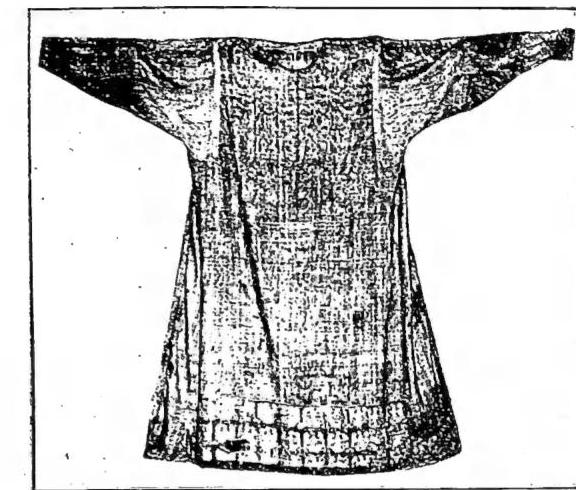
TUNIGELLA (tunica, tunica linea, tunica striscia; subtile; dalmatica minor, dalmatica subdiaconula). — A liturgical vestment of the subdeacon, of the same form and fabric as the dalmatic (v.) of the deacon.
Used in Rome in the 6th century, it was abolished by Gregory the Great, but returned in the 9th century and spread beyond Rome. In the meantime (6th–9th centuries), subdeacons wore, like other clerics, the planeta; today the folded planeta remains only in the penitential liturgical seasons of Advent and Lent. Once the subdiaconate was counted among the major Orders, a distinctive service habit similar to the diaconal one was given to subdeacons to set them apart from other Orders: an unbelted tunic of lesser width, with narrow sleeves and without clavi. Later it gradually came to resemble the dalmatic and followed its shortening and deformation. The conferral upon newly ordained subdeacons was introduced in the 13th century. From this time also comes the name “t.”; at first, especially outside Rome, it was called subtile.
The tunigella belongs to the papal pontifical vestments already in the 8th century. Bishops wore under the planeta until the 12th century either the long-sleeved diaconal dalmatic or the narrow-sleeved subdiaconal tunigella; gradually both came into use, but only at pontifical Mass and at Masses of Ordination. Until the 13th century abbots were rarely granted the use of the tunigella, and ordinarily only that of the diaconal dalmatic.
— See plate LVIII.