
ACROSTICO. — This is a figured poetic composition in which the initial or final letters (in the latter case more properly called a telestich) of the verses, read vertically, convey a meaning. The origin of this ingenuity or frivolity was attributed to Epicharmus or even to the Sibyls, in whose poems it was much employed. In fact, the first Christian a. is found among the poems attributed to the Erythraean Sibyl (Orac. Sibyll., VIII, 217 SGR., also mentioned by Constantine in his speech to the fathers of Nicaea), where thirty-four verses give the motto Ἰησοῦς Χριστὸς Θεοῦ Τίος Σωτὴρ Σταυρός, and the initials of these same words the mystical word ΙΧΘΥC (v.), which subsequently appears many other times in a. This a. seems to have been composed in Alexandria (2nd century). It has been thought that the figure of the fish, as a symbol of Christ, should be connected with it, but this is a groundless hypothesis. It is enough to recall Tertullian’s expression: «nos pisciculi, secundum Ἰχθὼν nostrum Iesum Christum, in aqua nascimur» (De Baptismo, 1).
We now give the text in Greek of the aforementioned a. (J. Geffcken, Die Oracula Sibyllina: CB, VIII, Berlin 1902, pp. 153–57), followed by the translation:
Ι δρώσει δὲ χθὼν, κρίσεως σημεῖον ὅτ' ἔσται.
Η ξει δ' οὐρανόθεν βασιλεὺς αἰῶσιν ὁ μέλλον
Σ' ἄρκα παρὼν πᾶσαν κρίναι καὶ κόσμον ἅπαντα.
Ο φονταί δὲ θεὸν μέροπες πιστοί καὶ ἀπιστοί
Υ φιστοὶ μετὰ τῶν ἁγίων ἐπὶ τέρμα χρόνου.
Σ' ἀρχοφόρων δ' ἀνδρῶν ψυχὰς ἐπὶ βήματι κρίνει,
Χ' ἔσας ὅταν ποτὲ κόσμος ὅλος καὶ ἄκανθα γένηται.
Ρ' ἔφουσιν δ' εἰδῶλα βροτοί καὶ πλοῦτον ἅπαντα,
Ε' κακύσει δὲ τὸ πῦρ γῆν οὐρανὸν ἠδὲ θάλασσαν
Ι' χνεῦον, ῥῆξει τε πύλας εἰρκτῆς· Λίδα.
Σ' ἄρξ τότε πᾶσα νεκρῶν ἐς ἐλευθέριον φάος ἦξει
Τ' ὧν ἁγίων ἀνόμους δὲ τὸ πῦρ αἰῶσιν ἐλέγξει.
Ο ππόσα τις πράξας ἔλαθεν, τότε πάντα λαλήσει·
Σ' τήθεα γὰρ ξοφάντα θεὸς φωστήριον ἀνοίξει.
Θ' ῥήνος δ' ἐκ πάντων ἔσται καὶ βρυγμὸς ὀδόντων.
Ε' κλείφει σέλας ἠελίου ἀστρῶν τε χορεῖαι.
Ο ὑρανὸν εἰλίζει μήνης δὲ τε φέγγος ὀλεῖται.
Υ' φώσει δὲ φάραγγας, ὀλεῖ δ' ὕψοματα βουνῶν,
Υ' φῶς δ' οὐκέτι λυγρὸν ἐν ἀνθρώποιαι φανεῖται.
Ι' σα δ' ὄρη πεδίοις ἔσται καὶ πᾶσα θάλασσα
Ο ὑκέτι πλοῦν ἔξει, γῆ γὰρ φρυγθεῖσα τότε ἔσται
Σ' ὧν πηγαῖς, ποταμοί τε καχλάζοντες λείψουσιν.
Σ' ἀλπινῇ δ' οὐρανόθεν φωνὴν πολύθρηνον ἀφήσει
Ο ρόουσα μύσος μελέων καὶ πήματα κόσμου.
Τ' ἀρτάρεον δὲ χάος δείξει τότε γαῖα χάνοῦσα.
Η ξουσιν δ' ἐπὶ βήμα θεοῦ βασιλῆος ἅπαντες.
Ρ' εὔσει δ' οὐρανόθεν ποταμὸς πυρὸς ἠδὲ θεοίον.
Σ' ἦμα δὲ τοι τότε πᾶσι βροτοῖς, σφηγὶς ἐπίσημος
Τ' ὁ ξύλον ἐν πιστοῖς, τὸ κέρας τὸ ποθοῦμενον ἔσται,
Α' νδρῶν εὐσεβέων ζωῇ, πρόσκομμα δὲ κόσμου,
Υ' ἄσαι φωτίζων κλητοὺς ἐν δώδεκα πηγαῖς.
Ρ' ἄβδος ποιμαίνουσα σιδηρεῖν γε κρατήσει.
Ο ὕτος ὁ νῦν προγραφεῖς ἐν ἀκροστιχίοις θεὸς ἡμῶν
Σ' ὠτήρ ἀθάνατος βασιλεύς, ὁ παθὼν ἐνεχήμῳ.
The earth will sweat when the sign of judgment appears: the King of the Ages, who is destined to judge in person every flesh and the whole world, will come from heaven. Mortals, faithful and unfaithful, will see God Most High with his saints at the end of time. And he will judge from his tribunal the souls of men clothed in flesh, when the whole world becomes dry earth and thorns. Mortals will cast away idols and all wealth, and fire will creep over earth, heaven, and sea; it will burn and shatter the gates of the prison of Hades. Then all the flesh of the dead will come forth into the light of the freedom of the saints, while the fire will punish the unjust throughout the ages. Everything that a person has done in secret will then be revealed: God will open the darkened breasts with his splendors. There will be weeping from all and gnashing of teeth. The light of the sun and the dance of the stars will cease: he will roll up the heavens, and the moon’s radiance will be extinguished. He will fill the ravines and make the hilltops disappear. No longer will weary heights appear among men; the mountains will become level with the plain; and the whole sea will no longer be navigated, for then the earth will be scorched, and the gurgling rivers will abandon it together with their springs. A trumpet from heaven will emit a mournful sound, roaring over the impurity of the wretched and the woes of the world. Then the earth, opening up, will reveal the Tartarean abyss. All will come to the tribunal of God the King. A river of fire and brimstone will flow from heaven. Then the cross will be a sign to all mortals and a distinguished seal for the faithful, the desired horn, life of the pious, but a stumbling-block to the world, illuminating the faithful with the waters of twelve springs. An iron rod, like that of a shepherd, will rule. This one, now written at the beginning of the acrostics, is our God, Savior, immortal King, who suffered for us.
It seems that the a. was first invented and used to impress upon a work, like a seal of authenticity, and for this reason it ordinarily reproduced the author’s name (for example, the oldest one found so far reads ΕΥΔΟΞΟΥ ΤΕΧΝΗ, “the art of Eudoxus,” the famous astronomer of Cnidus, from 193–190 B.C.), while another transmitted to us by Cicero, De div. II, 11, read Q. Ennius fecit; the same is found
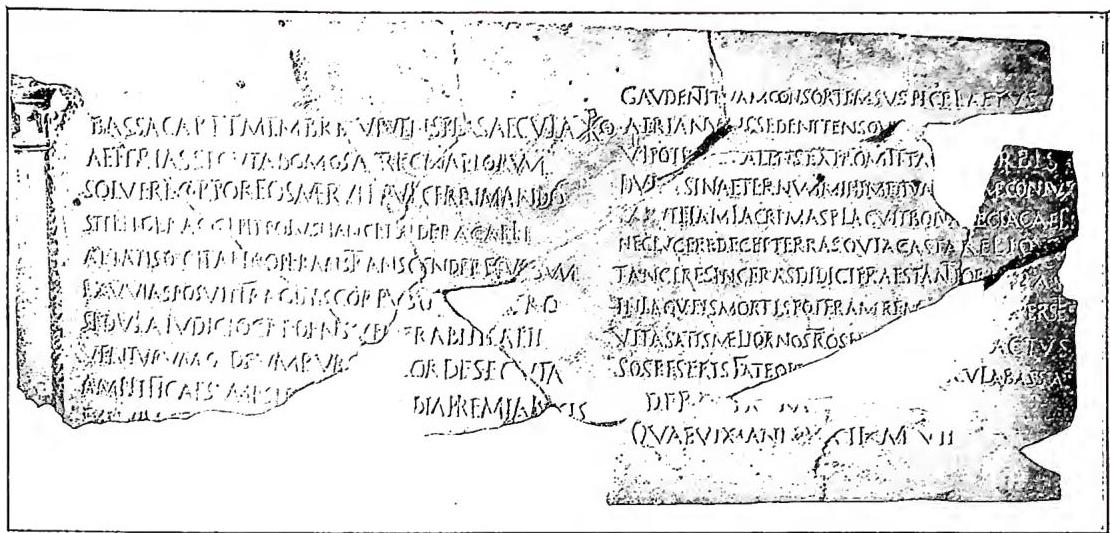
(propr. E. Jesi)
Related to acrostics are abecedarian compositions (v. ABECEDARI).