
Madrid 1859; S. Puig y Puig, *Episcopologio de la Sede Barcinoense*, Barcelona 1929; I. Mas, *Notes historiques del bisbat de Barcellona*, 12 vols., Barcelona 1906–15; C. Barraquer, *Los religiosos en Cataluña*, 4 vols., Barcelona 1906–17; Hefele-Leclercq, II, n. 1163; III, n. 237; IV, nn. 99, 722, 914, 1113, 1268; Giuseppe Pou y Marti
SAINTS, CHURCHES AND MONASTERIES. – In addition to the bishops mentioned above, Barcelona holds in great veneration: St Eulalia, whose feast is celebrated on 12 February, while the namesake in Mérida is celebrated on 10 December. According to Delehaye, these are two feasts for a single martyr (*Martyrologium Hieronymianum*, p. 90, n. 35). St Cugat, mentioned by Prudentius: *Barcino claro Cucufate freta surget* (*Peristeph.*, IV, 33), is recorded in the *Martyrologium Hieronymianum* on 16 February and in the Mozarabic liturgy on 25 July. Also venerated are St Raymond of Peñafort (1275), who was a canon of Barcelona, and St Joseph Oriol (1702; v.).
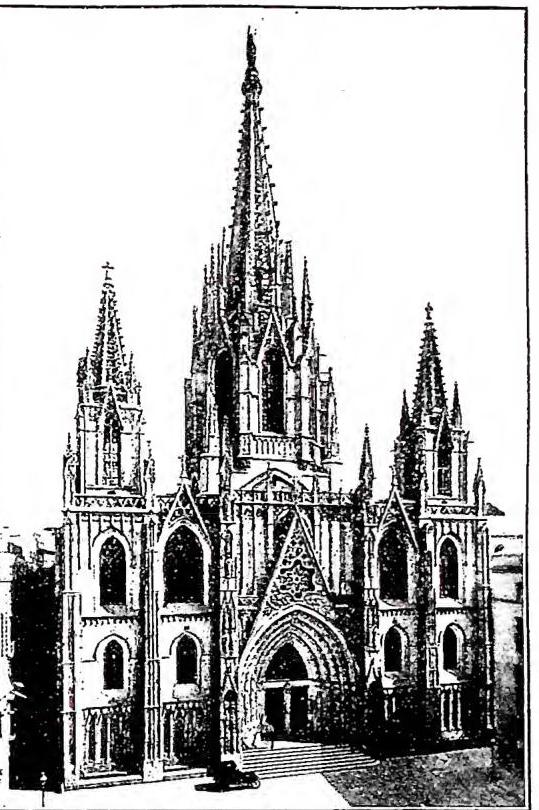
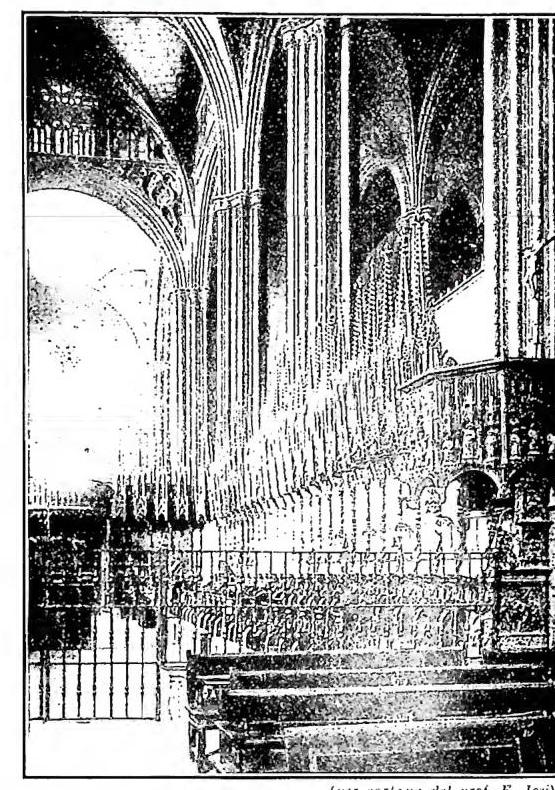
The ancient cathedral of Barcelona, St Croix, was transformed into a mosque by the Arabs; after the Frankish reconquest in 801, Bishop Frodoí (801–877) began its reconstruction, transferring the relics of St Eulalia there the following year. It was ruined in the invasion of 985 and rebuilt between 1048 and 1058 by Bishop Guisalbert and Count Ramón-Berenguer I. The altar of St Andrew dates to 1173, that of St Mark to 1203, and that of the Three Virgins to 1271. On 10 May 1299, James II laid the first stone of the new cathedral, which was completed only in 1430; it has three naves in Gothic-Catalan style, with two octagonal towers on the exterior. Beneath the high altar in the crypt is the rich sarcophagus containing the remains of St Eulalia, who is the second titular saint of the cathedral. It also contains the tomb of St Olegarius (1115). The attached cloister dates to the 15th century. In 1948, remains of the primitive cathedral were discovered, occupying the same area as the present one, minus the apse.
Very ancient is the church of St Paul of the Field, founded together with the monastery toward the end of the 11th century, mentioned in a privilege granted on 10 December 1098 to Abbot Berengarius of St Cugat; it is in the form of a Greek cross, with three apses and an octagonal dome at the centre; the façade still retains original ornamentation, and the cloister is adorned with artistic capitals.
The seven oldest parishes of Barcelona are: 1) St Mary of the Sea or of the Sands, built on the site of the discovery of the relics of St Eulalia (878); it presents itself as a Gothic church with three naves dating between 1329 and 1377; 2) St Saturninus, already existing in 945, when the nearby abbey of Sant Pere de les Puelles of Benedictine nuns was founded. The church and monastery were destroyed in 985 and restored in 991. The church was reconsecrated in 1147 and damaged in 1909; 3) St Michael, recorded in documents of the 11th century, transferred in 1835 to the church of La Mercè; 4) St James, recorded in the 12th century; 5) St Cugat del Horno, founded by Guisalbert before he became bishop. The church, rebuilt in 1827, burned in 1909; 6) St Mary of the Pine or of the Pine Tree, a 15th-century construction, served by G. Oriol, later canonized; 7) SS Justus and Pastor, near the cathedral: the present church dates to 1345.
The national shrine of Catalonia is the church of La Mercè, which houses the effigy of the Madonna who appeared to St Peter Nolasco, St Raymond, and King James for the founding of the Mercedarian Order. The Madonna of La Mercè is the patroness of the city and diocese of Barcelona; her feast is on 24 September.
Other notable churches include: St Anne, begun in 1151 and completed in 1507, a single-naved Latin-cross church; the church and monastery of St Catherine with a 15th-century cloister; the chapel of St George (15th century) in the Palace of the Provincial Deputies. Among the Baroque churches are those of St Severus and Bethlehem. On Tibidabo, overlooking the city, a votive church suggested by St John Bosco is rising; another expiatory church is under construction, dedicated to the Holy Family, begun by Villar and continued by Antoni Gaudí. Ancient monasteries include those of St Eulalia of the Field, St Mary of Pedralbes, St Vincent of Garraf or of Petra bona (now Silges), founded by Alfonso II in 1163; St Cugat of the Vallès, St Lawrence of the Mount, St Michael of the Fay, etc.
At Terrassa there remains a group of three churches whose present form dates partly to the 9th century and partly to the 12th, though with some older elements: the church of St Mary, the ancient cathedral, with a semicircular apse inside and a rectangular enclosure outside (remains of a 6th-century mosaic pavement are found there); nearby is the church of St Michael, which served as a baptistery, a quadrilateral construction with a polygonal apse; the third is the church of St Peter. During restorations in the episcopal palace of Barcelona carried out in 1933, decorative sculpture belonging, like the annexed choir, to the 12th century was found in the courtyard. In addition to the episcopal and city archives, Barcelona possesses the extremely important Crown of Aragon archive, of prime importance for medieval history.
The Art Museum of Catalonia houses a series of frescoes from ancient churches such as St Mary of Tahull (early 12th century), St Clement of Tahull (1233), Pedret (first half of the 12th century), Sorpe (12th century), St Michael of the See, and St Martin of Fenollar.
The municipal archaeological museum is housed in the ancient church of St Agatha, which contains two Christian sarcophagi (Wilpert, *Sarcophagi*, I, pls. 89, 7 and 90, 3, 5).
COUNCILS. – We have knowledge of two councils of Barcelona held during the Visigothic domination in Spain: one around 540, the other in 599. The first was attended by seven bishops of the Tarraconensian province, who promulgated ten decrees concerning liturgy, the clergy, public penance, and monks.
The second, held under the presidency of the metropolitan Asiaticus of Tarragona, was attended by twelve bishops (among them two from Tortosa, namely the Catholic Julian and Froisclus, recently converted along with others from Arianism, and the famous John of Biclar), who signed four canons on simony, clerical discipline, and the vow of chastity for virgins.
Other minor councils were held in Barcelona after its liberation from the Saracen yoke, namely in 906 (attended by the sovereign count Guifred and the archbishop of Narbonne, against whom the bishop of Vic protested), in 1009, in 1054 and 1068, at which the suppression of the Visigothic liturgy was decreed; this suppression only came into force in 1071.