
BETHSAIDA (Bethesda, Bezaatha, Bethzaatha). — A pool in Jerusalem, near which Jesus healed the paralytic who had been ill for thirty-eight years (Jn 5:1-9). The Greek text (the Vulgate is inaccurate) describes it as near the [Sheep Gate] (probatica: cf. Neh 3:1, 31; 12:38). Its name has been preserved in three forms: the first (from the Vulgate); Bηθσαιδά = “house of the fisherman” (cod. B’W, Coptic manuscripts, many Latin manuscripts, Tatian, Tertullian, Jerome); the second: Bηθσαιδά = “house of mercy” (the majority of Syro-Antiochene manuscripts), preferred by Knabenbauer, Vogels, Merk; the third: Bηθσαιδά, Bηθσαιδά or Βεζεθά (cod. δ s/s 33, Old Latin manuscripts, Irenaeus, Eusebius), adopted by Tischendorf, Nestle, Dalman, Lagrange, seems the most probable. Vincent and Ricciotti prefer Βεζεθά. Hence the name would derive from the Bezeatha hill (v.) on which the pool was dug. Its waters acquired healing power when they bubbled up (cf. Prat, I, pp. 401ff.).
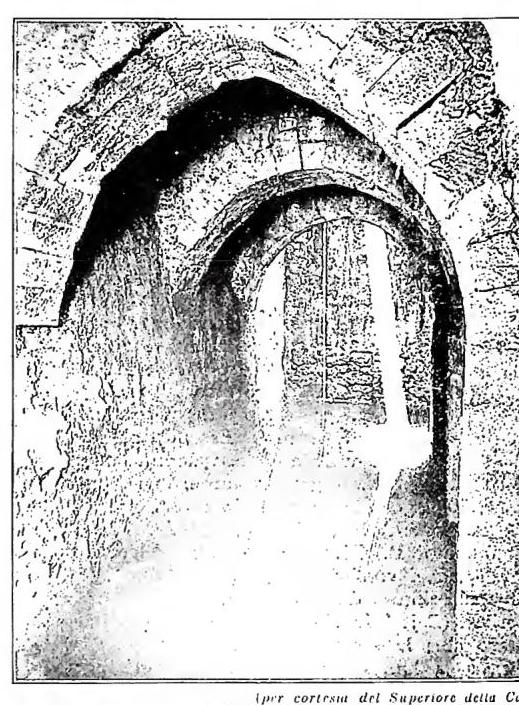
It is probably to be identified with the Roman-era pool discovered by C. Schick and excavated by M. Mauss (1871) and by the Bianchi fathers (1914). It is cut into the central part of the valley that runs obliquely through Bezeatha, 30 m north of the church of St Anne, on a rectangle measuring 120 x 60 m and 7-8 m deep. A transverse wall divided it so as to form two square pools of 48 m each, aligned north-south and communicating by a channel. The porticoes above it (6.20-6.50 m wide, with columns 8.47 m high and monumental entrances) thus amounted to five in number. “Ex voto” finds from the excavations attest that the healing virtue of the waters persisted in later times. The tradition (cf. D. Baldi, Enchiridion locorum sanctorum, Jerusalem 1935, pp. 573-91) also confirms the archaeological data. Under Bishop Juvenal (422-68), a one-aisled church with an apse was built on the western side of the transverse wall of the pool, dedicated to the paralytic; and toward the end of the 5th century the church of St Mary of the Probatica (about 45 m) was erected on the east side of the other pool, above the crypt that tradition identified as the house of the Virgin. Both were destroyed by the Persians in 614.
The claim of A. Loisy that the Bezeatha pool is a product of Johannine symbolism, referring to the books of the Pentateuch under whose shadow the Jewish people lived, is thus refuted by the archaeological evidence.