
BETHSHEMESH (Hebr. Béth-shemesh «house of the sun»). — Name of three Palestinian localities.
1. — A priestly city on the northern border of the tribe of Judah between Cheslon and Thamna (Jos. 15, 10; 21, 16), situated on Tell Rumjeleh (or 'Ajn Šems) at the confluence of the Wādi Bulos with the Wādi Surar (valley of Sōrēq).
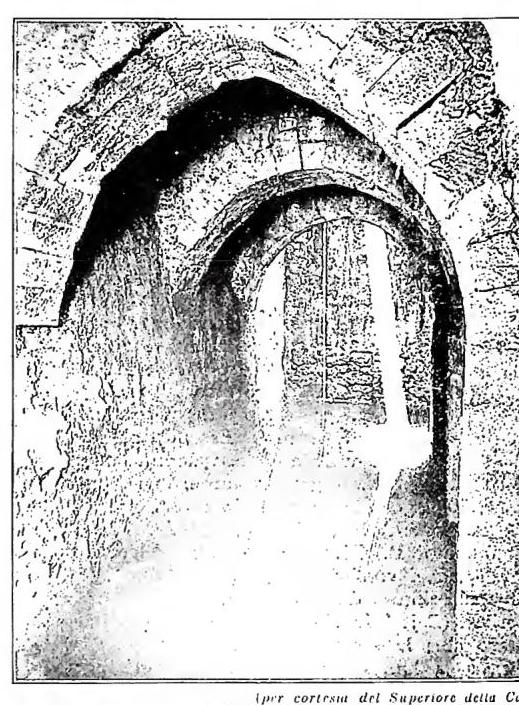
It was explored in 1911–12 by D. Mackenzie and in 1928–33 by E. Grant, who brought to light the Canaanite troglodytic layers (3000–1500 B.C.), Philistine (14th–12th centuries), and Israelite (11th–12th centuries). The city covered an area of 3½ hectares (200 × 150 m), like Jericho and Zakarijja, with strong fortifications; it appears to have been destroyed by fire twice. Two bāmōth (v. BRAHMÃ) were discovered: one in the city center with five maṣṣēbōth overturned and one broken; the other contained a well, pits, channels, maṣṣēbōth, figurines of Astarte, which was later replaced by a temple, along with Geometric and Mycenaean pottery. A tunnel for water supply outside the walls was also found. The Hyksos used B. as a supply center. Its golden age was during the 13th Dynasty. The Ark, returned by the Philistines to the Israelites, stopped at B. (1 Sam. 6), and Amaziah, king of Judah, was defeated there by Joash, king of Israel (2 Kgs. 14, 11–13; 2 Chr. 25, 21–23). Reoccupied by the Philistines under Ahaz, it remained abandoned from the time of the exile.
2. — A frontier city of the tribe of Issachar between Mount Tabor and the Jordan (Jos. 19, 22); it corresponds to the village of el-'Abedijjieh on the banks of the Jordan or to Hürbet Šemsin south of the Sea of Tiberias.
3. — A fortified city of the tribe of Naphtali (Jos. 19, 38; Judg. 1, 33), identified with Hürbet Šem'ah, 4–5 km west of Safed.
In Jer. 43, 13, «B. which is in the land of Egypt» is clearly Heliopolis in Lower Egypt, whose name is literally translated into Hebrew.