
BOLATICA, SCRIPT. — Also called *littera sancti Petri*, it is the conventional and characteristic script with which the papal bulls were written from the late 15th century to the 19th century, until its abolition ordered by Leo XIII with a *motu proprio* of 29 Dec. 1878 (*Acta Leonis XIII*, I, Rome 1881, p. 184: see example under the entry BOLLA).
It represents a derivation from Gothic minuscule, developed in the papal chancery and carried to an extreme stylization of chancery script, so much so that only a few initiates could write it and its reading was so difficult that a copy in ordinary script was attached to the document for the recipient’s understanding. As a graphic phenomenon, its formation and persistence can be explained by the common tendency of all sovereign chanceries to adopt their own type of script, which would be both decorative and a certain guarantee against easy forgeries.
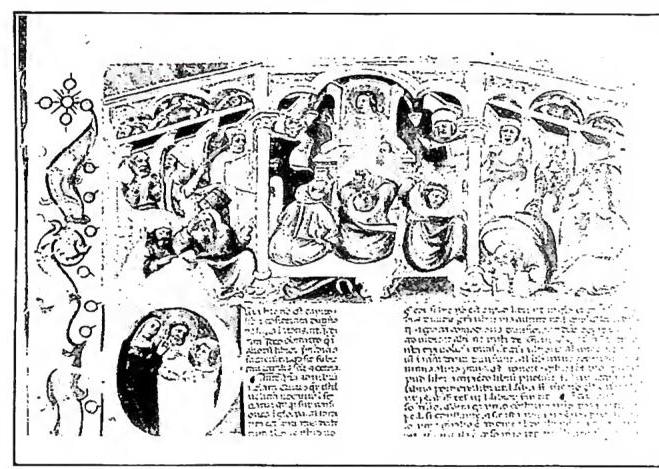
It is heavy in stroke, upright or slightly inclined to the left, with letters having detached strokes, exaggeratedly thick strokes, abbreviative signs sometimes long and conspicuous, sometimes thin and barely visible. Punctuation marks are absent. In the heading of the bulls, the Pope’s name and other initials are in large ornamental capital letters, accompanied by special floral decorations.