
new C. under the immediate jurisdiction of the Holy See. The founder nevertheless mitigated the external severities. Other, graver persecutions followed in the Veneto, provoked by the evil reports arising from the close collaboration, before the Council of Trent, between the Barnabites and the Angelics, and reinforced by the apostasy of the Angelic Paola Antonia Negri and by the condemnation of the Battista da Crema (v.), Zaccaria’s inspiration. As a result, the Barnabites were expelled from the Venetian dominion, and two of the most venerable among them, Fr. Besozzi and Fr. Melso, were confined in the prisons of the Inquisition in Rome (1551); but their virtue and the intervention of Roman friends, among them s. Ignatius and Card. Ghislieri (s. Pius V), commissary of the Holy Office, freed them from prison and from every accusation. On that occasion a protector was assigned to them, succeeded (1560) by Card. Serbelloni, the first name in the Order’s «Book of Benefactors»; but when he died (1591), no one succeeded him, because the new constitutions had by then established a procurator general
to represent the Barnabites in Rome. These constitutions, compiled by a commission of fathers and rendered into elegant Latin by Fr. Bascapè, promulgated by s. Charles at the General Chapter of 1579, and approved by Gregory XIII in the bull of 7 November of the same year, replaced those in Latin by fra' Battista, already dispersed in 1552, and those in an almost dialectal Italian by the holy founder, who had drawn them up from an initial outline or in collaboration with Fr. Da Crema and which were published by Fr. Premoli (op. cit. in BIBL., I, pp. 424–55). To the constitutions must be added the Regulae Officiorum and the Decreta et Monita of the General Chapters, as well as the Rules of the Lay Brothers and the Regulae Novitiorum. From 1608 the Order was divided into provinces. Provincials are elected for three years; local superiors for one year; the provost general for six years. Only the General Chapter has the authority to establish new constitutions. The habit is that of sixteenth-century clerics; the beard was abandoned in 1726.
They do not have an ascetic school of their own; but their spirit and doctrine are Pauline (cf. Doctrina s. Pauli in libros cost. distribut. by Fr. Gobio, Milan 1863), with a preference for s. Francis of Sales, their secondary patron. Nor do they claim a genuine pedagogical school, although their institutions have an unmistakable character and perhaps a method consisting in the «simple gentility of a well-ordered family» (I. Clerici, L'educazione della gioventù, private ed. 1942, p. 250); nor are they bound to a philosophical school, preferring instead a broad syncretism nevertheless inspired by s. Thomas. In short, their spirit embodies the Pauline admonition Omnia probate, quod bonum est tenete.
The founder’s premature death (1539), the particular character of the first persecutions, and the rigor of admissions—which led s. Alessandro Sauli (v.), even when he was s. Charles’s confessor and friend, to refuse the merger with the Humiliati and the consequent acquisition of their 90 wealthy convents—meant that the Order did not undergo broad and rapid development. In 1557 came the first foundation, at S. Maria di Canepanova in Pavia, followed by others in Italy, France, and
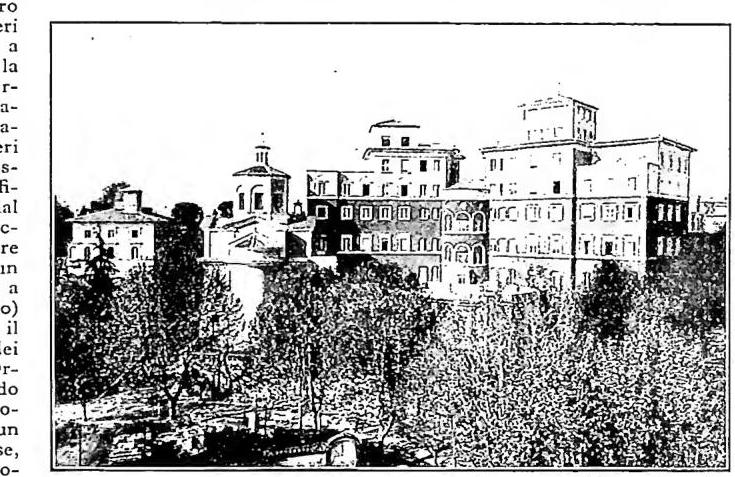
(courtesy of the pp. Barnabites)