
CONGREGATION OF ST PAUL (BARNABITES). — Founded in 1530 in ZACCARIA, SANTO (v.) together with Giacomo Morigia and Bartolomeo Ferrari, Milanese patricians. Their first residence was near the church of St Augustine, and they were approved by Clement VII on 18 February 1533; there also the first Angelicas of St Paul (v.) gathered. From September 1533 they were at St Catherine of the Smiths at Porta Ticinese, whence, after three years, they moved to St Ambrose, into the house left free by the Angelicas, who had settled in their convent of St Paul. The true mother house, however, remained St Barnabas, where they definitively established themselves in 1545 and from which they took the name Barnabites. Strengthened in spirit by their “spiritual conferences,” they went out into the streets of Milan to preach, more by the example of rigorous and even public mortifications than by deliberately plain words. Then came the “missions” outside Milan.
Soon difficulties arose: famous was the first, in 1534, provoked by the mortifications, which were denounced as hypocritical novelties and heretical before the Senate and the archiepiscopal Curia; but the bull of Paul III of 1435, confirming and extending the concessions of Clement VII, placed the new Congregation under the immediate jurisdiction of the Holy See. The founder, however, mitigated the external severities. Other, graver persecutions followed in the Veneto, stirred up by ill reports of the close collaboration, before the Council of Trent, between the Barnabites and the Angelicas, and fuelled by the misconduct of the Angelica Paola Antonia Negri and by the condemnation of the Battista da Crema (v.), inspirer of Zaccaria. As a result the Barnabites were expelled from Venetian territory and two of their most venerable members, Fr Besozzi and Fr Melso, were imprisoned in the Inquisition’s jails in Rome (1551); but their virtue and the intervention of Roman friends, among whom were St Ignatius and Cardinal Ghislieri (St Pius V), commissioner of the Holy Office, freed them from prison and from all charges. A protector was given them on that occasion, succeeded in 1560 by Cardinal Serbelloni, the first in the “Book of Benefactors” of the Order; but when he died in 1591 no successor was appointed, for by then the new constitutions had established a procurator general to represent the Barnabites in Rome. These constitutions, compiled by a commission of Fathers and rendered into elegant Latin by Fr Bascapè, promulgated by St Charles at the General Chapter of 1579 and approved by Gregory XIII with a bull of 7 November of the same year, replaced those in Latin by Fra Battista, already dispersed in 1552, and those in almost dialectal Italian by the holy founder himself, drawn up on a first draft or in collaboration with Fr Da Crema and published by Fr Premoli (op. cit. in bibl., I, pp. 424-55). To the constitutions must be added the Regulae Officiorum and the Decreta et Monita of the General Chapters, besides the Rules of the Lay Brothers and the Regulae Novitiorum. From 1608 the Order was divided into provinces. Provincial Superiors are elected for three years, local superiors for one year, and the Procurator General for six years. Only the General Chapter has the power to establish new constitutions. Their habit is that of the secular clergy of the 16th century; the beard was abandoned in 1726.
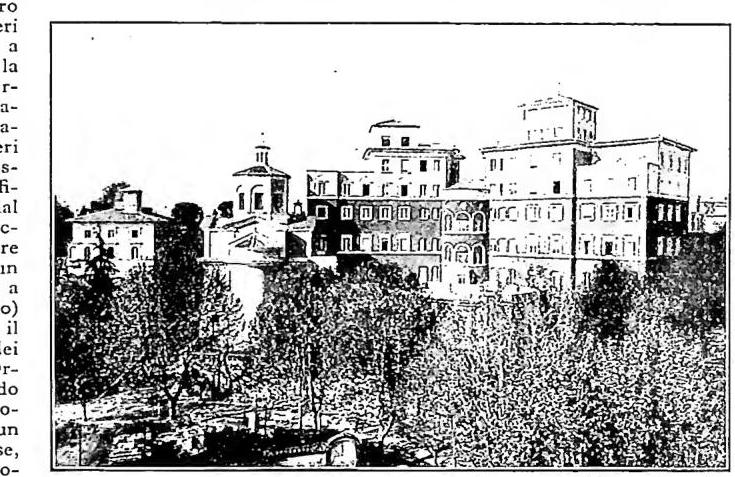
They have no distinctive ascetical school, but their spirit and doctrine are Pauline (cf. Doctrina s. Pauli in libro cost. distributa, by Fr Gobio, Milan 1863), with a preference for St Francis de Sales, their secondary patron. Nor do they claim a distinctive pedagogical school, although their institutes have an unmistakable character and perhaps a method in “the simple refinement of a well-ordered family” (I. Clerici, L'educazione della gioventù, private ed. 1942, p. 250); nor are they bound to any philosophical school, preferring a broad syncretism nevertheless inspired by St Thomas. In short, their spirit is the practical application of the Pauline admonition: “Prove all things; hold fast that which is good” (1 Thess 5:21).
The premature death of the founder (1539), the peculiar nature of the early persecutions, and the rigour of their admissions—so strict that even St Charles, their General, confessor and friend, and St Alexander Sauli (v.), refused the fusion with the Humiliati and the consequent acquisition of their ninety rich convents—meant that the Order did not enjoy wide or rapid development. In 1557 there was the first foundation at St Mary of Canepanova in Pavia, followed by others in Italy, France and Austria. In 1600 there was also the fusion with the few priests of the Annunziata of Pescia and the beginning, long contested and almost contrary to the letter of the constitutions, of a ministry more directly sacerdotal, namely the instruction of youth in public schools. Before then, only exceptionally had Bascapè allowed the admission of secular clerics into the Order’s private schools, and he had accepted from St Charles the direction of the seminary of Arona, soon abandoned. Then came the extern schools for nobles in Milan and other cities, for which the General Chapter of 1662 decreed the compilation of the Regulae (Externarum scholarium disciplina, by Fr Gorino, Milan 1665). Greater resistance, and never entirely overcome, was met by the boarding schools until 1689, when a three-year trial was granted, later confirmed, at Montargis; this was followed in 1723 by the college for nobles in Milan and subsequently by others.
In the 18th century the Barnabites were also among the infidels. Five Fathers, among the forty offered at the request of Clement XI (1715) to accompany Monsignor Mezzabarba on his legation to the Emperor of China regarding the Chinese Rites controversy, when that mission failed preferred, rather than abandon the field, to scatter throughout it: Fr Cesati in Cochin-China, Fr D’Alessandri in Tonkin, Fr Rasini in Canton, Fr Ferrari in Peking as philosopher at the imperial court, and Fr Calchi in the kingdoms of Ava and Pegu in Burma, which Benedict XIV entrusted definitively to the Barnabites in 1740. And it was a marvellous page of history, written for almost a century (until 1832) in the blood and sweat of a handful of heroic priests and scholars of languages and natural sciences. The 18th century was also the century of their greatest literary splendour.
Towards the end of the century and in the early 19th the Barnabites shared the fate of other religious institutes. After the Napoleonic suppression of 1810 only St Alexander in Milan remained. Through the efforts of the Fathers, later Cardinals, Fontana and Lambruschini, the Order was re-established in Rome (1814); in 1825, at the initiative of Fr Mantegazza and through the generosity of Count Andreani and Marquis Arconati Visconti, St Barnabas and the Carobbio were redeemed from the state. Notable in the 19th century was the work of Frs Redolfi and Villoresi for the oratories, and of the Apostleship of Prayer introduced into Italy by Fr Maresca and directed for fifty years, until 1916, by the Barnabites, with the journals Il Messaggero and Il Devoto. The restoration in France in 1857 is linked to the work of Fr Schouvaloff, taken up by Fr Tondini, for the conversion of Russia, and of Frs Moro, Tondini and Almerici for missions in Sweden and Norway (1864-80). The new expulsion under the Waldeck-Rousseau laws (1901) opened the way to foundations in Belgium and Brazil. At present the Order has houses in Italy, France, Belgium, Brazil, Chile and Argentina, divided into provinces, to which must be added the mission of the Guamà (Upper Brazil) and the chaplaincy of the Italian Legation in Kabul (Afghanistan). They engage in sacred ministry in parishes and shrines, but especially in the education of youth through oratories, Catholic Action associations, boarding schools and extern schools (Alla Querce in Florence, St Louis in Bologna, Carlo Alberto in Moncalieri, B. Bianchi in Naples, etc.).
Many were the religious illustrious for holiness: St. Anthony Mary Zaccaria, St. Alexander Sauli, Bl. Francis Xavier Bianchi (v.); the Venerable Castelli and Canale; the co-founders, Basca-pè, Dossena, Pagni, Recrosio, Redolfi, etc.; for ecclesiastical dignities: Cardinals Gerdil, Fontana, Lambruschini, Bilio and others; the bishops: C. Bascapè, “the St. Charles of Novara,” Guérin, friend and successor of St. Francis de Sales, Giarda, martyr of obedience to the pope, Nerini, martyr of chastity in Burma, Recrosio, apostle of Nice, along with many others; for diplomatic roles: Boerio, Mazenta, Corona, Parravicini, Pentorio, Asinari, Gorini, Boldoni, Rossi, Gattinara, Grandi; for sciences, letters and art: Bellarini, Venerio, Rossignoli, Rotario, Giribaldi, Gerdil, Semeria, Canale, Griffin, Quadrupani, Teppa, writers on ascetics; Corio and Vercellone, biblical scholars; Tornielli, historian, and Gavanto, liturgist, in whose memory, by papal privilege, a Barnabite sits ex officio among the consultors of the Sacred Congregation of Rites; Baranzano, Pini, Gerdil, philosophers; Asquini, Caronni, Ungarelli, Bruzza, archaeologists; De Regis, Frisi, Mariano Fontana, Configliacchi, Cavalleri, Denza, Bertelli, physicists and mathematicians; Rosasco, Corticelli, Branda, Venturini, Notari, Niceron, Boffito, literary figures and bibliographers; Sacchi, musician; Mazenta and Binago, architects.
The Barnabites’ coat of arms consists of three mountains surmounted by a cross flanked by the initials of the Apostle Paul, beneath which, at times, are the intertwined sword and palm and the Pauline motto: *An gladius*? The principal archives are in Milan, S. Barnaba (Mother House), and in Rome, S. Carlo ai Catinari. In the latter is the iconographic collection in the two great Atlases compiled by Fr. Vercellone. - See pl. XIV.
CONGREGATION OF ST. CATHERINE OF SIENA OF THE SISTERS OF THE THIRD ORDER OF ST. DOMINIC IN SOUTH AFRICA. - Under this name must be understood the union of six already existing Congregations of Dominican tertiaries, five of which are in the Union of South Africa, with their respective Mother Houses in Cape Town, King William’s Town, Newcastle, Oakford, Port Elizabeth; the sixth with its Mother House in Salisbury (Southern Rhodesia).
This union, promoted by the Sacred Congregation for the Propagation of the Faith, was approved by Pius XI (16 Nov. 1922), who wished it to be dependent on the same dicastery, although the Congregation was not properly to be considered of pontifical right. The first constitutions, examined by Propaganda, were introduced by the Apostolic Delegate, then re-examined and approved *ad septennium* by decree of 20 Nov. 1926. Subsequently, the various original nuclei resumed their autonomy, and at present all depend on the Sacred Congregation of Religious, except for the Congregation of Salisbury, which depends on the Sacred Congregation for the Propagation of the Faith.