
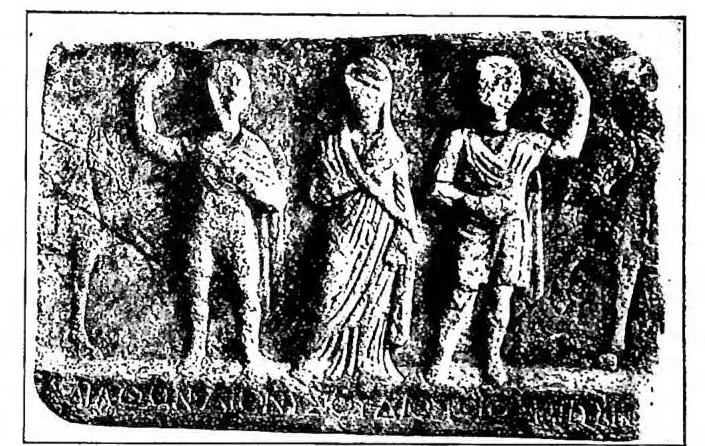
DIOSCURI (Διοσκουροι). — Greek deities: they were twins, Castor and Pollux, young and handsome, sons of Zeus and Leda, brothers of Helen, but according to others only Pollux was a son of Zeus and immortal.
Their nature is debated: they would be gods of light, or of light and darkness, or two heroes of Laconia substituted for the twins of Zeus, or domestic Mycenaean deities of the kings of Sparta. Their cult is especially localized in Sparta and its territory (famous the sanctuary of Therapne) and in its colonies. From Sparta come numerous reliefs depicting the D. on either side of a female xoanon, with a high polos on her head and torches in her hands, an evident depiction of Helen. Outside Sparta the D. have been substituted for pairs of local deities; in historical times they often merged with the Cabiri, the Curetes, the Corybantes, etc. For Homer, Castor was a tamer of horses, Pollux the inventor of boxing. They were saving gods in the dangers of war, of travel, of the sea, of diseases. Their symbols are the σκάνοι, of uncertain meaning, horses, or two amphorae, two stars, two Phrygian caps. Widespread among the myths about the D. are their participation in the expedition of the Argonauts and the rape of the Leucippides.