
EXPRESSIONISM. – This term designates an artistic movement which, in the field of painting, acquired definite orientation and programmatic manifestations at the beginning of our century in Germany. These manifestations were produced by the painters of the group known as “Die Brücke,” founded in Dresden in 1903, followed by the “Berliner Sezession” and the “Neue Sezession.”
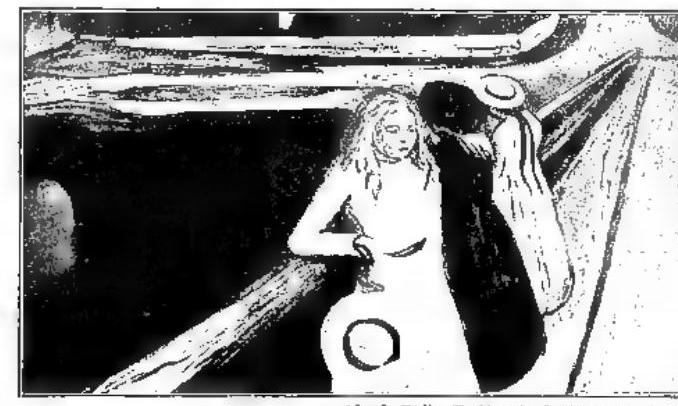
However, some works by the Norwegian Edvard Munch, painted in the last decade of the 19th century, already contain elements characteristic of what is understood as the poetics of expressionism, unless one wishes to recognize such elements, as some do, in the painting of van Gogh; but the antecedents are numerous and distant and may also be connected to Eastern art, to Assyro-Babylonian sculpture, to the barbaric idols of Negro tribes, and so forth.
The poetics of expressionism asserts conceptions diametrically opposed to those of impressionism (q.v.), which wages its battle in the name of sensible truth. Indeed, expressionism seeks to convey not so much the impressions of the external world—thus objective impressions—as the movements of the spirit, that is, subjective impressions, rendered through an exaggerated vision of form, which is accentuated, i.e., deformed, in its characteristics so that the state of mind associated with those movements of the spirit may be manifested in the work. The ancient laws of painting and sculpture are thus rejected, and from this derives the deformation of images that express, through marked signs and ashen colors, sentiments that are almost always violent or tragic, often turbid.
At the beginning of the present century, the largest group of expressionist painters can be found in Germany among the members of the aforementioned groups; they include E. Heckel, E. L. Kirchner, K. Schmidt-Rottluff, E. Nolde, M. Pechstein, A. Macke, and H. Nauen. In France, among the numerous painters who may be considered expressionists, G. Rouault stands in the foreground. In Italy, apart from A. Modigliani, who lived almost always in France and participated very actively in the artistic movement of that nation in the first two decades of the century, Gino Rossi, Gino Bonichi (known as Scipione), and Lorenzo Viani may be linked to the expressionist movement in certain aspects of their painting.