
**FOFPA, VINCENZO** – Painter, born in Brescia c. 1427, died in the same city in 1515 or 1516. He may have first trained in the workshop of the Bembo family. Although Brescia later came under the stylistic influence of Jacopo Bellini and Mantegna, it developed its own pictorial language, characterized by great monumentality, strong chiaroscuro, and a purity of design almost akin to sculpture. For over thirty years he lived in Pavia, where he had moved with his family in 1456.
From that same year dates the dramatic *Crucifixion* in the Carrara Gallery in Bergamo, his first signed work. He then worked in Milan, executing for Francesco Sforza in the Medici Bank the large fresco *The Justice of Trajan*, of which only preparatory drawings survive (Federico Museum in Berlin; Ashmolean Museum in Oxford), and frescoes for Pigello Portinari depicting *Stories of St. Peter Martyr* and *The Four Doctors of the Church* in the Portinari Chapel, begun by Michelozzo in 1462 and completed in 1468 in S. Eustorgio. Only recently has this cycle of frescoes been attributed to Foppa and is now considered one of the most important ensembles of his career. In 1475 he painted the large altarpiece for the church of S. Maria delle Grazie in Bergamo, now in the Brera Pinacoteca, and in 1485 two frescoes, one depicting *The Madonna and Child with Sts. John the Baptist and John the Evangelist* and the other *The Martyrdom of St. Sebastian*, both now in the same gallery, having come from the demolished church of S. Maria di Brera. Works by Foppa, regarded as the founder of the Milanese school, are preserved in the Sforza Castle in Milan and in museums in Berlin, Glasgow, and London. He had several pupils, including Bergognone and Vincenzo Civerchio, and exerted a great influence on Butinone, Zanale, Zanetto Bugatto, Bonifacio Bembo, and Ludovico Brea. According to Lomazzo, he may also have written a treatise on perspective.
---
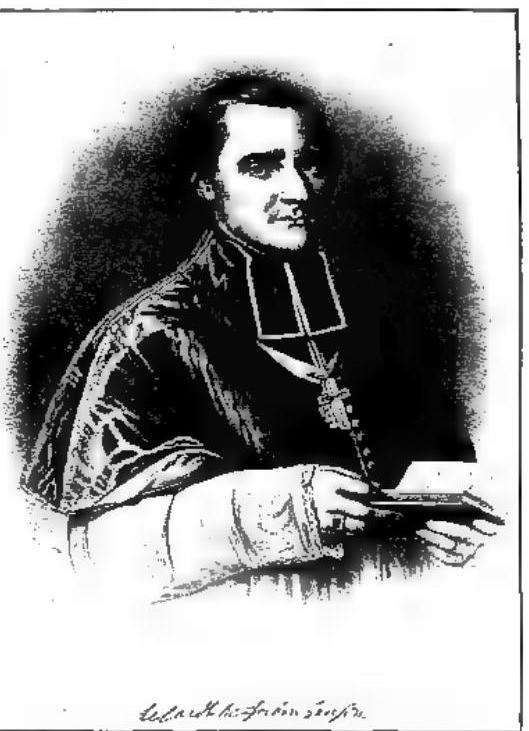
**F.-Y., PARISI.** In 1830, Bishop F. was forced to leave Nancy and go to Rome. He tried to return to his see, but it was not possible. Far from his pastoral duties, Bishop F. assisted Pauline Jaricot in developing the *Society for the Propagation of the Faith* and maintained an intense correspondence with missionaries. With the approval of Gregory XVI, in 1839 he traveled to North America, preaching among French-origin Catholics. From May 16 to 24, 1840, he participated in the Fourth Provincial Council of Baltimore. From Baltimore he went to Canada. On December 8, 1841, he embarked for France and the following year returned to Rome to report to the Pope on his work in America. Gregory XVI appointed him assistant to the papal throne. However, he died at the family estate of Aygalades near Marseille.