
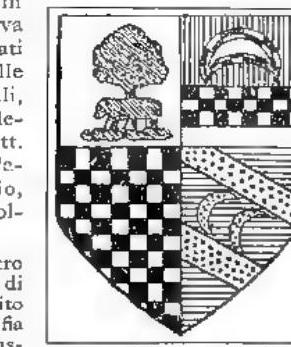
FRANCESCO ORAZIO da PENNABILLI. — The most illustrious Capuchin missionary to Tibet, born in Penna-babili (Pesaro) in 1680, of the Olivieri family, entered the Capuchins of the Picene province on 8 Nov. 1700, died at Patna (Nepal) on 20 July 1745.
With five other confreres he formed the third Capuchin missionary expedition to Tibet, which departed on 25 Aug. 1712; he reached Chandernagor (Bengal) on 1 Sept. 1713 and proceeded to Patna (Bihar); in Dec. 1714 he was sent to found a station in Nepal; on 4 Aug. 1716 he set out for Lhasa, capital of Tibet, arriving there on 1 Oct. of the same year. Appointed Prefect of the mission in 1720, he received the decree on 15 Sept. 1725. Exhausted by hardships and difficulties, he retired to Nepal in Aug. 1732.
In 1737 he came to Rome seeking aid and published the interesting Breve ragguaglio dell'operato da Cappuccini nella missione del Tibet (Rome 1738; cf. Analecta Ordinis Min. Capuccinorum, 37 [1921], pp. 285-94; 38 [1922], pp. 57-61), which was reprinted and translated several times. In 1738 he led the ninth Capuchin expedition to the difficult mission in Tibet, including Fr. Beligatti Cassiano da Macerata and Fr. Bernini Giuseppe da Gargano, arriving in Lhasa on 6 Jan. 1741. Reduced to the limits of endurance and expelled by persecution on 20 Apr. 1745, he departed for Patna, marking the end of the properly so-called Tibetan mission. He wrote another Relazione sul principio e stato presente della missione del gran Tibet (Rome 1742, cf. Analecta cit., 4 [1888], pp. 270-283, 315-19, 340-43).
He also distinguished himself in literary work; skilled in the local languages, he left in manuscript the first Italian-Tibetan Vocabulary, of about 35,000 entries, and an Italian-Hindu Vocabulary. To facilitate knowledge and refutation of Buddhist religion, he translated into Italian various sacred books of the Lamas. He translated into Tibetan the Doctrine Christiana of St Robert Bellarmine, the Thesaurus religionis Christianae of Tourlon, as well as the Gospels and the Acts of the Apostles; he also composed in Tibetan an Apologia of Christianity against Buddhism, which he presented to the king in 1713, and a Life of the Blessed Virgin Mary. His linguistic and ethnographic manuscripts were used by other authors.