
FULDA, prince-bishopric of. — In Germany, a suffragan of Paderborn, it has an area of 19,958 sq. km., 3,603,800 inhabitants of whom 838,580 are Catholic, 465 churches, 284 parishes, 394 diocesan priests, 97 regulars, 144 seminarians, 16 male religious houses with 121 professed, 16 female religious houses with 2,072 professed, 315 charitable institutions with 8,000 inmates (1948).
On 12 March 744 Sturmius (abbot 744–79), at the request of his master St Boniface (v.), founded a monastery at F. which was richly endowed by Carloman, Mayor of the Palace of the Franks. Pope Zachary (741–52) granted it exemption from all episcopal authority. After the death of St Boniface (754), who was buried there, the monastery developed rapidly and a great basilica replaced the primitive church (780–807). The school, founded by Sturmius, was famous and produced many distinguished men: Eigil, Rudolf of F., Walahfrid Strabo, Servatus Lupus and others. Equally important was the library, whose treasures were dispersed during the Thirty Years’ War. In 969 John XIII granted the abbots primacy over all abbots in Germany and Gaul. From the 10th century these abbots were imperial chancellors of the Empress and from 1289 bore the title of prince.
During the Peasants’ War the abbey’s territories were terribly devastated. The “Reformation” penetrated the region and Abbot Balthasar of Dembach (1370–1606) vigorously promoted the Catholic Reformation by summoning the Jesuits to F. (1671) and uniting the seminary with their college (1584). Only after the Peace of Westphalia (1648), given the resistance of the nobility supported by neighbouring Protestant princes, could the Catholic restoration be completed. With the bull In apostolicae dignitatis apice of 5 October 1753 Benedict XIV erected F. into a diocese, which was secularised together with the abbey in 1809. Pius VI, establishing the ecclesiastical province of Upper Rhenish, with the bull Provida solersque (16 August 1821) defined the boundaries of the new diocese, which included the Electorate of Hesse and a large part of Thuringia. These were slightly modified by the Prussian Concordat of 14 June 1929. Since 1867 F. has been the seat of the annual Cispadane conferences.
The most celebrated abbot is the Blessed Rabanus Maurus (822–42), “preceptor of Germany”; under him the school reached its greatest splendour and he may be considered the creator of the German humanistic school. In modern times Bishop Georg von Kopp (1881–87) rendered great services; he was appointed after an eight-year vacancy due to the Kulturkampf. In 1886 he reopened the theological college, closed in 1875.
Prince-Abbot Adolph of Dalberg (1724–37) founded a university (1733) which was suppressed by William Frederick of Orange-Nassau (1805). The present library, founded in 1771 by Bishop Heinrich von Bibra (1759–88), is rich in precious manuscripts.
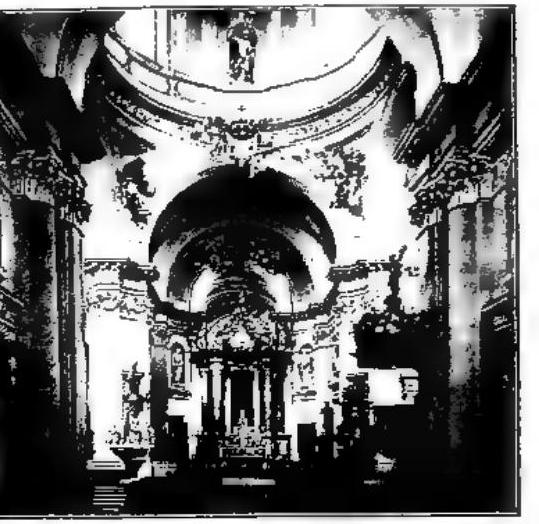
The cathedral, built by Johann Dientzenhofer (1705–12) during the reign of Abbot Adalbert of Schleifras (1700–14), is a combination of central and basilican structure with Baroque elements.
II. Writings
The attribution to F. of the Mythologiae, which allegorically explain myths, and of other profane works, due to a certain Fulgentius of Africa, does not seem well founded. The writings certainly his are polemical-dogmatic treatises, letters and sermons.In various treatises he combats Arianism: a) Contra Arianos liber unus, a brief reply to ten objections of Trasamund on the doctrine of the Trinity; b) Ad Thrasamundum regem Vandalorum libri tres, a reply to new questions, especially on the Incarnation and Redemption; c) Contra sermonem fastidiosi Ariani ad Victorem liber unus, on the Trinity and the Incarnation, written in very lively style after his return from exile against a monk and Catholic priest who had turned Arian; d) Contra Fabianum libri decem, in which he refutes a false account of a disputation he is said to have had with that Arian; only 30 fragments remain; e) De Trinitate ad Felicem notarium liber unus; f) De fide, seu de regula verae fidei ad Petrum liber unus, almost a manual of Catholic doctrine; g) De Incarnatione Filii Dei et vultum animalium auctore ad Scarilam liber unus, on two disparate topics; h) Psaltus abecedarius. Lost are: Adversus Pinnam (an Arian bishop) liber unus; De Spiritu Sancto ad Abraam presbyterum commonitorium brevissimum. Against Semi-Pelagianism: a) Ad Monimum libri tres, a reply to various questions on predestination, sacrifice offered to the Trinity, the Holy Spirit, St Paul’s counsel on virginity, and the text “Et verum erat apud Deum”; b) De veritate praedestinationis et gratiae Dei ad Felicem et Venerium libri tres, a precise exposition of Augustinian doctrine; c) De remissione peccatorum ad Euthymium libri duo, less directly connected with the Semi-Pelagian controversy, explains what constitutes the remission of sins and how it is obtained. Lost are the Contra Faustum Reiensem libri septem against the writings of the Semi-Pelagian bishop of Riez, sent to F. by monks from Constantinople. The Epistolae comprise 18 letters, five of which are by correspondents, on dogmatic topics: on various objections of the Arians (8); on the fate of a catechumen baptised after losing consciousness (12); on various Trinitarian and Christological questions, exegesis (14), on grace and human will—the same subject as De veritate praedestinationis; a collective letter of the African episcopate in exile in Sardinia (15); on the Incarnation and grace, to the Scythian monks, also collective (16); on the Aphthartodocetism (v. 18). Moral-exhortatory in character are: on the vow of continence taken by married persons (1); on virginity and humility (3); on prayer and compunction (4); on charity (5); on conversion (6); on penance and future reward (7); the second is consolatory.
The authentic sermons, about a dozen in number, include exegetical homilies, panegyrics and moral discourses; he also composed sermons to be delivered by others. In his oratorical style F. follows in the footsteps of Augustine, though remaining far below him in depth of thought and liveliness of tone, through his constant use of parallelism, especially antithetical, with final assonance—a characteristic, moreover, of most Christian oratory of these centuries. Stiglmayr attributes to F. the Quicumque vult.
III. Doctrine
The historical significance of F. does not lie in the value of his speculation but in the fidelity with which he expounds, defends and disseminates Augustinian doctrine.### Most Holy Trinity
As regards the Trinity, he was compelled by practical necessities to refute the objections of a surviving Arianism, a task that had been admirably accomplished by the great masters of the 4th century. He does not follow Augustine in speculative depth, which did not arouse the interest of his opponents. His Christology is expounded with the precision that the disputes of the 5th century had brought to it, and in close relation to soteriology. In the doctrine of Grace, F. remains rigorously faithful to his master, even in those parts that were not accepted into common doctrine. He teaches, therefore, that in the Trinity there is an identity of nature and a diversity of persons (C. Ariana, I; C. sem. fastid., 7-9); the attributes of one person are proper to the others as well, except for the relative properties pertaining to the terms of Father, Son, and Holy Spirit (Ep. 14, 2-14). The Church invokes and offers sacrifice to the whole Trinity (C. Fab. frg. 31, 34). The Son is begotten according to eternal birth from the Father, created according to temporal birth from a handmaid (C. Ariana, 3; De fide, 7-24; Ad Thrasann., 11, 6), equal to the Father (C. Ariana, 5, 6, 8; C. Fabriann., frg. 36), not only with the Father but in the Father, as the word in the mind, as counsel in the heart (Ad Monium., III), as the Father is immense and eternal (Ad Thrasann., II), distinct from the Holy Spirit (C. Ariana, 7), who is God, equal to the Father and the Son (ibid., 10; Ad Monium., II, 6-12; C. Fab., frg. 25-27; Ep. 14, 35-38). In Jesus Christ there are two natures in one person (Ep. 8, 26; Ad Thrasann., I, 8-20; III, 2, 6-7, etc., 16). The Word became flesh not only in the Virgin but from the Virgin (Ep. 17, 5), who conceived and gave birth to the very Word of God, inasmuch as He took flesh from her (ibid., 9), with virginal conception and birth (ibid., 12). God was not confused with man, and thus the divine nature remained impassible (Ad Thrasann., III, 1-2; C. sem. fastid., 11-20). It must nevertheless be said that one person of the Trinity suffered (Ep. 17); one can say that the divinity of Christ suffered, implying “in the flesh” (Ep. 14, 15-24). The soul of Christ has full knowledge of His divinity (ibid., 26-31), and is perfectly incorruptible; His body is weak and subject to death (Ep. 18, 9). Only the Son became incarnate (De Incarn., 1-23). God predestines the elect to glory and justice, the reprobate to punishment but not to sin; divine punishment strikes the evil works of the sinner, which proceed from pride; in this, God does not force the human will (Ad Monium., I, 7, 13, 22-25). Predestination is purely gratuitous, as shown by the example of infants who die at birth (De verit. praedest., I, 1-30), who will also pass into eternal fire, though with much lesser punishment than adults (ibid., 31; De fide, 68). Predestination is immutable and eternal (De verit. praed., III, 1-7, 13-14), but does not exclude prayer and good works (ibid., 9-12; De fide, 40-44). The universal salvific will of God is to be understood only in the sense that God drew the elect from all nations, ages, and classes (De verit. praedest., III, 15, 15). Predestination shows God’s mercy toward the elect, without which one could accuse Him of injustice toward the others; in any case, it is an inscrutable mystery (ibid., I, 28).
### Grace and Redemption
Angels and men received from God at creation the gift of eternity and beatitude (De fide, 30). These gifts were lost through the sin of Adam, which passes to every man through generation, inasmuch as it is accompanied by unruly concupiscence; but F., like Augustine, is uncertain whether one should therefore admit traducianism (De verit. praed., III, 28-38). The Son of God became man to know blood so that men might obtain the remission of sins (De verit. pec., I, 4-10). Only the personal unity of the Word with human nature could bring about Redemption (Ep. 17, 9). Grace is purely gratuitous; God has all the initiative in the action of man, giving him faith, placing good will within him, aiding him to overcome concupiscence, and bringing him to perseverance (Ep. 17, 47 and 67; Ad Domin., I, 7-16; Ep. 15, 2-5; Ep. 6, 12; De fide, 73). It is not given to all, just as faith is not given to all (De verit. praed., I, 32, 40-47; II, 1-29; Ep. 15, 10). Grace does not destroy free will in the good or the wicked (De verit. praed., II, 18, 30), yet the sin of Adam has weakened it (ibid., III, 24-27; Ep. 15, 16). Prayer is necessary to obtain Grace (Ep. 2, 36-37; Ep. 4). To obtain the remission of sins, faith, conversion of heart, penance, and good works are necessary (De verit. pec., I, 8-15; Ep. 15, 11). Sins are remitted only in this life (De verit. pec., I, 6; II; De fide, 36-40). Our sanctification is the work of the whole Trinity (Ad Domin., II, 11); through Grace we are children of God (ibid., III, 8) and temples of the Trinity (Ad Thrasam., 3, 35). Sins are remitted and the path to heaven is walked only in the Catholic Church (De verit. pec., I, 6, 16-29; De fide, 37), where the gifts of the Holy Spirit are obtained and a free sacrifice is offered to God (Ad Domin., II, 12), where Baptism is efficacious, while the Baptism of heretics, though valid as a Sacrament, does not bring salvation (De fide, 41-42; 77; 78).
### Moral and Ascetic Teaching
Sins are either light or grave; the latter are divided into sacrilege (against God), flagitia (against oneself), and facinora (against one’s neighbor); virtues are likewise divided into three categories: sobriety, justice, and piety (De Incarn., 36-56). Virginity, voluntary and supererogatory (Ad Domin., II, 13-15; De fide 43-44), is the greatest of all gifts and includes the integrity of body and soul (Ep. 3, 1-12). Yet the virgin would not be the spouse of Christ without unity (ibid., 23-38). The use of marriage is lawful; a spouse cannot bind the other with a vow of continence (Ep. 1, 11-18). Charity surpasses all temporal and spiritual gifts (Ep. 5, 1), avoids present sins, and obtains forgiveness for past ones (Ep. 7, 1-9).