
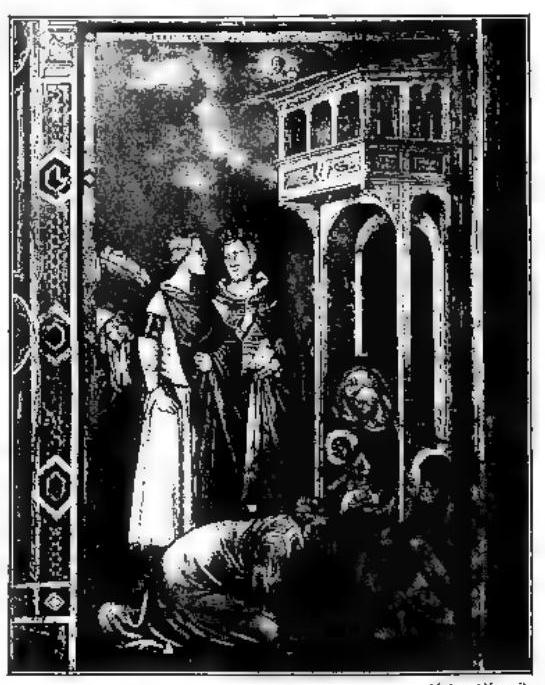
GADD, TADDEO and AGNOLO. – Florentine painters of the 14th century. TADDEO (recorded for the years 1327–66) was a pupil of Giotto and, in a certain sense, the most faithful follower of the Giottesque school.
In the frescoes of the Baroncelli Chapel in Santa Croce (1322–38), in the stories on the wardrobes of the sacristy of Santa Croce (now in the Accademia), in the frescoes of the refectory of Santa Croce, in the vault of the apse of San Francesco in Pisa (1342), etc., he applies himself to a translation of Giotto’s tightly woven drama into a calm narrative style, enriched with illustrative details and an emphatic and pious tone (he had friendly relations with the Blessed Simone da Cascia). A search for monumentality on the scale of Giotto’s work is evident in his panels (polyptychs of San Giovanni in Pistoia and of Santa Felicità in Florence, the Madonna of 1355 in the Uffizi, etc.); a more intimate accent, with Sienese coloristic inflections, appears in some of his later works, such as the roundels in the vault of the crypt of San Miniato and the Madonna della Villa delle Rose. The frescoes in the Camposanto of Pisa with the Stories of Job, attributed to him by Vasari, on the other hand, display a new breadth of landscape and a fantastic richness of color, sustained by fervent inspiration, which make one doubt the traditional attribution.
AGNOLO, his son (active from 1360, d. 1396), had a more delicate artistic temperament and, in contact with various currents of advanced Gothic art, developed a language that stands as the liquidation of the Giottesque academy and the beginning of the International Gothic style. In the frescoes of San Piero in Palco, in the series of early panels (Galleria dell’Accademia in Florence, Vatican, Fideldi, London), but especially in the autograph parts of the frescoes in the choir of Santa Croce (c. 1380), the Castellani Chapel, and the Chapel of the Holy Girdle in the Prato Duomo (1392–95) – executed with extensive collaboration from assistants of varying skill – he succeeded in expressing himself in a subtly rhythmic language of fluid line, clear color, open and indefinite compositions, having courageously abandoned the plastic grammar and the syntactical constraints of Giottism. Qualities that weaken, however, in the master’s last panels, such as the altarpiece of San Miniato (1393–96) and the predella in the Louvre.