
**GIOVANNI GUALBERTO**
Among his notable deeds are his military skill and his swift action against the assassins of his father, as well as his victory over Cendebeo (ibid. 16, 9). In 135-34 B.C., he succeeded SIMONE, who had been killed along with his other two sons. From the outset, G. was involved in military actions, first against Ptolemy, the murderer of his family, and then against the Seleucid king Antiochus VII.
Both enterprises proved difficult. However, with the threat of Roman intervention on his behalf—an inference that may be drawn from uncertain notices in Flavius Josephus (Antiq. Iud., XIII, 259-66; cf. XIV, 143 ff., 247 ff.)—G. managed to secure terms not overly harsh from Antiochus VII, who sought to secure his southern flank before advancing against the Parthians in the northeast of his kingdom. The recognition of Seleucid overlordship lasted only briefly, for after the death of Antiochus VII, during the decline of the Greek kingdom, it was easy for G. I. to declare himself practically independent (op. cit., XIII, 273). Indeed, he was able to launch his expansionist campaigns against Idumea, Transjordan, and especially against the Samaritans, whom he destroyed the temple on Mount Ga-rizim. In addition to a nationalistic motive, G. I. also aimed at the spread of pure Yahwism, which he often sought to propagate by force, as when he compelled the Idumeans to undergo circumcision and adopt Jewish rites (loc. cit., 257-58).
Internally, the kingdom of G. I.—which must have been very prosperous—was marked by the exacerbation of the divergences between the two antagonistic ideological currents, the Pharisees and the Sadducees. According to Flavius Josephus (loc. cit., 288-98), G. I., who professed the ideas of the Pharisees, suddenly switched to the opposing sect and persecuted his former friends. This change was probably due to the covert opposition of the Pharisees, who disapproved both of G. I.’s impulsive and secular character and of the union of the high priesthood with civil power, as well as of his policy toward foreigners, who were even admitted into the ranks of the Yahwistic army (loc. cit., 248-52).
---
**GIOVANNI LEONARDI, Saint**
Founder of the Order of the Clerics Regular of the Mother of God, born in Diecimo (Lucca) in 1541 (or 1543 according to others), died in Rome on 9 Oct. 1609. After his early studies in the village of Villa Basilica, where he also donned the clerical habit, he was sent by his father to Lucca in 1561 to learn the profession of pharmacist. He practiced this trade for several years, that is, until his father’s death, when he was able to resume the ecclesiastical habit, though he was already 26 years old. In 1573 he was ordained a priest, having had as his theology teacher the Franciscan Prospero Pampaloni, who had been a theologian at the Council of Trent. In Lucca, L. dedicated himself to the education and instruction of the young people of the common folk, founding a “Company of Christian Doctrine.” Then, in 1574, he began a “Congregation of Reformed Priests,” first called the “Secular Clerics of the Blessed Virgin” and later the “Clerics Regular of the Mother of God.”
The first companions of L., who assisted him in the founding of three other institutions—one in Lucca, another in Pescia, and a third in Pistoia—were the Venerable Giov. Battista Cioni and Cesare Franciotti. In 1584, returning from the sanctuary of Loreto, he stopped for some time in Rome, where he was hosted, along with some of his religious who had accompanied him, by St. Philip Neri in San Girolamo della Carità. In 1592, Pope Clement VIII sent him as apostolic commissioner to the sanctuary of the Madonna dell’Arco near Naples.
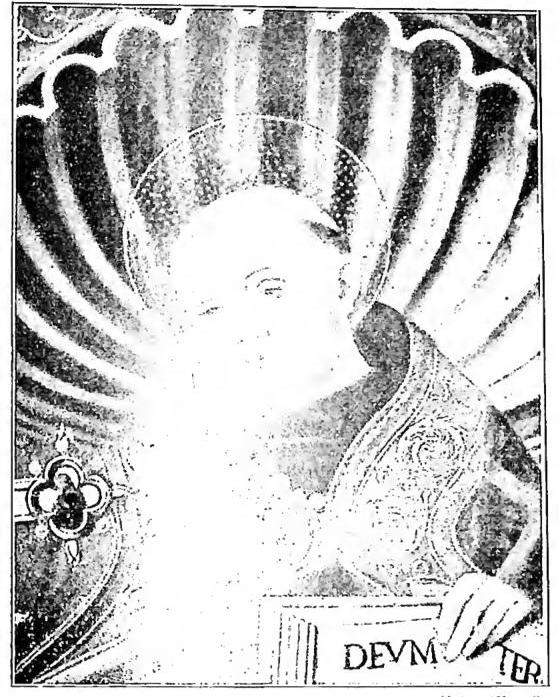
From every quarter people of different conditions came to receive his advice and spiritual direction. He spent most of his time in the confessional, also occupied with explaining catechisms and delivering Sunday homilies. A model of parish priests for his simple humility and apostolic zeal, he was beatified by Pius X on 17 Apr. 1904 and canonized by Pius XI on 31 May 1925. Proclaimed patron of parish priests by Pius XI with the apostolic letter Anno Iubilari of 23 Apr. 1929 (AAS, 21 [1929], pp. 312-13).
---
**GIOVANNI MATTEO CARYOPHYLLIS (CARIOFILLI):**
See **CARIOFILLE, GIOVANNI MATTEO**.