
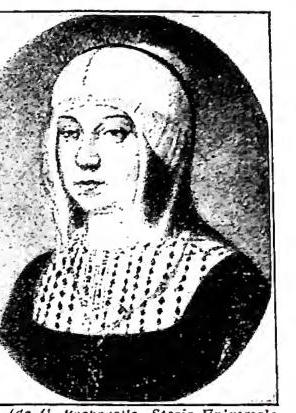
ISABELLA II, Queen of SPAIN. – B. 10 Oct. 1830 at Madrid, d. 9 Apr. 1904 at Paris. Daughter of Ferdinand VII and Maria Christina, she lost her father at the age of three. Ferdinand VII, before his death, had promulgated the “pragmatic sanction,” securing the succession for his daughter, an act that met with the hostility of his brother Charles, who, at the King’s death (19 Sept. 1833), considered himself aggrieved in his legitimate rights. Maria Christina, who had been appointed regent, thus found herself embroiled in a civil war that lasted nearly seven years (from 1833 to 1839). Having reached her majority in 1843, the internal situation of Spain did not improve.
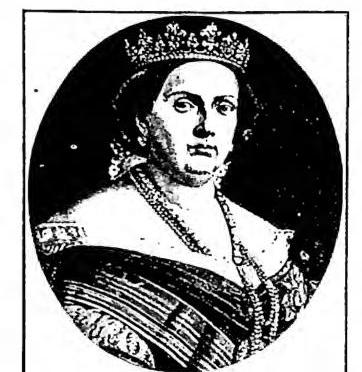
The personal ambitions of politicians and generals prevented the formation of any stable government, nor had the hopes of the Carlists to seize the throne definitively faded. The solution to the dynastic problem, after Don Carlos’s renunciation in favor of his son Don Carlos Luis, Count of Montemolin, who assumed the name Charles VI, seemed imminent, but the project of a marriage between the latter and Isabella encountered not only the hostility of the liberals but also that of certain foreign powers (France, England), so that the pacification between the two factions could not take place. The marriage contracted in 1846 by Isabella with the Duke of Cadiz, a union favored and desired by the courts of London and Paris, ran counter to the expectations and even the wishes of the Catholic Church. Immediately after the death of Ferdinand VII, relations between the Spanish government and the Queen on one side and the Holy See on the other worsened considerably, despite the efforts of the Spanish government and the Queen to restore the papal authority in Rome after the events of 1848–49 and despite the Queen’s tireless efforts with Pius IX both for the definition of the dogma of the Immaculate Conception and for that of the Assumption of Mary. Nor did matters improve with the Concordat of 16 March 1851, for three years later the appointment of General Espartero as president of the council of ministers marked the beginning of new measures against the Church. When a revolution broke out in Sept. 1868, Isabella was forced to leave the country, settled in Paris, and abdicated in 1870 in favor of her son Alfonso XII.
**