
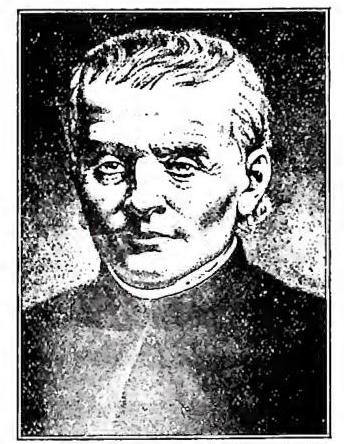
LIBERMANN, François-Marie-Paul, Venerable. — Born at Saverne (France) on 12 April 1802, died in Paris on 2 February 1852. The fifth son of the city’s rabbi, he was raised in Judaism and destined to become a rabbi.
At the age of twenty, having gone to Paris for his studies, he examined Catholic doctrine and on 24 December 1826 received baptism. In 1827 he entered the Seminary of Saint-Sulpice. On the eve of his subdiaconate (1829), nervous crises prevented him from receiving Holy Orders.
Sent to the Seminary of Issy, he met two Creoles from La Réunion and Saint-Domingue who spoke to him of the spiritual abandonment of slaves on those islands. Libermann resolved to save those souls and came to Rome to have his plan for a missionary society approved by the Sacred Congregation for the Propagation of the Faith. Having recovered from his epileptic seizures at Loreto (1840), he was ordained priest in 1841 and founded the Congregation of the Immaculate Heart of Mary, which was later approved by Rome. In 1848 his Congregation merged with the Society of the Holy Spirit, and Libermann was elected Superior General. He devoted all his energies to the development of the nascent congregation and sent many missionaries to work among the Black populations. He became a reformer of African missions, a master of missionary spirituality, and a champion of the idea of indigenous clergy. On 19 June 1910 the decree introducing his cause of canonization was published (AAS, 2 [1910], pp. 487–88).