
LORENZETTI, AMBROGIO and PIETRO. - Brothers, Sienese painters.
I. AMBROGIO
The earliest universally accepted date relating to him is 1319. In 1331 Tizio reliably reported the frescoes in the cloister of S. Francesco in Siena, of which two scenes survive (Martyrdom of the Franciscan saints at Ceuta and St Louis of Anjou taking the Franciscan vows in the hands of Boniface VIII), now in a chapel of the church.In 1332–34 Ambrogio was enrolled in the Arte dei Medici e Speziali in Florence, and in 1332 he painted frescoes of the Stories of St Nicholas for the church of S. Procolo in Florence (now lost), and perhaps two panels, now dispersed: of one, two side panels (St Proculus and St Nicholas) are preserved in the Museo Bandini in Fiesole, and of the other, four small scenes of St Nicholas of Bari are in the Uffizi (nos. 8348 and 8349). From 1335 are the frescoes (now lost) in the church of S. Margherita in Cortona, and together with his brother Pietro he executed some Stories of the Virgin on the façade of the Spedale di S. Maria della Scala in Siena (destroyed in 1720). From 1337 to 1339 he frescoed the Sala dei Nove in the Palazzo Pubblico in Siena with the Allegories and Effects of Good and Bad Government, and in the loggia of the same palace he painted a Madonna and Child in 1340. The Presentation in the Temple, now in the Uffizi (no. 8346), is signed and dated 1342, and the Annunciation for the Gabella in Siena, now in the Pinacoteca (no. 88), is likewise signed and dated 1344. The last documentary notice of Ambrogio dates to 1347; he probably died of plague in 1348.
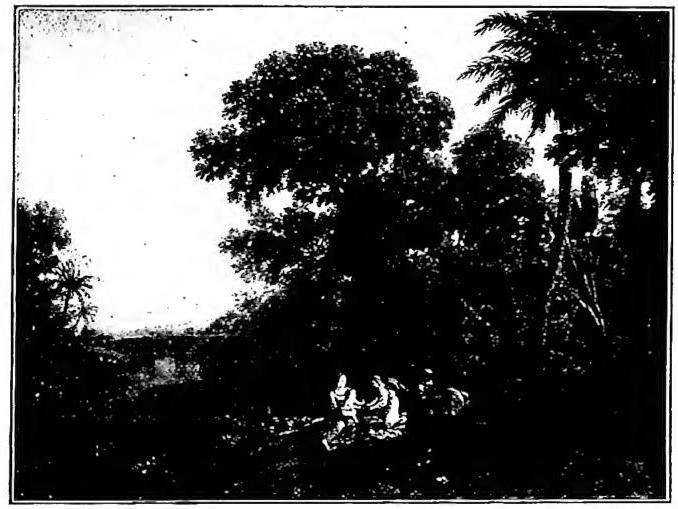
Besides the works already mentioned, all securely documented or dated, several panels in Siena are of particular importance and now undisputed attribution: in the Pinacoteca (Madonna between St Mary Magdalene and St Dorothy, from S. Petronilla [no. 77]; Madonna with angels and saints [no. 65]; the so-called Madonna of the Serre di Rapolano [no. 605]; two Landscapes [nos. 70 and 71]), in the Museo dell’Opera (SS Francis, Mary Magdalene, Catherine and Benedict), in the Archiepiscopal Seminary (Madonna lactans), at Massa Marittima (Madonna between angels and saints, known as the Maestà in the Palazzo Comunale), at Roccalbegna (Madonna in the parish church), at Badia a Rofeno (Madonna and St Michael Archangel in the parish church), in Milan (Madonna formerly in the Cagnola collection, now in Brera), in New York (Madonnas in the Blumenthal and Lehman collections), in Frankfurt (two panels in the Staedel Institute), in Budapest (Madonna in the Gallery), in Cambridge, Mass. (Crucifixion in the Fogg Museum), in Zurich (Holy Family in the Abegg collection), etc. Recently (1944) a fresco depicting the Madonna with various saints was discovered in a chapel of the church of S. Agostino in Siena; but the attribution of this last work to Ambrogio, as well as the frescoes in the chapel of S. Galgano at Montesipio near Siena and other minor paintings, is not universally accepted.
(photo Alinari)
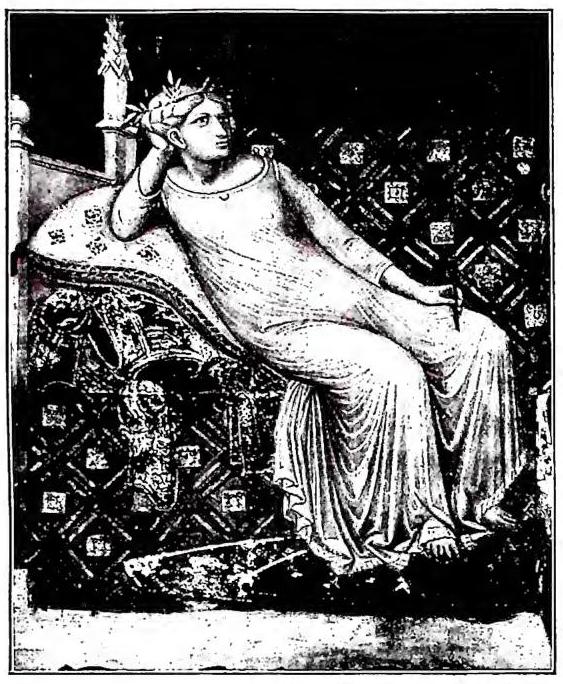
LORENZETTI, AMBROGIO — Peace. Fresco in the Palazzo della Signoria with the Good Government and the Bad Government — Siena, Palazzo Comunale.
Through the power of contour synthesis, a Florentine echo is again discernible in the large fresco compositions: the Franciscan scenes in Siena and the allegorical cycle of the Good Government, which was the artist’s most extensive pictorial undertaking. The complicated symbolic and doctrinal scaffolding of these famous compositions does not diminish their representative efficacy; rather, it becomes itself a subject of poetry, from which the exceptional importance—both historical and documentary—of the cycle derives. Yet it is above all in certain panel paintings, such as the Madonna del Latte and the Maestà of Massa, that the most intense and elevated expression of Ambrogio’s personal technique and inspiration shines forth: the sense of absorbed, superhuman calm that pervades them, and is reflected, with a touch of sensual languor, in the lush and opulent ideal of feminine beauty he cherished; the ability to perceive the most hidden and delicate motions of the heart, representing them, for example, in the tender, passionate intimacy of his Madonnas and Christ Childs; the exquisitely refined sensitivity to color, which he rendered warm and luminous. Of these qualities, the late Annunciation of 1344 is a striking testimony, perhaps unparalleled in all of European painting of the fourteenth century.
II. PIETRO
It is probable, though not certain, that a payment recorded on 25 February 1306 refers to him; after this date we must wait until 1320, when Guido Tarlati, bishop of Arezzo, commissioned from him a polyptych for the pieve of S. Maria: the work is still signed in situ. In 1324 he painted shields for the captain of the people in Siena, and in 1326 some Stories in the house of the Opera del Duomo, now lost; likewise lost or unidentified is a panel of 1329 for the church of the Humiliati. From 1329 comes the large altarpiece for the Carmelite convent in Siena, dismembered in 1818; its central composition (Virgin and Child with four Angels, St Nicholas and the Prophet Elijah) survives with the entire predella depicting five Scenes from the Carmelite Order, originally from the church of S. Ansano at Dofana, now in the Pinacoteca of Siena, together with other minor fragments. Records of smaller commissions for the Commune and the Opera del Duomo of Siena span the years 1329, 1330 and 1333.In 1335, having completed together with his brother Ambrogio the Stories of the Virgin in fresco on the façade of the Spedale di S. Maria della Scala (destroyed in 1720), he began the altarpiece for the altar of S. Savino in the Siena cathedral: the central section, consisting of the Nativity of the Virgin dated 1342, is now in the Museo dell’Opera of Siena, while two panels that he had undertaken for Paolo di Tingo in 1340 are lost. However, dated 1340 and bearing the painter’s signature is the Madonna and Child with Angels at the Uffizi (no. 445), which came from the church of S. Francesco in Pistoia. Sienese documents concerning licences granted to him run from 1337 to 1345; the absence of further notices leads to the presumption that he died in the plague of 1348.
Pietro’s temperament and stylistic formation differed greatly from those of his brother Ambrogio. In Sienese painting he introduced a sober and vigorous narrative style, rich in immediacy and dramatic potential, so that from the usual themes of the Christian pictorial repertoire he brought to the fore especially the tragic element. The sculpture of Giovanni Pisano inspired motifs of great
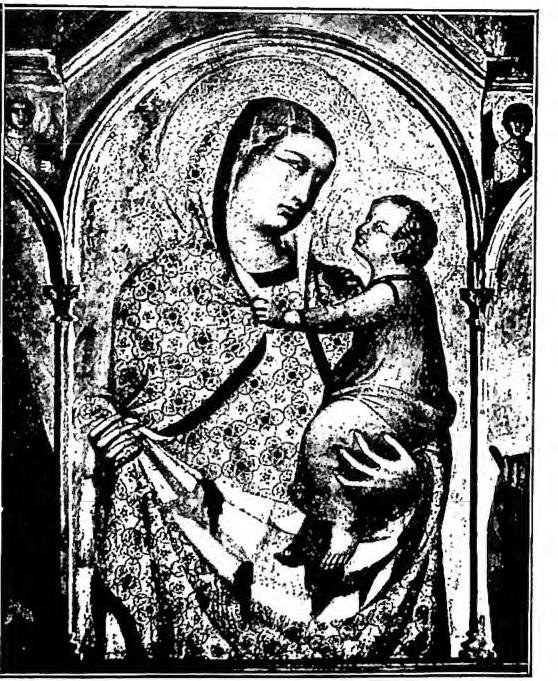
LORENZETTI, PIETRO - Madonna and Child. Central panel of the polyptych in the Pieve, Arezzo.
(photo Gab. fot. nat.)