
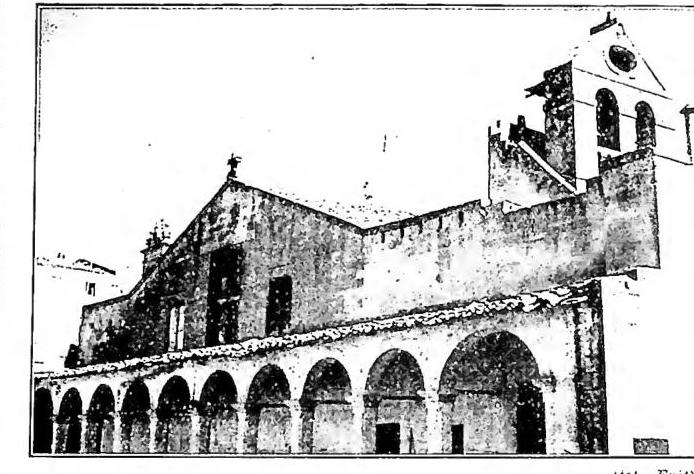
LUCCA, ARCHDIOCESE OF. — Archdiocese and provincial capital city in Tuscany of the same name. It has an area of 950 sq. km. with a population of 259,270 inhabitants, of whom 259,227 are Catholic. It comprises 253 parishes, served by 415 diocesan priests and 123 religious, one seminary, 19 male religious communities and 42 female ones (Annuario Pontificio, 1951, p. 255).
A Ligurian settlement, later occupied by the Etruscans, L. became a Latin colony in 180 BC, then a municipium (90-89 BC); under Augustus it belonged to Etruria and later to Tuscia Annonaria. It then became a Lombard duchy around 570; afterwards it was part of the March of Tuscany and included in the domains of the House of Canossa. The Commune, already governed by consuls since 1107, soon managed to free itself definitively from imperial and feudal constraints (1197) and reached the height of its political and economic power in the 13th century. The untimely end of the lordship built by Castruccio (1314-28) opened the way to foreign dominations (1328-69), which were ended by Charles IV when he restored ancient liberties on 15 April 1369. However, the Republic, after the brief interlude of the lordship of P. Guinigi (1400-30), gradually transformed itself from its democratic origins into a closed aristocratic and then oligarchic constitution (1556). Made a principality in favour of Elisa Bonaparte, wife of Felice Baciocchi (1805-14), it became a duchy (1817) under Maria Luisa and Carlo Lodovico of Bourbon until in 1847 it passed under the rule of Leopold II of Tuscany, and then became part of the Kingdom of Italy.
For Lucca too, a very late tradition connects its Christian origins with a Paulinus sent by St Peter with three companions to evangelise the city and establish the episcopal see there. According to an approximate calculation, the diocese, like those of Pisa, Florence, Siena and Arezzo, would have appeared in the first decades of the 4th century; the first certain bishop, Maximus, is present at the Council of Sardica in 343. The first 15 bishops in the authentic episcopal list go down, though not in their original order, to around the end of the 6th century, and the most venerated among them, St Frediano, prior to the Lombard invasion, is mentioned by St Gregory the Great (Dialogues, III, 9). Bishops Leto and Eleutherius appear respectively at the Roman Councils of 649 and 680; and the documents of the very rich chapter archive attest to the activity of their successors. They also attest to the division of the very extensive diocesan territory into parishes already by the 6th century, if not earlier, as well as the existence within the boundaries of these parishes, from the 8th century onwards, of smaller churches subordinate to them, which would become true parishes in the communal era (12th-13th centuries), along with charitable works and pious foundations. Towards the end of the 11th and during the 12th centuries, the parishes were transformed into canonries, so that later some of them became true monasteries, such as S. Frediano and S. Michele in Foro in the city, S. Pietro di Pozzeveri and S. Pantaleone on Mons Heremitae in the countryside; others at the end of the 14th century were transformed into collegiate churches, such as S. Donato (transferred to S. Paolino in 1513), S. Alessandro Maggiore, S. Maria di Camaiore; some of these still exist, while others were suppressed under the dominion of the Baciocchi.
In antiquity the diocese evidently extended over the entire territory belonging to the city, occupying the Val di Nievole as far as beyond S. Miniato al Tedesco. It then extended into the lower Valdarno and the Val d'Era, and in its southernmost part held the Tuscan Maremme, bordering on the dioceses of Volterra, Populonia and Roselle. It also possessed in the Pisan territory the monasteries of Sesto, Bientina, S. Michele di Verruca, S. Frediano di Vecchiano and S. Maurizio di Filettole. To the north it reached as far as the Modenese on the Giogo dell'Alpe, where the sanctuary and hospital of SS. Pellegrino e Bianco arose as early as 1110, then extending into the Garfagnana to embrace the lands of Piazza and Sala, an ancient fief of the bishops of Lucca, finally touching the Versilia with S. Martino di Pietrasanta and the ancient pieve of S. Felicita. However, the need to remove from the spiritual jurisdiction of the bishops of L. lands that politically belonged to other States considerably reduced this extent, and it is estimated that from 1519 to 1853 the diocese lost about 200 parishes with the monasteries and places that existed in those territories.
Leo X, in fact, raised the ancient pieve of Pescia to the status of a diocese (15 April 1519), making it immediately subject to the Holy See and subjecting to it the churches of the Val di Nievole and the Valleriana that lay outside the political dominion of L., which, following the bull of Benedict XIII (17 March 1726), constituted the diocese of Pescia. Gregory XV, on 9 December 1622, at the request of the Grand Duchess of Tuscany, Margherita Maddalena of Austria, erected the new diocese of S. Miniato. With this measure 118 churches, convents, places, etc. were removed from the jurisdiction of the bishop of L., including the collegiate churches of Fucecchio, S. Croce, Castelfranco and S. Maria a Monte. At the request of Grand Duke Peter Leopold, the two vicariates of Barga and Pietrasanta (17 parishes) with the pieve of Ripafratta were united to the primatial see of Pisa by Pius VI (18 July 1789). In the same document, however, the Pope ordered that some parishes of the coast and the adjacent hills of Lucca should pass from the diocese of Pisa to that of L. With the erection of the diocese of Massa (3 July 1822), Leo XII assigned to the new bishopric the 48 churches included in the vicariate of Garfagnana and in the priory of Castiglione (41 parishes, 7 curacies). Pius IX (17 December 1853) ordered the fifth and final rearrangement whereby all the churches located in the territory of Gallicano (9 parishes) passed to the diocese of Massa.
The bishops of L. were at all times immediately subject to the Holy See; the pallium was granted to Benedict I (1118-28) by Callistus II (1121) and the cross as a metropolitan by Lucius III (1181) to Bishop William I (1170-94); they obtained the use in pontificals of the red zucchetto like that of cardinals and above all the title and jurisdiction of Count of Diecimo, Piazza and Sala. This last distinction, which some historians trace back to Otto I, and which over the centuries gave rise to long and bitter disputes with the Republic, forcing not a few bishops to renounce the dignity or at least live away from the see, lasted until 1726 when the Elders obtained from Bishop Bernardino Guinigi (1723-29) the renunciation of civil powers then exercised over the territories of Diecimo and Moriano, in exchange for monetary compensation, and it completely ceased in 1787 with the cession made by Archbishop Martino Bianchi (1770-88) to the Este of the county of Piazza and Sala in Garfagnana. The Holy See, acceding to the request of the Lucchese government, granted the title of archbishop to the head of the diocese (1742) and a few years later granted the government the right to present four names, then three, for the appointment of the bishop.
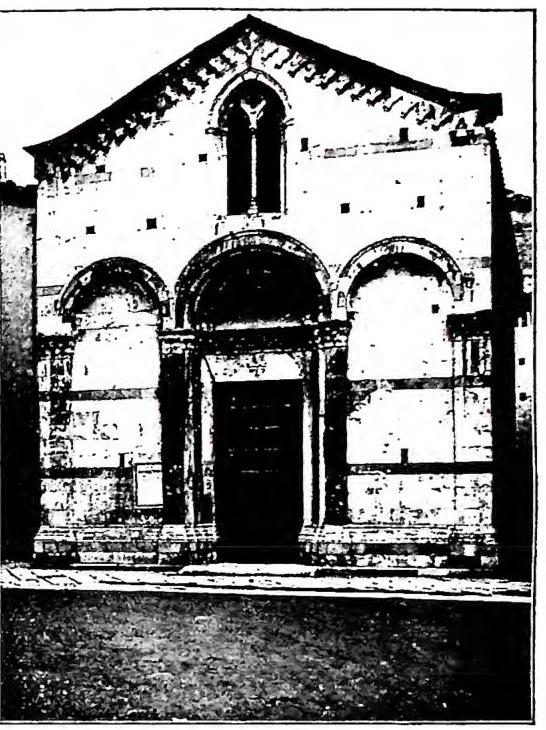
Shrines. — There are no shrines of wide renown in the diocese, except for the one built in 1940 in the city, near the Monastery of the Passionists, in honor of St. Gemma Galgani (d. 1903), and another located on the borders of the three towns of Capannori, Antraccoli, and Lunata, where since 1665 a fresco depicting the Madonna del Carmine between St. Roch and St. Sebastian has been venerated; this was entrusted in 1940 to the Discalced Carmelites of the Tuscan province. However, since the Middle Ages, the simulacrum of the Volto Santo, i.e., the wooden Crucifix that, during the period of iconoclasm, is said to have landed on the shore of Luni and from there transported to Lucca (1742), and then placed in its Cathedral, has been famous in Lucca. According to the legend of Leobinus, its cult dates back to the 8th century, and there is no reason to doubt it, but in that case the present Volto Santo is not the ancient one, and no documents mention a replacement in the 12th century.
St. Zita (d. 1278) is also remembered; her incorrupt body rests in the basilica of San Frediano, in the sacellum erected in 1321 by the Fatinelli, the fortunate lords of the poor and holy maidservant.