
MONTAIGNE, MICHEL, EYQUEM de. – Jurist, philosopher, pedagogue, born at Montaigne near Bordeaux on 28 Feb. 1533, died there on 13 Sept. 1592. He was the eldest son of a noble family descended from the merchant bourgeoisie and owner of the eponymous château (an ecclesiastical fief). He studied at the Collège de Guyenne and the Faculty of Arts in Bordeaux (1539–49), then law at the University of Toulouse. In 1554 he became counsellor to the Cour des Aides in Périgueux and in 1557 a member of the Parlement of Bordeaux. In 1562 he took part in Paris, and for his city, in the profession of Catholic faith decreed by that Parlement against the Huguenots. In 1570 he left the magistracy to devote himself to literary studies and court duties. A Catholic partisan in the first civil war (1572–74), in 1577 he became a gentleman of the court of Henry of Navarre (Henry IV), though remaining faithful to Henry III. In 1580–81 he travelled for instruction through Burgundy (Domrémy), the Rhineland, and Italy (Nov. 1580–Sept. 1581: *Journal de voyage*, ed. 1774). He served as mayor of Bordeaux in 1582–85. In 1590 he addressed a kind of political testament to Henry IV, proposing peace in the name of Catholicism.
In the *Journal des voyages* (the manuscript of which was discovered and published in Paris in 1774 [II. trans. by A. d’Ancona, *L’Italia alla fine del sec. XVI: Giornale di viaggio di M. de M.*, Città di Castello 1895]), he records his impressions of travel without literary pretension, especially concerning the city of Rome, where he was received by the Pope and met illustrious figures, antiquarians, and courtiers, and Loreto, where he went to fulfil a vow to the Madonna. His principal work, in which his singular genius is revealed, is the *Essays* (1st ed., 2 vols., Paris 1561; 2nd ed. 1581; 3rd ed. Bordeaux 1580; 4th ed. Paris 1588), to which, besides many interpolated passages, he added in Book II the *Apologie de Raymond Sebonde* (I, 12), of which he had already translated the *Theologia naturalis*, and a third book. The 5th ed., posthumous (Paris 1595), contains the additions annotated by M. himself in a copy of the Bordeaux edition. The *Essays* were placed on the Index (decr. 28 Jan. 1676).
Montaigne’s thought is in substantial contradiction with his professed Catholicism. It is naturalistic and sceptical. His naturalism has as its mystical backdrop the nature created by God, yet which transcends the life it generates and in which man recognises himself as meaning and reason. Reason, by natural grace, can therefore furnish only the material of religious faith; the form of faith is by supernatural grace. Philosophy, as the exercise of human faculties in the pursuit of happiness and salvation, must therefore conclude sceptically that these faculties are limited both in origin and in end, and aim at the contemplation of death, which will deliver one from suffering: hence the superiority of Pyrrhonism and the doctrine of suspension of judgement (v. CARROLL, PIERRE [Montaigne’s friend]). Yet the individual, by limiting the claims of reason, may develop sufficient wisdom and virtue to regulate his earthly life and form an “heroic” personality. This comes about through the agency of experience, which remedies the uncertainties of thought—thought that cannot alter or invent the laws of the world but only observe them (III, 13)—and of education, which nourishes us with the wisdom and eloquence of the ancients so as to withstand the adversities of nature (I, 26).
MONTAIGNE THE PEDAGOGUE. – The *Essays* may be described as a unique work: a most varied collection of maxims, observations, reflections, proverbs, anecdotes on every topic that crossed his mind or flowed from his pen, with an equally varied array of quotations from Cicero, Plato, Horace, Martial, Virgil, Plutarch, Seneca, Diogenes Laertius, Livy, Boccaccio, and Ariosto. Yet these are not haphazardly heaped together with effort, but drawn from studied readings and assimilated to his distinctive cast of mind. Nor does he aim at any other purpose than to present to his friends and acquaintances what he is (“I have presented myself to myself as both subject and object; I myself am the matter of my book”), with his ideas, his failings, his feelings, his ways of seeing; all in a form that is unstudied yet simple, making him a vivid, trenchant, effective writer. Above all, the *Essays* hold great importance for pedagogy; to this subject belong the three essays: *Du pédantisme* (I, 25), *De l’éducation des enfants* (I, 26), and *De l’affection des pères aux enfants* (II, 8), marked by an openness to new themes antithetical to the prevailing methods of the time, without, however, amounting to a true treatise.
The main points can be summarized in the following principles:
a) Banish pedantry: culture formed of words and formulas, of grammatical and logical rules, more pretentious than true science, useless to life. Just as plants are choked by an excess of moisture and a lamp by too much oil, so the intelligence is stifled by an overabundance of material.
b) Banish the mania for rote learning: one must educate not so much from books as from the great book of nature, always open to the gaze and ever varied in its spectacles. “We strive only to fill the memory and leave the intelligence and conscience empty... to know by heart is not to know... it is merely a facile ability. Hence the value of the experience of men, the study of the languages of neighboring nations, visits to foreign lands; thus one’s horizons are broadened and one no longer judges from a narrow or parochial viewpoint, but becomes accustomed to consider oneself a citizen of the world.”
c) Aim at life: “If science is not to serve to strengthen the child’s character and to make his judgment healthier, it would be better for him to spend his time playing football; at least his body would become more agile and strong.” Every other kind of knowledge is harmful to those who lack the knowledge of goodness.
d) Active, objective method: one must awaken in the child a healthy curiosity: “Let him see everything that is singular around him; a building, a fountain, a man, a battlefield, the direction of the winds, the character of people.” Thus knowledge becomes internal to the child, who will not only know the definition of virtues but will put them into practice in his conduct, becoming serious, prudent, and virtuous.
e) The teacher should be “a well-made mind” rather than “a well-filled mind,” for he must aim not to cram the memory but to form judgment. He should therefore accustom the pupil not to accept ready-made phrases and judgments, empty formulas, and to hate conventionalism, but to reason, to form his own ideas about things and people.
f) Personal effort must be promoted at all costs: “Let the teacher have the pupil repeat what he has learned in a hundred different ways, to see whether he has truly understood the idea and made it his own. Bees gather nectar from various flowers, but then they produce honey, which is their own creation and is neither thyme nor marjoram.”
g) Discipline is necessary, but not that of the rod and punishment alone; rather, it must be founded on gentleness. The true method is “a stern gentleness.”
h) Care for physical education, since man is composed of soul and body: “It is not enough to invigorate the soul; one must also invigorate the body.” Therefore, accustom the child to cold and heat, to fatigue and pain, to gymnastics and play. Raise not a pretty fop, but a virile youth.
It must not, however, be overlooked that there are some shadowy areas in M.’s pedagogical observations.
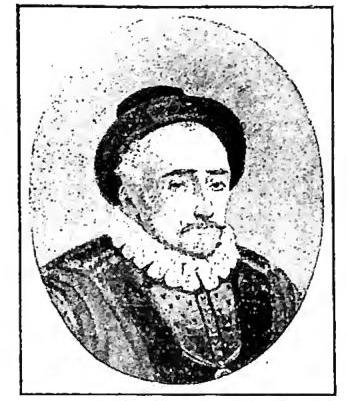
Montague. Michel, Eyquem de Portrait. Engraved from a contemporary painting.)
---
1335 MONTAIGNE MICHEL — MONTALEMBERT CHARLES-RENÉ 1336
between the dioceses of Grosseto, Chiusi, and Arezzo. Yet from the 11th century the popes had granted the abbots of the monastery of S. Antimo, eight kilometers from M., quasi-episcopal jurisdiction over the churches of M. and its surroundings. Indeed, the pieve of the Most Holy Savior, later raised to the status of a cathedral, was described by Pius II among those *nullius dioecesis*. The same jurisdiction was exercised over the towns of the Amata by the abbots of Abbadia S. Salvatore.
M., together with Corsignano, his native town which he rebuilt and renamed Pienza, was elevated to a diocese by Pius II with a bull dated 15 Feb. 1462, issued from the Baths of Petriolo near Siena, where the Pope sought relief for his failing health. The humanist pontiff loved this hill, where in his youth he had often stayed as a guest of the Franciscan friars, and where he counted some learned friends, such as Bernardo Lapini, commentator on Petrarch. In his *Commentarii* he calls M. *amplum et nobile oppidum*. Originally, one bishop governed both the dioceses of Pienza and M.; later they were separated, then reunited, and finally, and definitively, separated again in 1600.
The first bishop of the united dioceses was Giovanni Cinughi, transferred from Chiusi; the first of the Montalcino diocese, separated in 1600, was Camillo Borghese, later archbishop of Siena. The diocese, however, was rather small on its own, and so in 1772 Pope Clement XIV assigned it 14 additional parishes, namely those that the diocese of Grosseto had on this side of the Ombrone River. The number of parishes thus rose to 35, as it remains today.
Among the 29 bishops who have occupied the see of M., the following deserve special mention: Agostino Patrizi Piccolomini, Pope Pius III, who as a cardinal was its apostolic administrator; Antonio Bichi, later a cardinal; Fabio De Vecchi, to whom the enlargement of the episcopal palace and the country residence of Castelnuovo dell’Abbate are owed; Giuseppe-Maria Borgognini and Bernardino Ciani, canonist scholars; Giuseppe Pecci, who in 1788 founded the seminary; Paolo Bertolozzi, a literary and Rosminian philosopher; and Donnino Donnini, who was transferred to the see of Arezzo. — *Vedi* tav. XCI.