
MONTAIGNE, MICHEL, ÉVQUEM de. — Jurist, philosopher, educational theorist, born at Montaigne, near Bordeaux, on 28 February 1533, died there on 13 September 1592. He was the firstborn of a family of nobles who had come from the mercantile bourgeoisie, and owner of the eponymous castle (an ecclesiastical fief). He studied at the Collège de Guyenne and in the Faculty of Arts at Bordeaux (1539–49), then law at the University of Toulouse. He was (1554) counsellor of the Cour des Aides of Périgueux and (1557) a member of the Parliament of Bordeaux. In 1562 he took part in Paris, and on behalf of his city, in the profession of the Catholic faith decided upon by that Parliament against the Huguenots. In 1570 he left the magistracy to devote himself to literary studies and court offices. A Catholic partisan in the first civil war (1572–74), in 1577 he became a gentleman of the court of Henry of Navarre (Enrico IV), while nevertheless remaining faithful to Henry
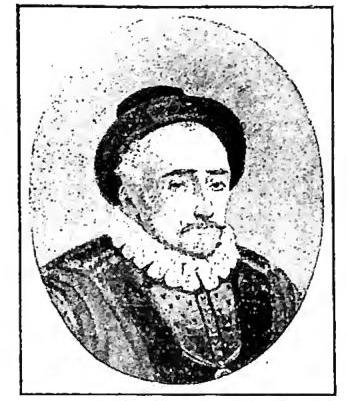
(from M. Montaigne, Saggi scotti, Turin 1921)
M.’s thought is in substantial contradiction with his demonstrated Catholicism. It is naturalistic and sceptical. His naturalism has as its mystical background nature created by God, which nevertheless stands beyond the life generated by it and in which man recognises himself as sense and reason. Reason, by natural grace, can therefore provide only the matter of religious faith; the form of faith comes through supernatural grace. Philosophy, as the exercise of human powers in the study of happiness and salvation, must therefore conclude sceptically that these powers are limited both in origin and in end, and must aim at the contemplation of death, which will remove us from suffering: hence the superiority of Pyrrhonism and the doctrine of the suspension of judgment (v. CARROLL, PIERRE [friend of M.]). But the individual, by limiting the claims of reason, can develop sufficient wisdom and virtue to govern himself in earthly life and form an “heroic” personality. This occurs through experience, which comes to the aid of the uncertainties of thought, which can neither modify nor invent the laws of the world, but only ascertain them (III, 13); and through education, which nourishes us with the wisdom and eloquence of the ancients so that we may resist the adversities of nature (I, 26).
III. In 1580–81 he traveled for purposes of instruction through Burgundy (Domrémy), the Rhineland of Germany, and Italy (November 1580–September 1581: Journal de voyage, ed. 1774). He was mayor of Bordeaux in 1582–85. In 1590 he addressed Henry IV with a sort of political testament, proposing peace to him in the name of Catholicism.
In the Journal des voyages (the manuscript of which was discovered and published in Paris in 1774 [Italian version by A. d’Ancona, L’Ita-
of maxims, observations, reflections, proverbs, and anecdotes on all the subjects that crossed his mind or flowed from his pen, together with an equally varied assortment of quotations from Cicero, Plato, Horace, Martial, Virgil, Plutarch, Seneca, Diogenes Laërtius, Livy, Boccaccio, and Ariosto; not, however, heaped together indiscriminately and laboriously, but drawn from readings carefully studied and assimilated into his particular forma mentis. Nor does it pursue any other aim than to place before his friends and acquaintances what he is (“I have presented myself to myself as subject and object; I myself am the matter of my book”), with his ideas, his failings, his feelings, and his ways of seeing; all in a style that is not studied, but simple, making him a living, incisive, effective man of letters. Above all, the Essays are of great importance for pedagogy; three essays belong to this subject: Du pédantisme (I, 25), De l’éducation des enfants (I, 26); De l’affection des pères aux enfants (II, 8), owing to their open spirit toward new subjects, antagonistic to the methods then very much in vogue, without, however, rising to the level of a genuine systematic treatise.
The principal points may be gathered into the following principles: a) Banish pedantry: a culture made up of words and formulas, grammatical and logical rules, more conceit than true knowledge, useless in life. Just as plants are suffocated by an excessive abundance of sap and a lamp by an excess of oil, so intelligence is suffocated by too great a quantity of material. b) Banish the bookish mania: one must educate not so much from books as from the great book of nature, always open to one’s gaze, ever varied in its spectacles: “We take pains only to fill the memory and leave intelligence and conscience empty... to know by heart is not to know... it is merely a bookish capacity. The experience of men, the study of the foreign languages of neighboring nations, and visits to foreign countries will therefore be beneficial; in this way perspectives are broadened and one no longer judges from a narrow and provincial point of view, but becomes accustomed to considering oneself a citizen of the earth.” c) Aim at life: “If science is not to help give the child’s soul a better temper and greater soundness to his judgment, I would prefer that he spend his time playing ball; at least his body would become more supple and strong.” Every other form of knowledge harms one who does not possess knowledge of goodness. d) An active, objective method: healthy curiosity must be aroused in the child: “Let him see everything unusual he finds around him: a building, a fountain, a man, a battlefield, the direction of the winds, the character of persons.” In this way knowledge becomes internal to the child, who will not merely know the definition of virtues, but will put them into practice in his own conduct, becoming serious, prudent, and virtuous. e) Let the teacher be “a well-made head” rather than “a well-filled head,” because he must not aim to stuff the memory, but to form judgment. He should therefore accustom the pupil not to accept ready-made phrases and judgments, empty formulas, and conventionalism, but to reason and to form an idea of things and persons. f) Personal effort must be promoted at all costs: “Let the teacher have the pupil repeat in a hundred different ways what he has learned, to see whether he has fully understood the idea and has known how to make it his own. Bees suck here and there at the flowers, but afterward they make honey, which is their own production and is neither thyme nor marjoram.” g) Discipline is necessary, but not discipline of the rod and mere punishments; rather, discipline founded on gentleness. The true method is “a severe gentleness.” h) Physical education must be cultivated, since man is composed of soul and body: “It is not enough to strengthen the soul; the body must also be strengthened.” The child must therefore be accustomed to cold and heat, exertion and pain, gymnastics and play. One should raise not a pretty fop, but a manly youth.
One must not, however, fail to point out certain areas of darkness in M.’s pedagogical observations. He insists too much
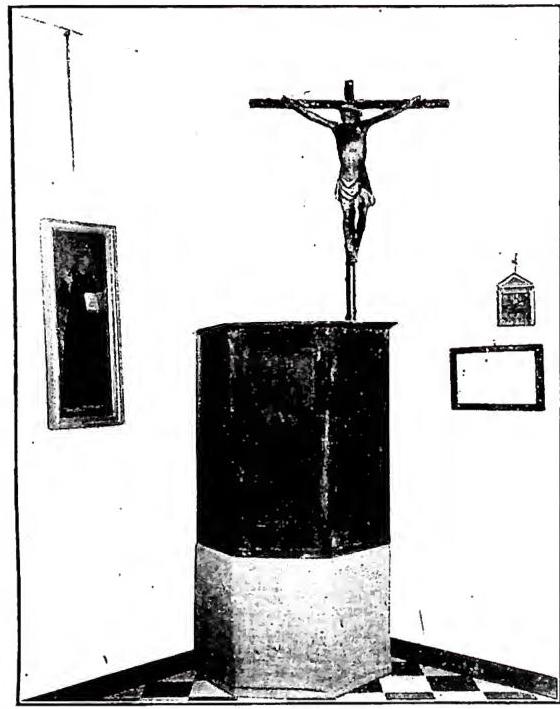
on the education of intelligence, while neglecting the other faculties, which are also important: memory, inclinations, and character; likewise the arts, which possess great formative power. As for the education of women, his ideas are quite weak and incomplete: a woman, for him, is sufficiently learned when she knows how to distinguish between her husband’s shirt and jacket. Even more deficient is the absence of any recognition of the pedagogical value of religion, without which a strong and candid conscience cannot be formed. Curious, too, is the idea that the love bestowed on one’s own children should yield to love for the fruits of one’s own intellect, because these are much more truly ours.
Despite these shortcomings, M. is rightly considered one of the fathers of pedagogy; the pedagogist “representative of common sense,” who begins from the admirable principle that “the child is not a vessel to be filled, but a lamp to be lit”; and later pedagogists derived more or less from him, at least until the time of Rousseau.