
NEPHTHALI (Heb. Naphtali). — Second son of Jacob, born to Bilhah, Rachel’s maidservant.
His name is interpreted in Gen. 30:8 as “contention,” an allusion to Rachel’s long sterility in comparison with her sister Leah; from the root ptil(niphʿal), set-
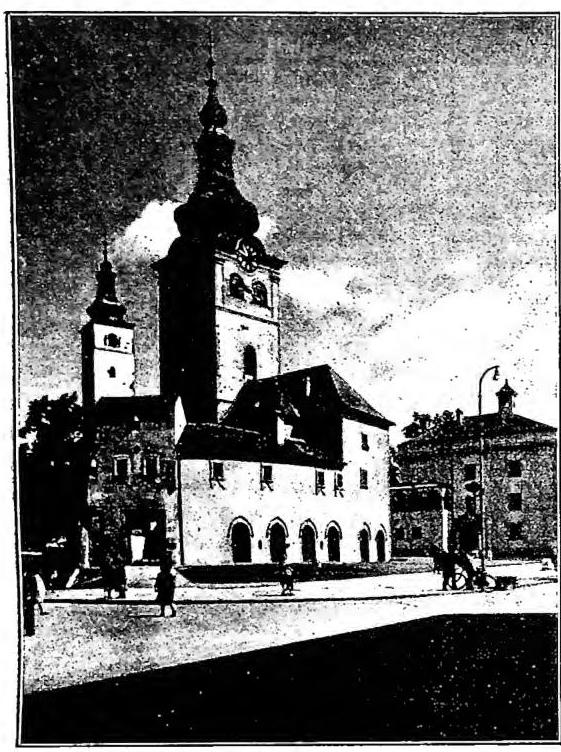
Neosolio, diocese of — Parish church (18th cent.).
tant Neqθαλ[e]λ[μ]. N. is the eponymous ancestor of the tribe that bears his name. He is mentioned only by his four sons in the list of Jacob’s sons who went down to Egypt (Gen. 46:24) and in the father’s prophetic blessing, in the tenth place (Gen. 49:21).
The tribe of N. belonged to the northern tribes. In the allotment by lot of the land of Canaan after the conquest under Joshua, it received territory west of Lake Merom (el-Hūleh, with its northern boundary roughly at the latitude of the city of Kadesh, which belonged to it) and of the Sea of Galilee (cf. Deut. 33:23, where the fertility of the region is also noted), between Dan to the north, Asher to the northeast, Zebulun to the west, and Issachar to the south. It played an important role in the period of the Judges (v.), when, together with Zebulun (Judg. 4:6; 5:18; cf. Isa. 8:23; Ps. 68:28), it took part in the enterprise led morally by Deborah and militarily by the Naphtalite Barak (v.) against Jabin and Sisera (Judg. 4), celebrated in the famous Song (Judg. 5; cf. already Gen. 49:21). N. and Zebulun are also remembered as participants in Gideon’s campaign against the Midianites (Judg. 7:23). Later the Naphtalites shared the common fate of the northern tribes, first separating into the “Kingdom of Israel,” then being ruined by the Assyrian deportation (cf. 1 Chron. 5:26).