
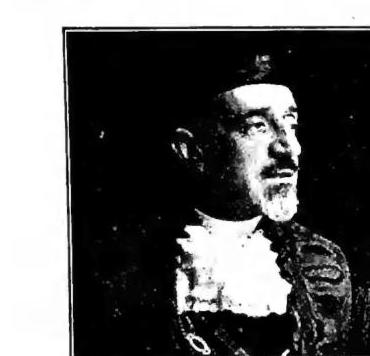
PACIAN, bishop of BARCELONA, saint. — St Jerome (De vir. inl., 106) is the source of the scant information we possess about him.
His testimony is valuable because of his relationship with Dexter, his son, at whose request he wrote the De viris inlustribus. The imperial election of Theodosius in 379 and the composition of Jerome’s De viris inlustribus in 392 indicate the period within which Pacian’s death may be placed, occurring in extreme old age; this presupposes that his life unfolded from the beginning of the 4th century. His birth, or at least a long residence in Barcelona before his episcopal consecration, may be inferred from the ancient rule of appointing a member of the community as bishop. His descent from an illustrious family is evidenced by the standing of his son Dexter, “clarus in saeculo” and praetorian prefect. The clear eloquence praised by St Jerome is attested by the excellence of his style and denotes a thorough humanistic education. Virgil must have been his favourite author: he himself testifies that he read him from childhood (Epist., 2, 4), and he vigorously defended the propriety of a Virgilian citation against an opponent. To him is attributed the celebrated saying: “Christian is my name; Catholic my surname.”
His works mark a stage in the history of penance. In his anti-Novatian polemic he clarifies not a few points regarding the doctrine and practice of penance in the Church of his time. Three letters survive in which he rebuts the innovatory objections of Sempronianus; the Paranesis sive exhortatorius libellus ad poenitentiam; and the Sermo de Baptismo, which extols the life of grace communicated by the first sacrament. All these are dogmatic and more ascetical than disciplinary works, yet they reveal the penitential life in the second half of the 4th century in Spain. The little work Cervulus, which he mentions in the introduction to the Paranesis as condemning certain pagan spectacles (cervulum facere) held at the beginning of the year, has been lost. The treatise De similitudine carnis peccati, attributed to him by its first editor, Dom Morin (Etudes, textes, découvertes, Paris 1913, pp. 81-150), in fact belongs to the priest Eutropius (Gennadius, De vir. inl., cap. 49; cf. J. Madoz, Herencia literaria del presbítero Eutropio, in Estudios eclesiásticos, 16 [1942], pp. 27-54).
In the history of penance in the early Spanish Church, P. holds a foremost place among the Spanish bishops of the generation immediately following the Council of Elvira, who appear to have adhered to a more temperate discipline than that contained in the canons of that assembly. Universality of forgiveness, without exception for any kind of sin, in reaction to Novatian rigorism. For the three capital sins the ordinary remedy was canonical penance, with the acts of confession, satisfaction and absolution: the latter was the function of the bishop with his clergy. For non-capital sins a private, extra-canonical penance was introduced, though in Pacian there are not such clear references to it as in Gregory of Elvira. The same practice of penance was gradually becoming more lenient in regard to its rigour and duration. It was a transitional step from the rigours of the ancient canons to the excessive and degenerate indulgence of the time of the Third Council of Toledo.