
PAOLO SARPI. — Born in Venice on 14 Aug. 1552, died there on 14 Jan. 1623. Already at the age of 18 he distinguished himself in Mantua in disputations; in 1575 he entered the Servite Order and by 1579 he held the office of provincial. In 1585 he came to Rome as procurator general of his Order. The true causes of his deadly enmity toward the Roman Curia and the Society of Jesus have not yet been sufficiently explored: but it is certain that in 1593 the appointment of S. as bishop of Milapotamos, favored by Cardinal Santori, and later the appointments to the sees of Caorle and Nona, were rejected in Rome. His relations with Protestants, and especially with the Bedell, chaplain to the English ambassador to Venice, Wotton, were a source of irritation.
P. S. began to attract much attention when, on 28 Jan. 1606, having become state theologian of the Republic of Venice with an annual stipend of 200 and later 400 florins, he became an advisor to the Republic in its struggle against Pope Paul V: and with very many opinions, only a small part of which were printed, he maintained that the censures imposed by the Pope on Venice, and especially the interdict, were not valid; he supported the Republic in its resistance to the Pope, and with the jurists Mennocchio and Pellegrino and the ex-Jesuit Marsiglio, he was a leading figure in anti-papal propaganda.
After peace was restored between the Pope and Venice, the Republic continued to protect the excommunicated S., whom the Pope would have liked to see handed over to the Roman Inquisition.
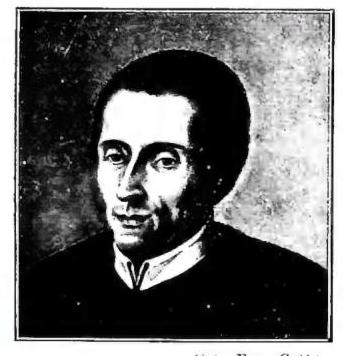
Sannelli, Maria Gennaro, venerable – Portrait preserved in the General House of the Redemptorists, Rome.
When, on 5 Oct. 1607, he was the victim of an attack and wounded by three stab wounds to the head, the nuncio Gessi was indicated as the instigator; however, it has not been proven that this was desired by Rome.
Protected by the Republic, S. continued his struggle against the Papacy by other means: he advised and aided the envoys of the Calvinist Du Plessis Mornay and the German Protestant Dohna, who wished to introduce Protestantism into Venice: but he disappointed them by refusing to convert. In the years 1612–15, under the influence of Gallican writings against the Council of Trent by Gentillet, Ranchin, Thou, and Gillot, he planned to strike a blow at the Papacy of the Counter-Reformation with his own *Istoria del Concilio Tridentino*. In his youth he had known Camillo Olivo in Mantua, former secretary to Cardinal Ercole Gonzaga, and in Venice the former French ambassador to the Council, Ferrier; for a long time he had collected, in addition to oral accounts, written notes, and the State Archives of Venice were at his full disposal. Despite this, the sources for his *Istoria del Concilio Tridentino* are relatively meagre. The gaps in the sources were filled with a certain amount of imagination.
To the formal merits of the work—its conciseness, masterful precision of language, and gripping exposition—there correspond numerous errors in detail; and the greater falsehood is the anti-papal spirit, carefully concealed but surfacing on every page.
The *Istoria* is in reality an indictment against the Roman Curia: it was printed in 1619 in London de Dominis (v.), doubtless without S.’s unawareness. Although it was placed on the Index of Prohibited Books on 22 Nov. 1619, ten years after its appearance it had already been translated into five languages, widely read and often reprinted despite the refutations by Pallavicino. During the Risorgimento at least three reprints were made.
S. did not consider himself a Protestant or irreligious. His work is explained by his concept of the Church, strongly influenced by Gallicanism (a concept that continues the line of Marsilius of Padua), and especially by his deep hatred of the Papacy and the Society of Jesus. He was an intelligent, and therefore dangerous, enemy of the Papacy of the Catholic Reformation.
There is in S. an archaeological museum which is undoubtedly among the most important in the region; it preserves remains from the pre-Roman and Roman periods. From recent excavations (1927–29), in a nearby locality (Pian di Bezzo), where a Roman necropolis was discovered, several mausolea with curvilinear pyramidal cusps have come to light in excellent condition; this discovery is of national interest, since throughout the territory of the peninsula only in S. has this type of Roman architecture been preserved, apart from Aquileia where small sepulchral cippi with curvilinear pyramidal cusps had already long since been uncovered. One of these mausolea, erected in memory of “Aulus Murcius Obulaccus,” has been reassembled outdoors on a fine terrace at the entrance to the city; it consists of three structural elements: a base, a central aedicula, and a curvilinear pyramidal cusp, reaching a height of about 9 m. Also of interest is the three-aisled cathedral in Romanesque-Byzantine style from the end of the 8th century, which, though modified several times inside, still displays its original structure on the exterior. It preserves part of an ambo, a fine work of Romanesque sculpture, as well as other sculptures and paintings from various periods.
The episcopal archive, rich in precious documents and manuscripts, formerly kept in the Rocca di Ciola, has suffered damage on several occasions, particularly in the 16th century and most recently in 1944, as a result of the fury of war; the town itself, more than half of which was burned in enemy reprisals, was among the hardest-hit in the “Gothic Line.” Almost as a reminder and valorization of these painful events, the charitable organization *Linea Gotica* was founded in S., a pious initiative and suffrage foundation canonically established on 4 Nov. 1948 and recognized by the State as a moral entity on 31 Aug. 1951.
Among the shrines, mention should be made of a chapel in the cathedral dedicated to St. Vicinius, the first bishop, venerated as the patron of the diocese; here the mortal remains of the Saint and the so-called “chain of St. Vicinius,” his instrument of penance, are preserved.
Various monasteries, once governed by the Camaldolese, flourished in the diocese: among these are to be noted that of S. Salvatore in Summano, united in perpetuity to the episcopal table by St. Pius V; of S. Ambrogio di Ranchio; of S. Giovanni “inter ambas Para” (i.e., between the two streams Para), also called “Cella di S. Alberico,” from the hermitage of the Saint; and of S. Maria in Trivio. “Vedi tav. CXXVIII.
SARTI, EMILIANO. “Scholar, b. in Rome in 1795, d. there in 1849. He was a writer on the Hebrew language in the Vatican Library and a professor at the Sapienza.
His literary output was scant; however, he merits recognition for having gathered numerous epigraphic texts, some of which he published. His notes were passed to his friend G. Pellicioni, a professor in Bologna, and from him to G. B. De Rossi; they are now in the Vatican Library. The principal nucleus of the collection consists of inscriptions discovered during excavations at Cartoni in the Este territory near the chapel of St Herculanus between 1824–25; many are now in the Lateran Museum, others in the Capitoline Museum, while some epigraphs come from the Este excavations of Cardinal B. Pacca, also of 1825, and others from the Lipsanotheca of the Vicariate. Christian inscriptions were edited by him in collaboration with G. Settale in 1840 as an appendix to the work of F. L. Dionisii: *Monumenta sacra Basilicae Vaticanae Cryptarum* (Rome 1773). He collaborated with Mommsen on the *CIL*.
---
SARTIGES, EUGÈNE DE. «Diplomatist, b. at Gannat 18 Jan 1808, d. at Paris 3 Oct 1892. He began his diplomatic career in 1830 in Rome as attaché to the embassy; he later served as plenipotentiary of the French Empire in Washington and The Hague, and then (from Oct 1862 to Nov 1863) at the court of Turin, where he played a notable role in the “Aunis” affair. On the French ship of that name, the prefect of Genoa had arrested the brigand La Gala, who was under a severe sentence; the imperial government demanded his immediate release. After prolonged negotiations, the brigand was subjected to a new trial, condemned to death, and subsequently pardoned, in accordance with the agreements between Victor Emmanuel II and Napoleon III. A few weeks later S. was sent as ambassador to Rome, where he ingratiated himself with Pius IX and Cardinal Antonelli. He persistently urged his own government to withdraw the French troops from the Papal States and induced the Emperor and the foreign minister, Drouyn de Lhuys, to conclude the September Convention (v.).
In subsequent years S., who was closely linked with the secret committees of the innovators, repeatedly reported to Paris in a manner unfavourable to the papal government. In 1867, at the time of Garibaldi’s invasion of Latium, he was conveniently on leave and took no part in these events; he nevertheless declared that had he been in Rome he would not have requested the intervention of imperial forces, as his chargé d’affaires Armand (v.) had done. At the beginning of 1868 he was recalled to France under the pretext of his appointment to the Senate. With the fall of the Second Empire (1870), he retired from public life.
---
SARTORIO, GIULIO ARISTIDE. «Painter, b. in Rome 11 Feb 1860, d. there 3 Oct 1932. A pupil of his father Raffaele, S. gained wide experience in the museums and galleries of Rome, though he matured and established his reputation between 1880 and ’90 in that lively Roman intellectual milieu where D’Annunzian poses and veristic investigations strangely mingled. The subjects of his early works, following a brief sojourn at Fortuny’s studio—such as *Malaria* (1882, exhibited in Rome), *The Sons of Cain* (exhibited in Paris in 1889), and then *The Gorgon*, *Heroes*, and *Diana of Ephesus* (shown at the Venice International Exhibition of 1897 and now in the Roman Gallery of Modern Art)—display the fruit of these stylistic trends. Yet S., who left his finest achievements in certain landscapes of the Roman countryside, also essayed large-scale compositions, not only in the frieze of the Chamber of Deputies depicting *The History of Italy from the Communes to the Risorgimento*, but also in sacred subjects, such as *Christ Blessing Humanity* in the church of Lucinico and the cartoons for the museums of Messina Cathedral, the latter work left unfinished at the painter’s death.
---
SARUG (Heb. Šerūgh). «Descendant of Shem, presented as the son of Reu and father of Nahor; thus he would have been an ancestor of Abraham (Gen 11:20–23; 1 Chron 1:26). He is also recalled in the genealogy of Jesus as given in Luke 3:35. While the Hebrew text states that S. became a father at thirty and lived 230 years, the Greek version assigns him 100 years more, making him a father at 130. Angelo Penna
---
SARVIA (Heb. Šerūjāh, “wound”?; “perfumed with storax”?). «Sister—or rather half-sister (cf. 2 Sam 16:9; 19:21)—DAVIDE (v.), remembered only as the mother of Joab, Asahel, and Abishai (v.).
It is strange that these three brothers are always (about twenty times) referred to by their mother’s name and never (as custom would dictate) by their father’s, though his name was well known (2 Sam 2:32; Josephus knows it: Sur). Among the many hypotheses, the most plausible is that the intention was to highlight the kinship with David. Gino Bressan