
PACCA, BARTOLOMEO. — Cardinal, born in Benevento on 25 December 1756, died in Rome on 19 April 1844.
Of an ancient patrician family (his father, Orazio, was marquis of Matrice, and his mother, Cristina Malaspina, was descended from the marquises of Lunigiana), he was educated at the Jesuit College in Naples and at the Clementine College in Rome. His passion for literature and history earned him admission to the Arcadia while he was still very young. In 1788 he entered the recently established Academy of Noble Ecclesiastics, devoting himself to the study of law. Embarking upon a career in the prelatehood, he succeeded in winning the confidence of Pius VI, who in 1785 appointed him nuncio to Cologne. Ordained a priest and consecrated bishop of Damiata in portibus, he reached his residence while the struggle of the ecclesiastical electors against the Holy See, occasioned by the establishment of the nunciature of Munich, was still underway (v. EMESA, PUNTUAZIONE di). His mission therefore unfolded amid considerable difficulties and opposition, which P. confronted with firmness and skill and which abated only after the outbreak of the French Revolution. The unfortunate outcome of the flight to Varennes prevented P. from carrying out the assignment of extraordinary nuncio to Louis XVI, which Pius VI had entrusted to him in the hope that the attempt would succeed. Nuncio in Lisbon from 1795, he received there in 1801 the cardinal’s hat, with the title of S. Silvestro in Capite.
When the French entered Rome in 1808, and Consalvi’s forced resignation continued, he was called upon to replace Cardinal Gabrielli, expelled by the occupiers, as pro-secretary of State. As the conflict grew more bitter, despite P.’s efforts at pacification, the French, who accused him of being the inspiration behind Pius VII’s resistance, made a futile attempt to remove him from Rome. Arrested together with the Pontiff after the assault on the Quirinal on 6 July 1809, he endured harsh imprisonment in the fortress of Fenestrelle (Pinerolo). In February 1813 he was able to rejoin the Pope and, together with Consalvi and other cardinals, induce Pius VII to retract the so-called “Concordat of Fontainebleau.” Deported once again to Uzès, in southern France, he was able to return to Italy after the Allies entered Paris: Pius VII wanted him at his side on the day of his triumphant return to Rome (24 May 1814). P., having temporarily resumed his office as pro-secretary, devoted himself to the restoration of the State with great passion and energy, but with a political outlook that brought him into conflict with Consalvi’s more open ideas; from Vienna, Consalvi wrote to him that, if recovering the territories of the Holy See had been difficult, an even more difficult undertaking would be to retain them, if he wished to restore the old order of things in every respect and neglected “those views which wisdom, prudence, experience, the nature of the times, and circumstances advised.”
Napoleon’s return to France and the invasion of the Papal States by Murat (March 1815) led Pius VII to leave Rome; P. accompanied him in his new exile in Genoa. Once the storm had passed, Pius VII, who had already appointed him camerlengo (26 September 1814), subsequently placed him in charge of the bishoprics of Frascati (1818) and Porto and S. Rufina (1821). Under the pontificates of Leo XII, Pius VIII, and Gregory XVI he held the office of pro-datary; he was a member of the principal cardinalitial congregations; he was secretary of that of the Holy Office and prefect of that of Ceremonial. He was also president of the Supreme Council of the Apostolic Camera. From 1829, having become dean of the Sacred College, he governed the dio-
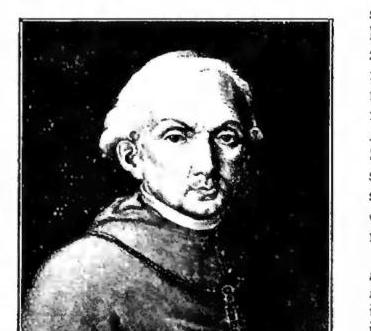
(Giordani photograph)
PACCA, BARTOLOMEO – Application for admission to the Pontifical Academy of Ecclesiastics – Rome, Archives of the Pontifical Academy.
dioceses of Ostia and Velletri. On every occasion, he demonstrated solid piety and unfailing attachment to the Holy See.
Endowed with a refined culture, a pleasant and erudite writer, and skilled in the principal European languages, he generously protected artists and men of letters and played a major role in the reform of university studies. His name is linked to the famous Edict of 7 April 1850 concerning excavations and the preservation of monuments. P. was also responsible for initiating archaeological research at ancient Ostia.
He left the following important memoirs: Mem. stor. di mons. B. P. sul di lui soggiorno in Germania dall'anno MDCCLXXXVI al MDCCXCIV, Rome 1832; Notizie sul Portogallo con una breve relazione della nunziatura di Lisbona dall'anno 1795 fino al 1802, there 1833; Memorie storiche del Ministero, dei due viaggi in Francia e della prigionia nel forte di S. Carlo in Fenestrelle, there 1830; Relazione dei viaggio di papa Pio VII a Genova, nella primavera dell'anno 1815, e del suo ritorno a Roma, Orvieto 1833; Il mio secondo ministero, in A. Quacquarelli, La ricostituzione dello Stato Pontificio, Città di Castello-Bari 1945, pp. 153-203.
Vittorio E. Giuntella