
deny permission to ecclesiastics who wished to appeal to Rome. From that moment the alliance between the Holy See and the Normans remained unchanged and provoked the emperor’s anger. For this and various other reasons of a jurisdictional nature, Frederick Barbarossa very soon altered his initial attitude toward the Pope and ultimately came into open conflict with him; the most significant episode was the incident involving the papal legates who appeared at the court of Besançon to remind the sovereign of the numerous “benefits” he had received from the Church. This word was misinterpreted by the noble officials, jealous guardians of the sovereign’s honor, but subsequently, through the efforts of those desirous of maintaining good relations between the two authorities, the dispute was settled. It was the Pope who yielded, partly because the German clergy had written to him declaring their agreement with the emperor; nevertheless, there was no shortage of opportunities to resume the struggle. When Frederick descended into Italy in 1158, he held a great diet at Roncaglia, where, among other things, he reaffirmed his rights over Corsica, which was papal territory, and imposed taxes even on the lands of the Church, laying claim to various cities. To the papal protests the emperor responded fiercely, asserting that his sovereignty over Rome must not remain a mere name and issuing threats. When an attempt at arbitration failed, Barbarossa looked favorably upon the Roman democrats, who were always hostile to the Pope, and these reached an understanding with the Lombard Communes, which were at war with the emperor. The now inevitable war was instead averted by the death of A., at Anagni, on 1 September 1159. The age-old conflict, owing to the lofty moral stature of the two adversaries, had by then reached its critical moment, deriving its rationale from the very organization of medieval society.
Henry II of England sent an embassy to A. in 1156 to ask his permission to conquer Ireland; this was an indiscreet request, since by consenting the Pope would have justified an aggression. If the bull of response that has survived is authentic, A. would have imposed various conditions on the undertaking and would not have admitted hereditary possession of the island by the English kings. The expedition, however, took place only much later.
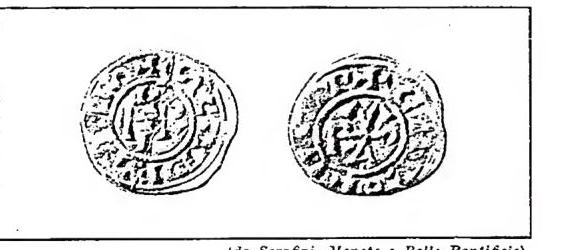
(from Serafini, Monete e Bolle Pontificie) ADRIANO II, papa - Silver denarius.
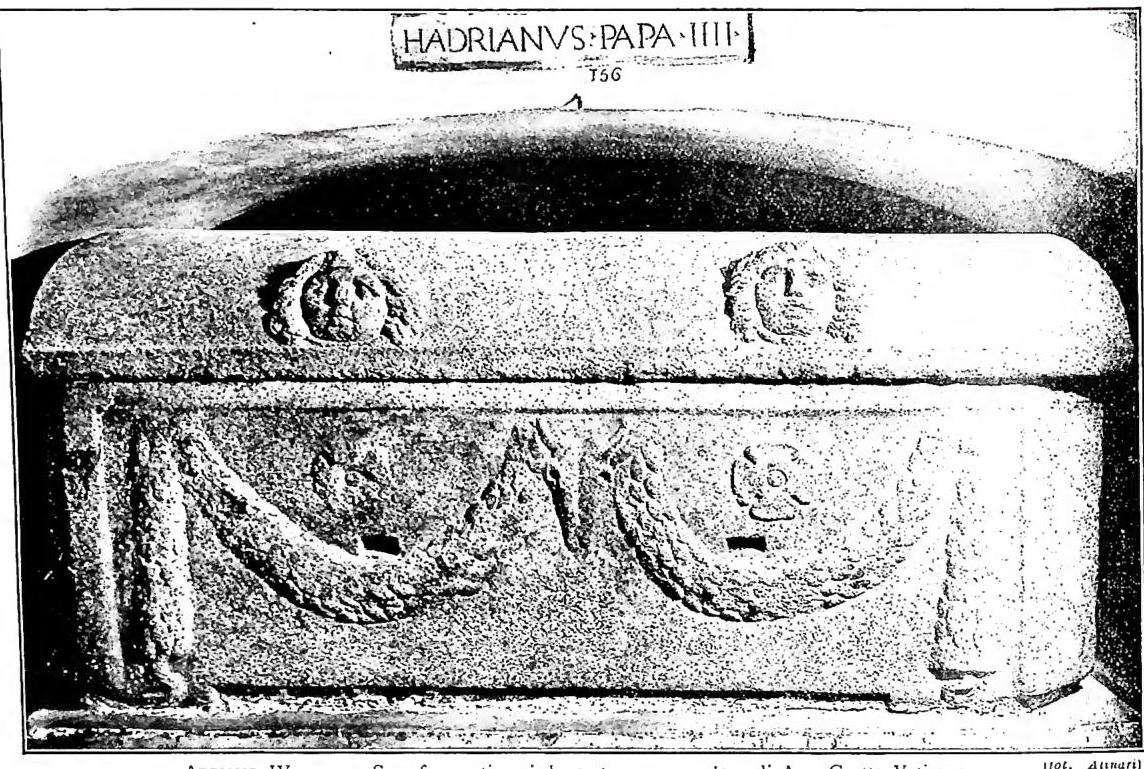
(photo Annani)