
AGEMINA (from *Agian* = Persia, in Arabic). — It is a synonym for "damascened" work and denotes a
AGEMINA
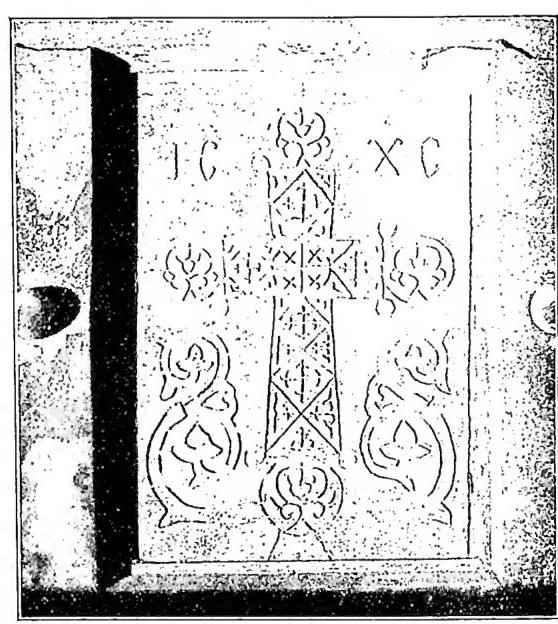
Agemina - Detail of the door of the basilica of St. Paul Outside the Walls (11th century).
NA - Detail of the door of the basilica of St. Paul Outside the Walls (11th century).
metal inlay technique, in which the metal is hollowed out in a design and filled with threads or sheets of another cold-hammered metal; it is often, though improperly, niello (v.). Already known to Egyptian and Cretan-Mycenaean art, it was widely diffused in antiquity; its great fortune in Byzantine and Muslim civilization is due to the progressive decline of plastic taste, replaced by a preference for color that this technique could satisfy with refined preciousness of effects and materials. It was often used together with niello for ecclesiastical furnishings (candlesticks, caskets) and even for partial cladding of sacred buildings (Church of the Apostles and Oratory of the Savior in Byzantium); it found wide use in bronze doors. Perhaps of Eastern manufacture are those of the Lateran Baptistery in Rome with silver crosses (5th century); and those of Salerno, Amalfi, Monte Sant'Angelo, and the other richer ones for the Roman basilica of St. Paul, all from the late 11th century, imported directly from Byzantium by the Pantaleoni of Amalfi. Our artists, following the example of the Byzantines, then executed the doors for the tomb of Bohemond in Canosa and the two for the cathedral of Troia (1119–21). Later, agemina was used predominantly for weapons and profane objects; among sacred works, a notable "pax" (v.) is preserved in the Poldi Pezzoli Museum in Milan (16th century). — See Plate XXXI.