
ALMACHIO, Saint, Martyr. — The fuller codices of the *Martyrologium Hieronymianum* preserve under January 19 the following notice concerning Almachius: “The birthday of Almachius, who, having said: ‘Today is the octave of the Lord; cease from the superstitions of idols and from impure sacrifices,’ was put to death by gladiators by order of Alypius, prefect of the city.” Here in brief is the summary of a *Passio* of the martyr Almachius, now lost. A fact that has points of contact with the foregoing notice is recounted by the historian Theodorus (Hist. eccl., V, 26), who attributes it to an Eastern ascetic named Telemachus. “When Honorius,” relates Theodorus, “assumed the Western empire, he abolished the gladiatorial combats, which from ancient times had been held in Rome, taking the following occasion. A certain Telemachus, who had embraced the ascetic life, having come from the East to Rome with this intention, and while that horrid spectacle was being given, entered the stadium and, descending into the arena, sought to make those who were fighting with weapons cease from their strife.
Many of the
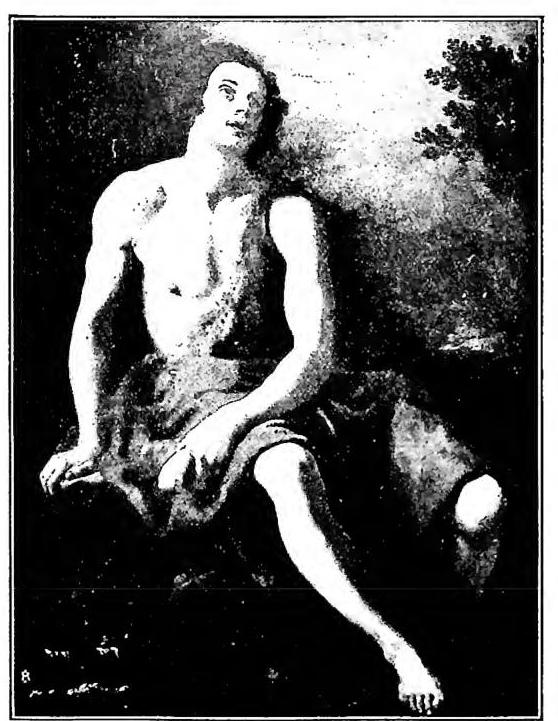
Allori, Cristoforo — St. John in the Desert.
spectators of that slaughter, incited and agitated by the fury of the demon who fed upon that blood, stoned the peaceful speaker to death. When this was known, the admirable emperor enrolled Telemachus among the victorious martyrs and put an end to that wicked spectacle.” Such spectacles indeed ceased shortly after 404. The *Martyrologium Hieronymianum* and Theodorus report two versions of one and the same event that cannot be doubted. The question of the two names remains; it seems that that of Almachius, preserved in the *Martyrologium Hieronymianum*, should be preferred.