
AMELI
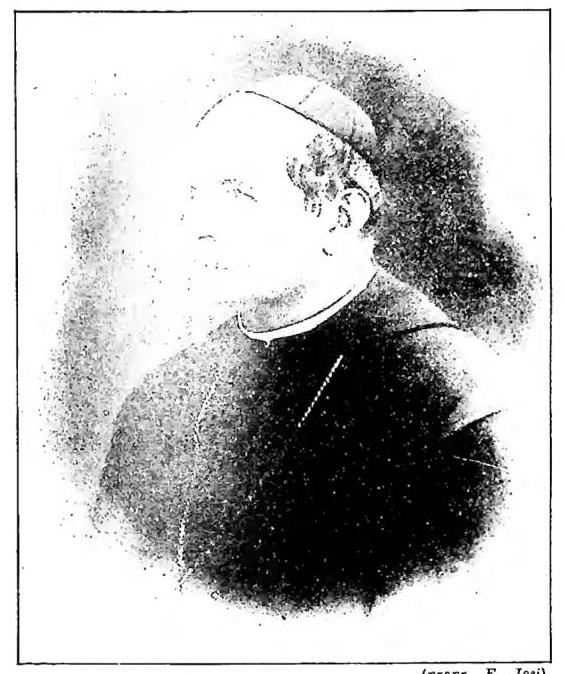
**AMELI, AMBROGIO - Portrait.**
**AMELI, AMBROGIO - Portrait.**
AMEN
**AMEN**
**AMEN**
**AMEN**
**AMEN**
**AMEN**
**AMEN**
**AMEN**
**AMEN**
**AMEN**
**AMEN**
In early Christian literature and in the epistles of the apostles, which place *amen* even as a seal of greetings, wishes, and doxologies, it provides the best proof (cf. *Didachē*, 10, 6; St. Justin, *I Apol.*, 65 and 67; Dionysius of Alexandria, in Eusebius, *Hist. eccl.*, 7, 9; Tertullian, *De spect.*, 25; St. Augustine, *De catarrh.*). As a solemn profession of Eucharistic faith, *amen* was sung at the most important moments of the sacrificial action: at the Consecration (as is still done in the Eastern liturgies) and at the end of the Canon or anaphora, while the faithful were to chant it in receiving Communion. “Disposing the left hand, as if a throne for the king, beneath the right,” says Cyril of Jerusalem, “receive with the concave palm of this hand the Body of Christ, and answer *amen*.” (*Catech.*, 23, 21); and Ambrose of Milan in *De Sacramentis*: “The priest says to you, *Corpus Christi*; and you say *amen*, that is, *Verum*. What the tongue confesses, let the heart hold fast.” (4, 5; cf. *Constit. Apostolorum*, 8, 13; St. Augustine, *Sermon* 272). This ancient custom is still in force in the Ambrosian liturgy; and the Roman rite preserves a vestige of it in the Mass for the conferral of Holy Orders.
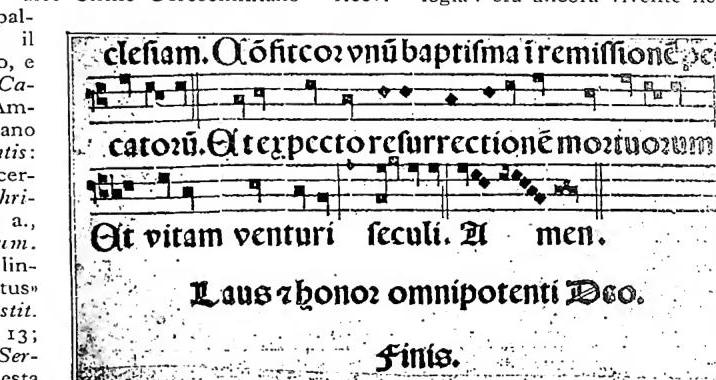
The liturgical *amen* has an eminently social value, for it expresses the solidarity of the faithful with the celebrant: “My brethren,” explains St. Augustine, “your *amen* is your subscription, your consent, your ratification.” (*Sermo contra Pelagium*, 3: PL 39, 1721). Famous for this is the *amen* at the end of the doxology that concludes the Canon, before the *Pater noster*: “The most solemn of the liturgy, perhaps the only one deriving from the primitive canon. As a concluding formula of the symbols of faith, *amen* can well be translated, with the Fathers, as *verum est*: ‘it is true,’ or ‘so be it.’ Instead, at the end of doxologies, and especially at the close of prayers of petition, it has the optative sense of *sīc sit*, ‘so may it be,’ as St. Augustine already interpreted (*Sermo* 6, 3 of the Denis collection: PL 46, 836), and its translation now replaces *amen* in almost all vernacular prayers.
**Universality of *amen*.** — *Amen* is one of the most widespread words in the world: common to Jews, to Christians of every rite, and even to Muslims, who add it to their prayers, especially after the first *sūra* of the Qur’ān. The rabbis extolled its efficacy as a pledge of eternal life: “Whoever says *amen* with all his strength (that is, with every intention and devotion) shall have the gates of paradise opened to him.” (J. Buxtorf, in *Lexicon Chaldaicum, Talmudicum et Rabbinicum*, Basel 1620, col. 115). A word of faith and hope, *amen* also adorned tombs. Christian epigraphy has preserved not a few inscriptions such as: *Requiescat in pace. Amen* or *Cum Christo in aeternum. Amen*.
With such a manifold and sublime meaning, *amen* is an untranslatable term (cf. M. Victorinus, *Adv. Arium*, 3, 9; St. Augustine, *De doctr. christ.*, 2, 11; *Tractatus in Io.*, 8, 34), one of those mystical words which, like *Alleluia*, even in heaven form part of the songs of the triumphant Church (*Apoc.* 5, 14; 7, 12; 19, 4): “Our whole activity,” concludes St. Augustine (*Serm.*, 262, 28, 29), “shall be *Amen* and *Alleluia*,” that the blessed life will be entirely “in the contemplation and praise of the truth”: “All the saints shall say *Alleluia*, because they shall say *Amen*.”