
2,688 priests and 10,672 nuns; 58,583 indigenous auxiliaries or catechists.
The geographical distribution of Christian communities shows that the regions with the highest density of Catholic population are those of central-eastern Africa, which, out of a total of 7.5 million baptized, account for nearly five million alone. The regions with the fewest Catholics are those of northern and north-eastern Africa with 477,880, the southern regions with 536,505, and the western regions with 821,053 Catholics. Among the missions (simple territorial units), eleven stand out as particularly prosperous, each with Christian communities exceeding 100,000: Duala (Cameroon), Masaka, Ruvenzori, Uganda, Upper Nile (Uganda), Shire (Nyassa), Tananarive and Fianarantsoa (Madagascar), Lisala (Belgian Congo), Basutoland (South Africa), and Onitsha-Overri (Nigeria). Four exceed 200,000: Yaoundé (Cameroon), Upper Kassai (Belgian Congo), Cubango (Angola), and Ruanda (Belgian mandate); finally, the Apostolic Vicariate of Urundi surpasses 300,000, with precisely 326,027 Christians. The largest, most compact, and best-organized Christian agglomerations are the Belgian Congo with 2,139,933 Catholics, Uganda with 652,429, Nigeria with 307,699, Cameroon with 355,542, and Portuguese Angola with 441,310; these, due to their central position, together with the central-Ethiopian agglomeration further east, form a kind of barrier against Muslim expansion, which is pressing southward along the 5th parallel north toward southern Africa.
No single characteristic applies to the entire territory of Africa, as it is not a homogeneous continent. In the absence of a unifying index to outline the profile of the African mission, one may note—by way of understanding Africa’s “response” to Christian apostolate—that, from an ethnic-religious perspective, it can be divided into three zones from north to south: the first, extending to the 10th or even the 5th parallel north, consists predominantly of Muslim populations; the second, in the central part of the continent, from the 6th to the 10th or even 15th parallel south, is made up of indigenous races, generally Bantu, with pagan religions; the third encompasses southern Africa, where old European immigration has, in a sense, established its racial and religious dominance (Protestant). From this, it is clear what the greatest obstacles to this apostolate are: Islam and Protestantism. Another obstacle of a different nature is posed by the policies of the colonizing nations, both in the educational sector—through the endless obstacles placed in the way of missionary teaching (England and France)—and, in many regions, through exclusive protectionism (zones of influence favoring Islam or Protestantism) in British colonies.
All this helps to assess the progress made in recent decades and to explain many aspects of the various measures taken by the Holy See to consolidate these missions. Among the most significant of these measures and recent advancements are: the improved organizational structure of the missions themselves; the creation of the first indigenous ecclesiastical circumscriptions; and the enhancement of apostolic efficacy through the initial valorization of indigenous art. Today, the missions are grouped into three major ecclesiastical units (delegations), each overseeing a group of missions with a certain homogeneity: those of southern Africa (1922), British eastern and western Africa (1930), and the Belgian Congo and Ruanda-Urundi (1930), all under the jurisdiction of the Sacred Congregation of Propaganda Fide. These delegations serve as a coordinating and driving force, and, although they lack diplomatic status, they often act as intermediaries between the missions and colonial governments on matters of common interest, such as education. The appointment of the first two indigenous Apostolic Vicars and the first indigenous Prefect Apostolic (for the Apostolic Vicariates of Masaka and Miarinarivo and the Apostolic Prefecture of Ziguinchor) in 1939 was greeted with satisfaction by African Catholics; in Eritrea, an indigenous bishop had already been appointed for Coptic-rite Catholics in 1930. A favorable agreement between the Portuguese government and the Holy See reorganized the missions in the African colonies of Portugal. On September 4, 1940, the archdioceses of Lourenço Marques, with the suffragan sees of Nampula, and of Loanda, with the suffragan sees of Nova Lisboa and Silva Porto, were erected. Pope Pius XII created the Archbishop of Lourenço Marques a cardinal in the consistory of February 18, 1946. The Apostolic Delegation of Egypt was elevated to an Internunciature in 1947.
For individual missions, see the relevant entries.
Below is an overview of the missions currently in existence (as of May 1, 1948), indicating for each the ecclesiastical status (Apostolic Vicariate [V. A.], Apostolic Prefecture [P. A.], or Mission [M. J.], abbazia nullius [A. N.]) and location.
| Name | Title | Institution |
|-----------------------|-----------------------------------------------------------------------|-----------------------------------------------------------------------------|
| ABIDJAN (v. A) | Côte d'Ivoire | Côte d'Ivoire |
| ACCRA (v. A) | Côte d'Or | Côte d'Or |
| ADDIS ABEDA (v. A) | Ethiopia | South Africa |
| ALIWAL (v. A) | South Africa | Madagascar |
| AMBANJA (P. A.) | Madagascar | Madagascar |
| ANTSIRABE (v. A) | Madagascar | Madagascar |
| ASABA-BENIN (v. A) | Nigeria | Nigeria |
| BAGAMOYO (v. A) | Tanganyika | Anglo-Egyptian Sudan |
| BAHR EL GEBEL (P. A.) | Anglo-Egyptian Sudan | Anglo-Egyptian Sudan |
| BAHR EL GHAZAL (v. A) | French Sudan | French Sudan |
| BAMAKO (v. A) | Rhodesia | Rhodesia |
| BANGUELO (v. A) | French Equatorial Africa | French Equatorial Africa |
| BANGUI (v. A) | Belgian Congo | Belgian Congo |
| BASANKUSU (v. A) | Southern Africa | Belgian Congo |
| BASUTOLAND (v. A) | Belgian Congo | Belgian Congo |
| BAUDOINVILLE (v. A) | Belgian Congo | Belgian Congo |
| BENGASI (v. A) | Libya | Belgian Congo |
| BENI (v. A) | Belgian Congo | Belgian Congo |
| BÉNUE (P. A.) | Nigeria | Nigeria |
| BERBERATI (P. A.) | French Equatorial Africa | Belgian Congo |
| BETHEHEM (v. A) | South Africa | South Africa |
| BIKORO (P. A.) | Belgian Congo | Belgian Congo |
| BOBO-DIOULASSO (v. A) | Côte d'Ivoire | Belgian Congo |
| BOMA (v. A) | Belgian Congo | Belgian Congo |
| BONDO (v. A) | Belgian Congo | Belgian Congo |
| BRAZZAVILLE (v. A) | French Equatorial Africa | Belgian Congo |
| BUEA (v. A) | Cameroon | Belgian Congo |
| BUKOBA (v. A) | Tanganyika | Tanganyika |
| BULAWAYO (v. A) | Rhodesia | Rhodesia |
| BUTA (v. A) | Belgian Congo | Belgian Congo |
| CALABAR (v. A) | Nigeria | Nigeria |
| CANALE DI SUEZ (v. A) | Egypt | Egypt |
| CAPETOWN (v. A) | South Africa | South Africa |
| CONGO PORTOGHESE (P. A.) | Angola | Belgian Congo |
| COQUILHATVILLE (v. A) | Belgian Congo | Belgian Congo |
| COSTA D'ORO (v. A) | Côte d'Or | Côte d'Or |
| DAHOMEY (v. A) | French West Africa | Senegal |
| DAKAR (v. A) | Tanganyika | Tanganyika |
| DAR-ES-SALAAM (v. A) | Tanganyika | Tanganyika |
| DELTA DEL NILO (v. A) | Egypt | Egypt |
| DERNA (v. A) | Libya | Libya |
| DESSIÉ (P. A.) | Ethiopia | Tanganyika |
| DIEGO SUAREZ (v. A) | Madagascar | Madagascar |
| DODOMA (P. A.) | Tanganyika | Tanganyika |
| DOUALA (v. A) | Cameroon | Cameroon |
| EGITTO (v. A) | Egypt | Egypt |
| ENDEBER (P. A.) | Ethiopia | Ethiopia |
| ERITREA (v. A) | Eritrea | South Africa |
| ESHOWE (v. A) | South Africa | South Africa |
| FERNANDO POO (v. A) | Spanish Guinea | Spanish Guinea |
| FIANARANTSOA (v. A) | Madagascar | Madagascar |
| FORT DAUPHIN (v. A) | Madagascar | Madagascar |
| FORT JAMESON (P. A.) | Rhodesia | Rhodesia |
| FORT LAMY (P. A.) | French Equatorial Africa | French Equatorial Africa |
| FORT VICTORIA (P. A.) | Rhodesia | Rhodesia |
| FOUMBAN (v. A) | Cameroon | Cameroon |
| GAMBIA (M.) | Gambia | Gambia |
| GAO (P. A.) | French Sudan | French Sudan |
| GAROUA (P. A.) | French Cameroon | French Cameroon |
| GHARDAIA NEL SAHARA (P. A.) | Algeria | Algeria |
| GIBUTI (P. A.) | French Somaliland | French Somaliland |
| GIMMA (v. A) | Ethiopia | Ethiopia |
| GONDAR (P. A.) | Ethiopia | Ethiopia |
| GRAN NAMAQUALAND (v. A) | South Africa | South Africa |
| GUINEA FRANCESE (v. A) | French West Africa | Portuguese Guinea |
| GUINEA PORTOGHESE (M.) | Portuguese Guinea | Portuguese Guinea |
| HARAR (v. A) | Ethiopia | Ethiopia |
| HOSANNA (P. A.) | Ethiopia | Ethiopia |
| IPAMU (P. A.) | Belgian Congo
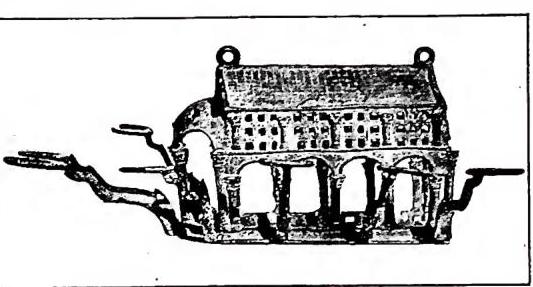
AFRICA - Lamp in the shape of a basilica found at Orléansville.
| Belgian Congo |
(from Dancel - Basilevsky, Collection Basilevsky)
AFRICA - LAMPADA e Lamp in the shape of a basilica found at Orléansville.
IRINA (v. A) ................................................................. Tanganyika
JOHANNESBURG (v. A) ......................... South Africa
JOS (P. A.) ................................................. Nigeria
KADUNA (P. A.) ......................................... Nigeria
KAREMA (v. A) ......................................... Tanganyika
KASSAI SUP. (v. A) ................................ Belgian Congo
KATANGA (v. A) ......................................... Belgian Congo
KATANG SETT. (v. A) ................................ Belgian Congo
KAYES (P. A.) ......................................... South Africa
KEIMOES (v. A) ......................................... South Africa
KHARTUM (v. A) ......................................... South Africa
KIGOMA (v. A) ......................................... Tanganyika
KILIMANJARO (v. A) ................................ Tanganyika
KIMBERLEY (v. A) ......................................... South Africa
KISANTU (v. A) ......................................... Belgian Congo
KISUMU (v. A) ......................................... Kenya
KIVU (v. A) ................................................. Belgian Congo
KOANGO O KWANGO (v. A) ......................... Belgian Congo
KODOK (P. A.) ................................................. South Africa
KOKSTAD (v. A) ......................................... South Africa
KORHOGO (P. A.) ......................................... South Africa
KROONSTAD (v. A) ......................................... South Africa
KUMASI (v. A) ......................................... South Africa
LAGO ALBERTO (v. A) ................................ Belgian Congo
LAGOS (v. A) ................................................. Nigeria
LA RÉUNION O St.-DENIS (D.) ......................... South Africa
LÉOPOLDVILLE (v. A) ................................ Belgian Congo
LIBERIA (v. A) ................................................. Liberia
LIBREVILLE (v. A) ......................................... French Equatorial Africa
LISALA (v. A) ................................................. Belgian Congo
LOANGO (v. A) ......................................... French Equatorial Africa
LOLO (P. A.) ................................................. Belgian Congo
LOMÉ (v. A) ................................................. Belgian Congo
LULUA e KATANGA C. (v. A) ......................... Belgian Congo
LUSAKA (P. A.) ................................................. Rhodesia
LAWANGA (v. A) ......................................... Rhodesia
LYDENBURG (P. A.) ......................................... South Africa
MAJUNGA (v. A) ......................................... Madagascar
MARIANNHILL (v. A) ................................ Madagascar
MAROCCO (v. A) ......................................... Uganda
MASAKA (v. A) ................................................. Belgian Congo
MATADI (v. A) ......................................... Tanganyika
MBULU (P. A.) ................................................. Kenya
MERU (P. A.) ................................................. Madagascar
MISURATA (P. A.) ......................................... Liberia
MOSGADISCIO (v. A) ................................ Italian Somalia
MORONDAVA (P. A.) ......................................... Madagascar
MUSOMA MASWA (v. A) ................................ Tanganyika
MWANZA (v. A) ................................................. Tanganyika
NATAL (v. A) ................................................. South Africa
NAVRONGO (v. A) ......................................... Gold Coast
NDANDA (A. N.) ................................................. Tanganyika
NDOLA (P. A.) ................................................. Rhodesia
NEGHELLI (P. A.) ...... Ethiopia
NIAMEY (P. A.) ...... French West Africa
NIANGARA (v. A) ...... Belgian Congo
NILO EQUATORIALE (v. A) ...... Uganda
NILO SUPERIORE (v. A) ...... Uganda
NOUNE (P. A.) ...... French West Africa
NYASSA (v. A) ...... Nyasaland
NYASSA SETT. (P. A.) ...... Nyasaland
NYERI (v. A) ...... Kenya
NZÉRÉKORÉ (P. A.) ...... French Guinea
OGOJA (P. A.) ...... Nigeria
ONDO ILORIN (v. A) ...... Nigeria
ONITSHIA (v. A) ...... Nigeria
OWERRI (v. A) ...... Nigeria
OUAGADOUGOU (v. A) ...... Ivory Coast
OUAHIGOUYA (P. A.) ...... Ivory Coast (French Sudan)
OUTDSHOORN (P. A.) ...... South Africa
PERAMIHO (A. N.) ...... Tanganyika
PIETERSBURG (A. N.) ...... South Africa
PORT ELIZABETH (v. A) ...... South Africa
PORTO LUIGI (D.) ...... Mauritius
PORT VICTORIA (D.) ...... Seychelles
PRETORIA (v. A) ...... South Africa
QUEENSTOWN (P. A.) ...... South Africa
RABAT (v. A) ...... French Morocco
RUANDA (v. A) ...... Belgian Mandate
RUWENZORI (v. A) ...... Uganda
SAKANIA (v. A) ...... Belgian Congo
SALISBURY (v. A) ...... Rhodesia
S. LUIGI DEL SENEGAL (P. A.) ...... French West Africa
SASSANDRA (v. A) ...... Ivory Coast
SHIRÉ (v. A) ...... Nyasaland
SIERRA LEONE (v. A) ...... Sierra Leone
SIKASSO (P. A.) ...... French Sudan
SOKODÉ (P. A.) ...... Togo
STANLEY FALLS (v. A) ...... Belgian Congo
SWAZILAND (v. A) ...... South Africa
TABORA (v. A) ...... Tanganyika
TAMATAVE (v. A) ...... Madagascar
TANANARIVE (v. A) ...... Madagascar
TANGANYIKA (v. A) ...... Tanganyika
TIGRAI (P. A.) ...... Eritrea
TRIPOLI (v. A) ...... Libya
TSUHUMBÉ (v. A) ...... Belgian Congo
TUKUYU (P. A.) ...... Tanganyika
UBANGHI BELGA (v. A) ...... Belgian Mandate
UGANDA (v. A) ...... Uganda
UMTATA (v. A) ...... South Africa
URUNDI (v. A) ...... Belgian Mandate
VICTORIA FALLS (P. A.) ...... Rhodesia
VOLTA INFERIORE (v. A) ...... Gold Coast
WINDHOEK (v. A) ...... South Africa
YAOUNDÉ (v. A) ...... Cameroon
ZANZIBAR (v. A) ...... Kenya
ZIGUINCHOR (P. A.) ...... Senegal
VIII. THE PROTESTANT MISSIONS
Protestant missions in Africa do not date back beyond the 18th century. The first missionaries belonged to the Moravian Brethren (v. MISSIONI PROTESTANTI), who attempted their mission in South Africa first in 1737, and later, more successfully, in 1792. They were followed, still in South Africa (1789), by those of the L. M. S. (London Missionary Society) with the Wesleyans (1815), who worked extensively for the uplift of the oppressed Hottentots (1834, abolition of slavery in South Africa). The western and equatorial regions of Africa, however, remained closed to them. The period of true possession of African territory by the various Protestant societies was the half-century from 1835 to 1885, accelerated after this date, not only by the successes of earlier missions but also by the freedom granted to any philanthropic and religious activity at the Berlin Conference. All societies and all denominations entered the field: the C. M. S. (Church Missionary Society), representative of the Low Church, in Uganda, Egypt, Mauritius Island, etc.; the already mentioned L. M. S., of independent tendency, in Madagascar and the Great Lakes region; the S. P. F. (Society for the Promotion of Faith), representative of the High Church, in southern and southeastern Africa and in Guinea; the Basel Mission (Basler Missionsgesellschaft) in Liberia, Guinea, the Gold Coast, etc.; the Berlin Mission (Berliner Missionsgesellschaft) especially in southern Africa (Natal, Transvaal, Orange), and the Rhenish Mission (Rheinische Missionsgesellschaft) in the southwest; the Paris Mission (Missions Evangeliques de Paris) in Gabon, Senegal, the Zambezi, Madagascar, and so on, so that by 1891 Protestant missions in Africa were distributed among 55 societies, of which 22 were English, 14 American, 10 German, and the rest of various nationalities. And their contribution to the civilization of Africa was not insignificant—setting aside any dogmatic evaluation—achieved through the spread of education, the promotion of agriculture, the fight against alcoholism, slavery, and the exploitation of the native population.
Protestant missions were in full development when, due to the World War of 1914–18, the activity of German societies, which had been particularly fervent in the Reich’s colonies, was almost entirely interrupted by the expulsion of German pastors; they were only able to return to the field in 1924–25. It was then that indigenization in African Churches took on greater momentum, with a tendency toward autonomy. In 1925, the World Atlas recorded a total of 1,015,683 communicant Christians, directed by 6,289 foreign missionaries (men and women) and 43,181 indigenous ones, including under the term “missionary” all personnel, i.e., evangelists, medical staff, teachers, etc.
By 1938, the date of the last general statistics, 300 missionary societies were at work in Africa, of which 253 were European and 47 indigenous or local, with a European staff of 8,447 and an indigenous staff of 81,625; of the latter, 42,455 were engaged in Christian preaching, 38,843 in educational work, and 327 in healthcare. The total number of communicant Christians in 1938 was 2,163,301; adding the non-communicant baptized, which amounted to 1,430,291, the overall total of baptized reached 3,593,592.
The missionary work of the various Protestant societies shows progress almost everywhere; particularly noteworthy is the educational activity, which has seen important initiatives in secondary and higher education, financed collectively by various societies (Fourah Bay College in Sierra Leone, Achimota College in the Gold Coast). But these results of “cooperation” have their counterpart in the excessive multiplication of societies or Churches, representing increasingly centrifugal tendencies, which have then necessitated mergers; thus, in 1931, after twenty years of negotiations, the “Wesleyan Methodist Church of South Africa,” the “English Methodist Church” of the Transvaal and Swaziland district, and the “Primitive Methodist Mission of the South African Union” merged into a single “Methodist Church of South Africa”; in Madagascar, as of late, no fewer than six Churches of different European denominations and nationalities have merged into the single “Malagasy Protestant Church.”
Another characteristic of Protestant missions in Africa is the frequent and sometimes extensive separatist movements with religious-political bases, such as the famous “Kimbanguist” movement, whose deleterious influence has not yet ceased. In any case, Protestantism today represents in Africa a religious force that is by no means negligible. — See Plates XXVII–XXX.