
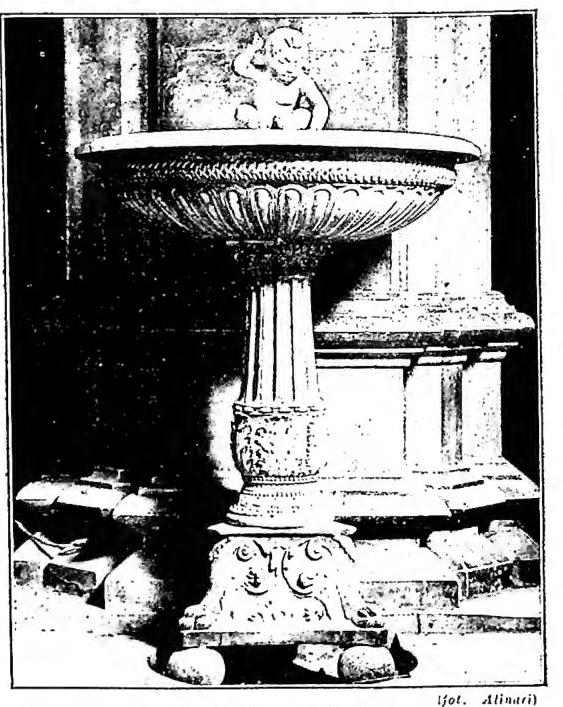
ART. – Various are the forms of holy water stoups in the succession of the centuries. Certain Byzantine specimens, such as those in the cathedrals of Torcello and Atri, have the basin adorned with rampant animals. The stem of the holy water stoup often lost, in the Gothic age, its architectural simplicity to become enlivened with figures, as in that of S. Giovanni Fuorcivitas in Pistoia attributed to Giovanni Pisano.
In the Renaissance the architectural simplicity of the support returns, variously enriched with fruits and garlands, as in that of the cathedral of Lucca by M. Civitali and in another, even richer, by A. Federighi in the cathedral of Siena.
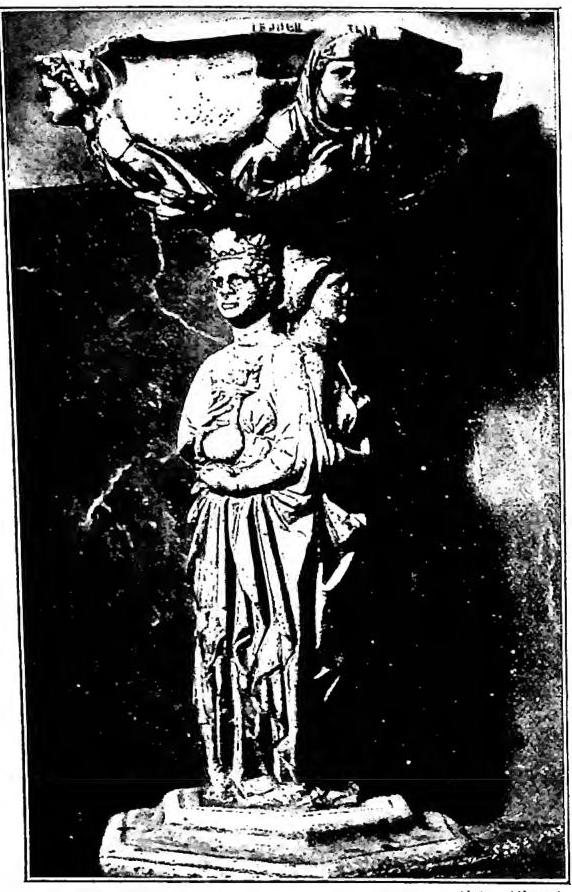
A fine 16th-century specimen is that of Orvieto cathedral, where the pictorial tendencies already appear that will prevail in the Baroque age, culminating, as in those of St Peter’s in the Vatican, in a monumental ensemble of basin, angels, and drapery agitated by an internal dynamism, rendered all the more sumptuous by polychromy. In general, however, holy water stoups maintain a very simple form that reduces stylistic features to a minimum; hence in modern architecture, alongside certain drop-shaped specimens, there are others essentially tied to their function and resolved through a careful study of proportions.
Minute specimens, which variously repeat stylistic forms proper to the minor arts and form part of furnishings, are intended for private use.
– See Pls. XIX–XX.