
ASSUMPTION. – This term is commonly used to express the privilege by which the Most Holy Mary, at the end of her earthly life, was glorified in soul and body in heaven. Theologians still debate whether this term extends to
clearly attest the same thing; that the Syrian opuscule *Obsequia B. Virginis*, from the second half of the 5th century (cf. W. Wright, *Contributions to the Apocryphal Literature of the New Testament*, London 1865, pp. 11-16, 42-51, 55-65) asserts that the soul of Mary, after death, «reunited with the body», one may, with some foundation, find a kind of guiding thread to prove, from century to century, back to the Apostles, the explicit tradition of the bodily Assumption of the Most Holy Virgin into heaven. Even in the apocryphal texts there would be «a common core» that would go back to the apostolic age, and more precisely to St. John. It is known, moreover, that some myths and legends of antiquity present «a historical core», such as, for example, the Babylonian myth or legend of the flood, etc. There is therefore nothing strange or improbable in seeking a «historical core» even in the apocrypha, that is, in the legends about the Assumption. Such a historical core, indeed, may reasonably be supposed to explain the favor these apocrypha enjoyed among the faithful of those times and even among some Fathers. It therefore does not seem to be dismissed out of hand as devoid of any foundation, an explicit tradition about the bodily Assumption of Mary. But even if the explicit tradition is set aside, the implicit tradition remains intact.
Recently the Jesuit O. Faller, in a work on the silence of the early centuries regarding the Assumption of the Blessed Virgin Mary (*De priorum saeculorum silentio circa Assumptionem B.M.V.*, *Anal. Greg.*, sect. A, n. 5, Rome 1946), has rigorously demonstrated the thesis, not diminished by the critique of the *Analecta Bollandiana*, 64 (1946), pp. 320-22, where the question is considered only from a historical point of view. After a particular examination of the thought of St. John Damascene and the Fathers contemporary with him, to verify on what dogmatic principles they base the privilege of the Assumption, he demonstrates that even in the early centuries (at the time of the supposed silence) the same dogmatic principles are explicitly found. It follows, therefore, that such a truth, in those centuries, was implicitly contained in the aforementioned principles explicitly admitted; without, however, implying that the authors of those early centuries had *subjective knowledge* and awareness of the truth of the bodily Assumption objectively contained in them.
*The dogmatic principles* on which St. John Damascene and his contemporaries base the privilege of the bodily Assumption of Mary are five: a) *Principle of restoration* (Eve-Mary); in Mary, contrasted with the first woman, Eve, through whom all die as a consequence of sin, there occurs the liberation from death that reduces the body to dust; b) *Principle of the full mystery of divine maternity*; c) *Principle of miraculous virginity*, understood in the broadest sense, so as to render Mary fully incorrupt and not subject to remaining in the power of death; d) *Principle of unity between Mother and Son*; e) *Principle of the honor that the Son renders to the Mother*.
Now, from the 4th century onward, all these principles are explicitly enunciated. Fr. Faller cites, for the 2nd century, St. Justin (d. ca. 165) and St. Irenaeus (d. ca. 202); for the 3rd century, Tertullian (d. after 220), Origen (d. 253-54), St. Gregory Thaumaturgus (d. ca. 270); for the 4th, St. Epiphanius (d. 403), St. Ambrose (d. 397), St. Jerome (d. 420), St. Augustine (d. 430), etc. (cf. the texts in Faller, *op. cit.*, pp. 93-127). In the first four centuries, therefore, the truth of the bodily Assumption is undoubtedly taught in an implicit manner.
2. *From the 5th to the 10th century.* – Around the middle of the 5th century, the feast of the «Memory of the Blessed» (Mary) as a feast of the death and bodily Assumption of Mary begins to appear in Syria. This is attested by the Syriac fragment of the *Transitus* published by Wright and taken from a manuscript codex from the end of the 5th century (*Contributions to the Apocryphal Literature of the New Testament*, London 1865, pp. 42-51). Around the middle of that century, therefore, there was in Syria a full faith in the bodily Assumption. If one then admits, as seems to be the case, the liturgical nature of the discourse *De transitu Dei Genitricis Mariae* (ed. A. Baumstark, in *Oriens christianus*, 5 [1905], p. 88 ff.) by James of Sarug, one has further confirmation of the existence of such a feast in Syria around the middle of the 5th century. Around the end of the 6th century, Emperor Maurice (582-602), according to the testimony of Nicephorus Callistus (d. 1335), would have imposed by a special edict the date of August 15 (Hist. eccl., XVII, 28: PG 147, 292).
The Coptic Church, from the time of Patriarch Theodosius (d. 567), also admitted the glorious resurrection of Mary, which would have occurred 206 days after her burial. The aforementioned patriarch of Alexandria composed a long account of the death of Mary (cf. Rev. de l'Or. Christ., 1933-34, pp. 272-304), and established the feast of her death on January 6, distinct from that of her glorious resurrection (on August 9). The same must be said of the Ethiopian or Abyssinian Church, which until recent years was under the jurisdiction of the Coptic Church.
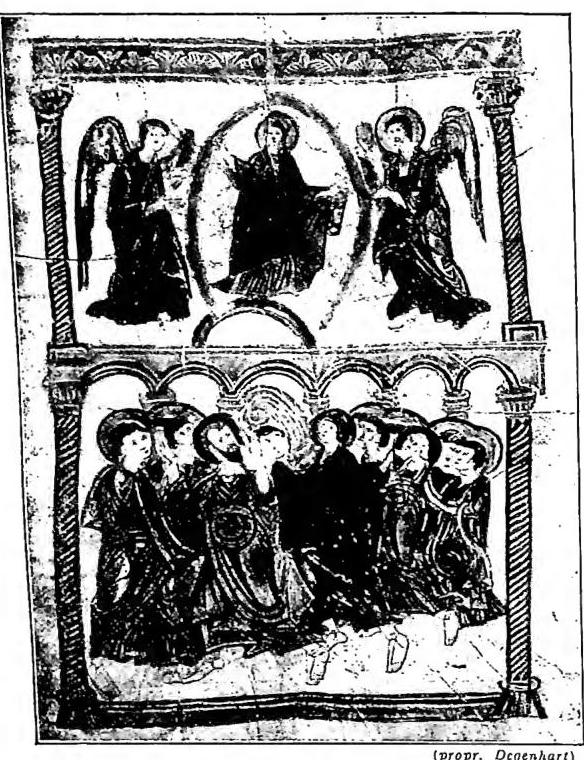
Assumption – *The Virgin assumed into heaven*. Below, the Apostles.
Miniature from the Roman school (11th century) – Vatican Library, cod.
Vat. Lat. 1339, fol. 7:
also of the death and anticipated resurrection of the Virgin.
The ordinary magisterium of the Church, which finds expression in the teaching of the Popes and bishops, in the celebration of the liturgical feast, with morally unanimous consent (cf. G. Henrich - R. G. De Moos, *Petitiones de Assumptione corporea B. V. S. Sedem delatae*, 2 vols., Rome 1942), holds that the bodily Assumption of the Most Holy Mary into heaven is a truth revealed by God and therefore contained in the deposit of divine revelation, entrusted to Scripture and Tradition.
1. *ORIGIN AND HISTORICAL DEVELOPMENT.* – I. *In the first four centuries.* – Given this unanimous teaching of the Church, theologians have endeavored to investigate how such a truth is contained in the deposit of revelation. All agree in admitting that such a truth is not explicitly contained in Holy Scripture, there being no biblical passage in which it is openly taught. All likewise agree in conceding that the question, in the first four centuries of the Church, of an explicit tradition that goes back to apostolic times, has not yet been sufficiently resolved. A positive solution, however, even in the present state of theological studies, is not only considered not impossible, but also presents a certain solidity of argumentation. From the end of the 5th century onward, explicit testimonies are not lacking. The first four centuries remain. Now, if one admits with Capelle (La fête de l'A. dans l'histoire liturgique, in *Ephemerides Theologicae Lovanienses*, 3 [1926], pp. 35-45) the testimony of the Lucius tradition from the middle of the 2nd century (heir of the teaching of the apostle St. John, who died toward the end of the 1st century); if one takes into account that Pseudo-Melito, perhaps at the beginning of the 4th century, attests to the fact of the Assumption; that Timothy of Jerusalem and St. Epiphanius (of the 4th century), in a sufficiently
In the second half of the 6th century, St Gregory of Tours (d. 594) bears witness in France to the bodily Assumption of the Virgin (cf. MGH, Scriptores rerum Merovingicarum, I, p. 489). His account is sober and probably reflects the historical core of the apocryphal writings. Towards the end of the 7th century and at the beginning of the 8th, the holy Fathers held a certain and explicit faith in the bodily Assumption. It suffices to mention St Modestus of Jerusalem (d. 634), Hippolytus of Thebes (7th–8th c.), St Germanus of Constantinople (d. 733), St Andrew of Crete (d. 740), St John Damascene (d. 749), St Cosmas of Maiuma, called the Melodist (d. c. 743), St Theophanes Graptus, bishop of Nicaea (d. 845), the pseudo-Athanasius (7th–8th c.), and others.
In the West, Pope Sergius I (687–701) decreed that the feast of the Dormition, like those of the Annunciation, the Nativity and the Purification, should begin with a solemn procession (cf. Liber Pontificalis, ed. L. Duchesne, I, p. 376). From Rome the feast of the Dormition spread to England and France, taking the title of the Assumption of St Mary. The introduction of the feast of the Dormition in France under the new title of the Assumption began to raise the question of the anticipated resurrection of Mary’s body. Two currents immediately emerged: one openly favourable and the other rather agnostic, tormented by doubt. No one, however, with the exception of some Spaniards from Asturias (cf. PL 96, 1231–40), dared to deny the singular privilege. Many, nevertheless, refused to admit it as certain, and admitted it only as a pious opinion, subject to caution. All, nonetheless, accepted without question the belief in the preservation of Mary’s most holy body from the corruption of the tomb, clearly expressed in the well-known liturgical texts of the Gregorian-Adrian Sacramentary: “ne tamen mortis nexibus deprimi potuit.” The celebrated Epistola ad Paulam et Eustochium of the pseudo-Jerome (PL 30, 122–42) holds primacy in this hesitant attitude. The same view was held by St Bede the Venerable (d. 735), the pseudo-Ildephonsus of Toledo (PL 96, 239–69), the pseudo-Alcuin (cf. Rev. Bénéd. 9 [1892], p. 496), the pseudo-Augustine in Sermon 208 (PL 39, 2129–34), and the Martyrologies of Ado and Usuard.
Yet in that same period there were writers fully convinced of Mary’s bodily glorification, as the pseudo-Jerome himself attests (PL 30, 123). Among these, special mention must be made of the author of the Liber de Assumptione beatae Mariae Virginis, attributed to St Augustine (PL 40, 1142–48). In this work the author (probably Paschasius Radbertus), reacting against the agnosticism of some contemporaries regarding the bodily Assumption, provided a very profound theological treatment— the first of its kind—of the argument. The pseudo-Augustine was echoed by Notker, monk of St Gall (840–912).
3. From the 10th to the 13th century
In the Byzantine Church (both Greek proper and Russian) the bodily Assumption of Mary continued to be admitted with moral unanimity, as in the preceding period (cf. M. Gordillo, L’Assunzione corporea della SS.ma Vergine Madre di Dio nei teologi bizantini: sec. X–XV, in Marianum, 9 [1947], pp. 64–90). The Assumption soon became the greatest of the Marian feasts. Towards the 10th century it began to have an octave.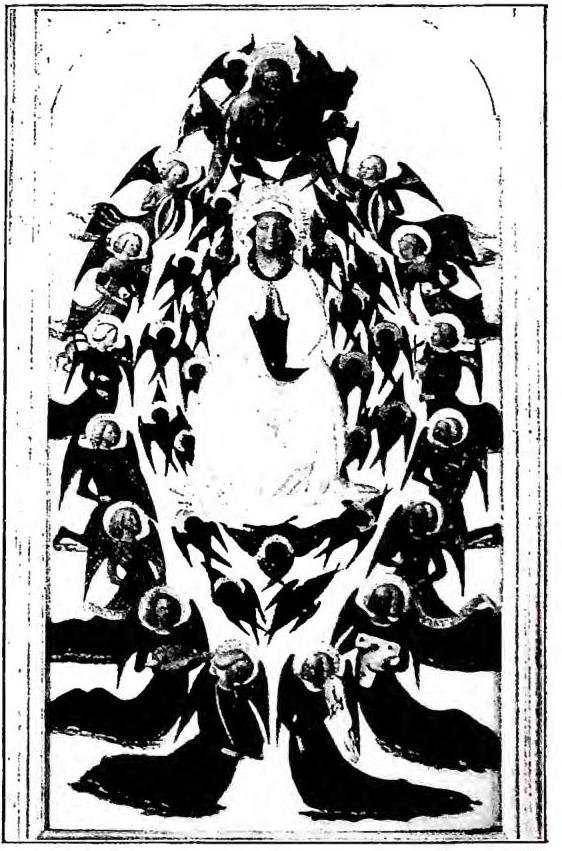
In the Latin Church, however, the influence of the pseudo-Jerome and the pseudo-Augustine (considered authentic until the 16th century) divided theologians into two roughly equal camps until about the mid-13th century, when the school of the pseudo-Augustine and that of Cardinal John of St Mary Major in Rome were joined by the definitive declaration of Pope Pius XII, as is evident from a document in the general archives of the Order of the Servites of Mary. Nearly a century passed before new petitions were made. In 1849 Cardinal Sterck, archbishop of Malines, and Bishop Sánchez of Osma in Spain, responding to the encyclical in which Pius IX had sought the opinion of the episcopate on the definability of the Immaculate Conception, also expressed the wish for a definition of the Assumption. These, however, remained isolated voices. About fifty years later, in 1863, Queen Isabella of Spain, urged by Bl. Anthony Mary Claret, begged Pius IX to “proclaim as dogma” the mystery of the Assumption as well. From that time onward a true movement in favour of the definition arose, a movement that continued to grow, prompting many studies on the definability of this singular privilege. Pius XII, taking into account the requests of 113 cardinals, 253 patriarchs, archbishops and bishops, 82,000 priests and religious, and more than 100 million of the faithful, on 1 May 1946 sent a letter to all the bishops asking their opinion on the definability of the Assumption.
THEOLOGICAL ELABORATION. — Besides investigating tradition, theologians have also increasingly scrutinised the various biblical passages, both from the Old and New Testaments, in which the bodily Assumption of Mary may be implicitly contained, and have highlighted the many congruities.
70. Biblical texts
The first biblical text is the so-called Protoevangelium (Gen. 3:15): “I will put enmity between you and the woman, between your seed and her seed; he (in the Hebrew text: “her seed”) shall bruise your head, and you shall bruise his heel.” Here we have the first prophecy, uttered by God immediately after our fall, concerning the Redemption. The “seed of the woman” is undoubtedly the Redeemer, considered not only personally but as representing all sinful humanity, recapitulated in him as in the new Adam. Consequently, the “woman” spoken of here is the most holy Mary, understood not only individually but also as, in her own way, a new Eve, representing all sinful humanity. This is the obvious sense of the text, confirmed by the interpretation of the Fathers and ecclesiastical writers.Thus set forth, our text foreshadows human redemption under the figure of a struggle ("I will put enmity"), culminating in a total victory of the offspring over the diabolical serpent ("he shall crush your head"), with a partial victory of the diabolical serpent over the "offspring" (the striking of the heel). This full victory of the Redeemer over the serpent, according to St. Paul, consists in destroying, through death, the dominion of the devil: "that through death he might destroy him who has the power of death, that is, the devil" (Hebr. 2:14). Yet in order that through his death the Redeemer might fully conquer death and him who holds its dominion, namely the devil, it was necessary that his death not be final, but for a brief time, immediately followed by the resurrection. Now, the "Woman," mother of the "offspring," as appears from the Genesis text, is intimately and indissolubly associated with the battle, the full victory of her offspring over the devil, and the partial defeat (the striking of the heel by the diabolical serpent, that is, the real death of the Redeemer on the cross and the mystical death, through the sword of sorrow, of the Coredemptrix at the foot of the cross). Two blocs clash: that of the vanquished (the serpent and his offspring) and that of the victors (the Woman and her offspring). Thus, for the Woman and her offspring, the enmities (that is, the struggle), the total victory (that is, the crushing of the head of the diabolical serpent), and the partial defeat (the striking of the heel) were common; just as for the diabolical serpent and his offspring, the enmities (that is, the struggle), the total defeat (that is, the crushing of the head), and the partial victory (that is, the striking of the heel) were common. Consequently, as for the Redeemer, so also for the Coredemptrix, death was soon followed by resurrection, victorious over death.
From this analysis of the Genesis text, illumined by other biblical texts and by the testimonies of the Fathers and Doctors, it can be legitimately concluded that the bodily Assumption of the Blessed Virgin Mary is implicitly foreshadowed, with equivalent terms, in the Protoevangelium and is therefore formally and implicitly contained therein. With good reason, therefore, 113 Fathers of the Vatican Council subscribed to a petition for the definition of the Assumption, in which this outstanding privilege was proved with such an argument (cf. G. Hentrich-R. G. De Moos, op. cit., I, pp. 97ff.).
Other proofs drawn from the Old Testament (from symbols, types, etc.) do not seem to provide a scriptural argument.
In the New Testament, the bodily Assumption is usually seen as implicitly contained in four passages: in the angel’s greeting (Lk. 1:28), in the texts in which St. Paul teaches the primacy of Christ in the resurrection (1 Cor. 15:23) or the connection between sin and death (Rom. 5:12ff.), and in the woman of the Apocalypse (12:1-2).
The first argument is drawn from the angel’s greeting: “Hail, full of grace, the Lord is with you; blessed are you among women” (Lk. 1:28). The Blessed Virgin is greeted as “full of grace” by antonomasia, as if that were her name, without temporal limit, immune therefore from the very first instant of her existence from any fault, and thus exempt from the dominion of death, which, according to Scripture and tradition, in the present state is the pure penalty of sin. The Immaculate therefore must also have been assumed. Secondly, the Blessed Virgin is greeted as she in whom the Lord is present in a special way: “the Lord is with you”; present not as in others (for example, as in Moses, when he was entrusted with the mission of freeing the Israelites from the slavery of Egypt) but especially to give birth to God in a manner worthy of him, that is, virginally (as the angel later explained), triumphing over concupiscence, which was a guarantee of immunity from the corruption of the tomb and of the resurrection of the body. Finally, the Blessed Virgin is greeted as “blessed among women” in a singular way. This “singular blessing,” a consequence of the “fullness of grace” and the “special presence of the Lord in her,” is opposed to the classic divine curse: “You shall return to dust” (Gen. 3:16-19). It is therefore a “blessing” that stands in radical antithesis to the curse pronounced by God in the earthly paradise and that is equivalent to a threefold blessing, expressed in the threefold greeting, namely: blessing of “fullness of grace” in the face of the intrinsic curse of sin; blessing of virginal fruitfulness, in the face of the curse of the pains of childbirth; blessing of anticipated resurrection in the face of the curse of the corruption of the tomb. The angel’s greeting, therefore, in its threefold blessing, echoes the Protoevangelium in the threefold victory of Mary, together with Christ, over sin, through the Immaculate Conception; over concupiscence, through virginal motherhood; and over death, through the bodily Assumption.
A second biblical argument drawn from the New Testament in favor of the Assumption is taken from 1 Cor. 15:20-23, where it is said: “But in fact Christ has been raised from the dead, the first fruits of those who have fallen asleep. For as by a man came death, by a man has come also the resurrection of the dead. For as in Adam all die, so also in Christ shall all be made alive. But each in his own order: Christ the first fruits, then at his coming those who belong to Christ.” Here, St. Paul, speaking of those who will rise, distinguishes two different categories: that of the first fruits (Christ) and that of the remainder of the harvest (all the others, who will rise at the end of the world). Now, if Christ—according to St. Paul—belongs to the first fruits of the risen because he is the principle of life (in opposition to Adam, who was the principle of death), the same can be said of Mary, since she too was a principle of life (in opposition to Eve, who was the principle of death, according to the saying in Ecclus. 25:23: “Of the woman came the beginning of sin, and because of her we all die”).
Thus, as Christ, so also the Blessed Virgin Mary must have risen beforehand.
The third scriptural proof is drawn from certain Pauline texts taken as a whole, which on the one hand establish for the Christian the titles for the resurrection (1 Cor. 15:20-23) and on the other present death as a consequence of sin (Rom. 4:25; 5:12-21; 6:23; 8:19-23; 1 Cor. 15:3; 15:56). In the light of these texts and of the dogma of the Immaculate Conception, many reason thus: the postponement of the final, even bodily, glorification of the children of God until the parousia is presented by St. Paul as a painful trial that, in the light of his doctrine on the connection of sin with death, must be explained as a penalty for a moral fault, personal and original. But the Blessed Virgin was immune from any fault, both original and actual: therefore she must also have been immune from the penalty of the delay of the resurrection until the day of the parousia. The Assumption of the Virgin is therefore implicit in Pauline theory.
A final scriptural argument is drawn from Rev 12:1–2: “And a great sign appeared in the heaven: a woman clothed with the sun, and the moon under her feet, and upon her head a crown of twelve stars.” The prophet then proceeds to describe the infernal Dragon’s war against the mysterious Woman, a war that unfolds in three phases: 1st phase (vv. 4–5): the dragon tries to devour the woman’s son as soon as he is born, but the child is caught up to God and to his throne; 2nd phase (vv. 6; 14–15): disappointed, the dragon turns his fury against the woman, who, mysteriously sustained by God, flies into the wilderness, to the place prepared for her by God, thus escaping the diabolical hostility for good; 3rd phase (v. 17): seeing his assaults against the woman frustrated, the dragon vents his rage “against the rest of her offspring,” namely, “against those who keep the commandments of God and possess the witness of Jesus.” One may note in this text the parallelism between the Apocalypse (the last inspired book) and Genesis (the first) or the Protoevangelium. If the Son spoken of is the Messiah (as is evident from the clear allusion to Ps 2), the woman can only be his mother, the Madonna, that is, the mother of the whole Christ, both physical and mystical. As mother of the physical Christ she is in heaven physically, in soul and body, as affirmed in the first verse; as mother, however, of the mystical Christ, she is mystically on earth, enduring the mysterious pains of childbirth and the dragon’s hostility. Such is the interpretation given by Pius X in his encyclical Ad diem illum.
One might perhaps object that the heaven in which the mysterious woman is described (in V. 1) is not the heaven properly so called (Paradise) but the sidereal heaven. It may be answered, however, that in the light of the context it is a question of heaven properly so called. The apostle, in fact, in the last verse of the preceding chapter (a verse which, logically, belongs to the following chapter) sees the heavenly regions opened (11:19). Moreover, the framework surrounding the woman is entirely composed of astronomical elements: clear evidence that it is not sidereal heaven but heaven properly so called.
Not every single scriptural argument has the same value; to give them their due weight they must be considered together, always taking account of the Catholic tradition (see the rich study by L. G. da Fonseca, L’A. di Maria nella S. Scrittura, Rome 1948).
71. Multiple congruities
The principal and most effective among the various theological reasons adduced in favor of the bodily Assumption appears to be that drawn from the triple bond that the Blessed Virgin Mary has with Christ: physical, moral, and dynamic or soteriological. If it is true that the Incarnate Word, by virtue of the moral or affective bond, freely assumed toward his mother all those moral duties that children owe to their mother, it follows that he would not have fulfilled, at least in an exemplary way, these freely assumed duties—and particularly that of honoring his own mother—had he not at once made her body a partaker in the glory of her soul. If it is true that the Blessed Virgin, by virtue of the dynamic or soteriological bond, was associated with Christ, the new Adam, as the new Eve, in the work of Redemption, it follows that she must necessarily be drawn along in the wake of Christ himself. Now, the resurrection and ascension of Christ are reckoned, according to the teaching of St. Paul, among the mysteries that effected our salvation. The same must therefore be said of Mary. In the present order of Providence, death is either a penalty for sin or a reparation for sin. In Christ and in Mary it was neither and could not be a penalty for sin: it was therefore a reparation for sin. But to make reparation for sin only death avails, not remaining in death. The Coredemptrix, therefore, like the Redeemer, had to rise at once and, as the reward for reparation of sin, receive the fullness of glory.Upon this triple bond are based the other Mariological principles that likewise, in their own way, demand the same singular privilege, namely: the principle of singularity, the principle of eminence, and the principle of analogy or likeness to Christ.
According to the principle of singularity, the Blessed Virgin constitutes an order, a world unto herself, with laws all her own, that is, as St. Albert the Great puts it, “she is not one among all, but one above all” (Maria, qq. 70–80) in every order. The Virgin, says St. Thomas of Villanova, “alone of herself makes the choir,” singing alone (In Praesent. B.M.V.). She is therefore singular in all things, in comparison with others—not only at the first moment of her earthly existence, by being redeemed before all others through preservative redemption, but also at the last moment of her earthly existence, rising glorified before all others.
According to the principle of eminence, what has been granted by God to others must be granted with even greater reason to the Blessed Virgin Mary. Now, God has granted to some of his true faithful the gift of the incorruptibility of the body. All the more, indeed much more, must he have done this for his most holy Mother, granting to her body not only incorruptibility but also the anticipated glorification.
According to the principle of analogy or likeness to Christ, the Blessed Virgin Mary was always and in all things like the Son, as far as her nature and condition permitted. The mysteries of Mary’s life harmonize wonderfully with the mysteries of Christ’s life. To the mystery, therefore, of Christ’s anticipated resurrection must correspond the mystery of Mary’s anticipated resurrection; to the glorious Ascension of Christ must correspond the glorious Assumption of Mary. Two destinies so wonderfully united from the beginning and throughout the course of their earthly existence could not be abruptly severed at the end of that existence.
All these reasons, drawn from Scripture, tradition, and theological congruities, taken together, acquire such force as to render the bodily Assumption of Mary definable.
### III. Iconography
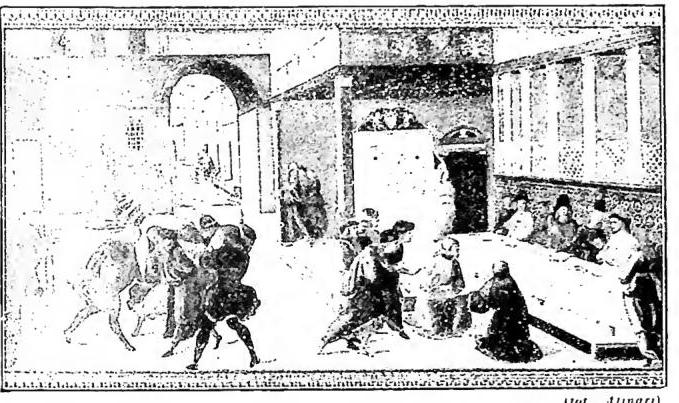
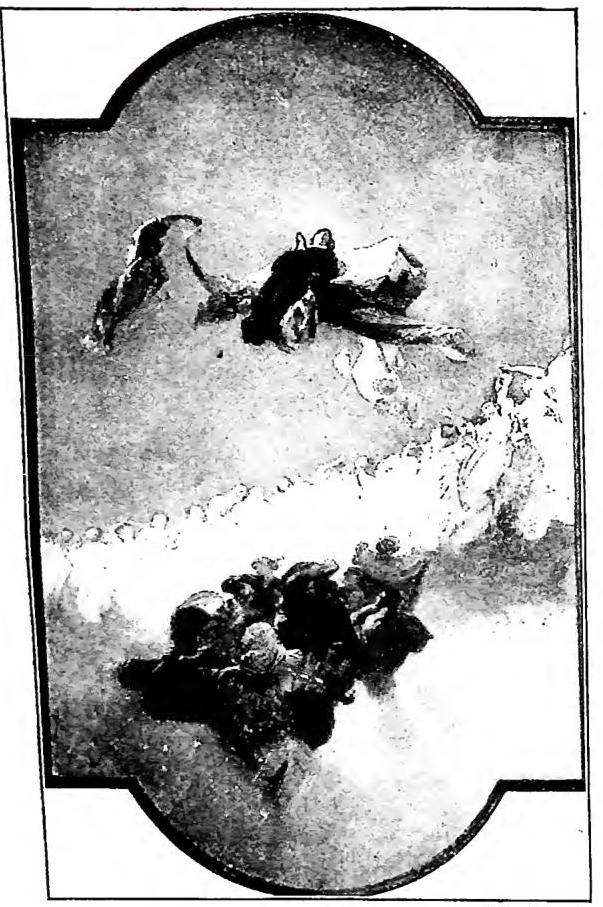
The account of the death, assumption, and coronation of the Virgin, as handed down by ancient legends, does not find depictions before the 12th century except on fabrics, ivories, and miniatures. These generally derive from Byzantine or Byzantinizing representations of the *dormitio*, introducing in the lower zone the customary depiction of the group of apostles gathered around the deathbed together with Jesus; beside them is the figure of an angel carrying the soul to heaven (ivories in the Cluny Museum, 12th c., and Darmstadt). Alongside these images symbolizing the assumption of the soul in the form of a child, there were others that showed the adult Virgin as an orant between angels with outstretched wings (fabric of Sens, 7th c.; panel by Tuotilo, 9th c., in the monastery of St. Gall). While such scenes required clarification by an inscription, the illuminators of the abbey of Reichenau in the year 1000 found a new solution to the difficult theme: in their works, angels support a medallion with the bust of Mary, later replaced by the mandorla enclosing her whole figure. This type of “Mary in glory” was adopted both by the 14th-century Sienese school of painting and by very many 15th-century artists (Masolino, Pinturicchio, and Perugino), until Titian, with his celebrated painting of 1518 (Venice, Frari), abandoned the old iconographic scheme, boldly transforming the assumption into a true ascension with the figure of the Madonna freely suspended in space between earth and sky, attended by angels above the empty tomb. This iconographic type was adopted by almost all later artists, from Rubens to Tiepolo.
---
### IV. The Assumption in Liturgy
a) In the East. – As certain as is the Eastern origin of the feast of the Assumption, so uncertain remain its date and place. The hypothesis that it derives from the feast of the Marian church called Kathisma, situated between Jerusalem and Bethlehem and celebrated on August 15, as attested by an Armenian lectionary of c. 460, has today been abandoned, since this refers to the dedication of the church. Likewise, the idea of a kind of transfer of the primitive Marian feast, common to almost all Eastern rites and placed either after Christmas or after Epiphany, seems unlikely. The celebration of a Marian feast in Jerusalem on August 15, linked to a church built, it seems, by Eudoxia (c. 450) in Gethsemane, is attested by an 8th-century Georgian lectionary reflecting Jerusalem usages of the late 7th century. This feast, however, as shown by other