
AVICENNA (Abū ʿAlī al-Ḥusayn ibn ʿAbd Allāh ibn Sīnā, known in Latin scholasticism as Avicenna). — One of the greatest Arab philosophers, a renowned physician, encyclopedic in his learning, and thus called the “Prince of Scholars” and “the third master,” after Aristotle and al-Fārābī. He was born in 980 in a village in the region of Bukhara, in the eastern part of Persia, where he spent his life. For a time, he served as vizier, that is, minister, to Prince Sams ad-Dawlāh in Hamadān; he endured several months of imprisonment for political reasons; but he devoted the greater and better part of his life to the study of philosophy, medicine, and the sciences. He died in Hamadān in 1037.
Avicenna created a grand philosophical system of a markedly
Avicenna
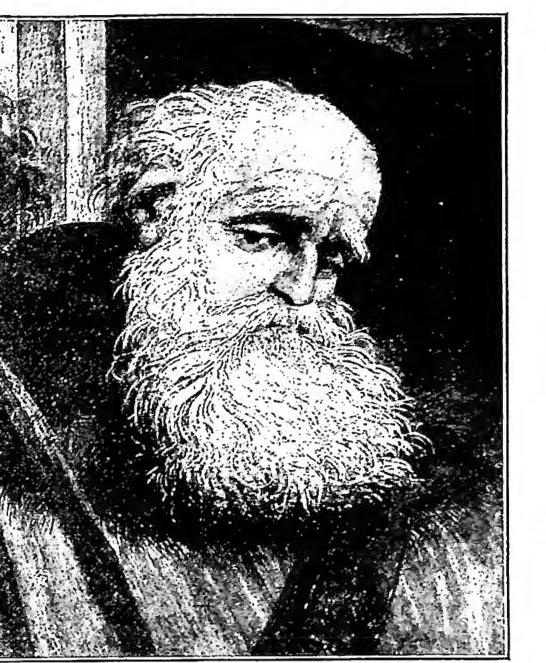
Avicenna — Detail of the fresco depicting the Disputation of St. Thomas with Heretics, by Filippino Lippi (15th century) — Rome, Church of Santa Maria sopra Minerva.
— Detail of the fresco depicting the Disputation of St. Thomas with Heretics, by Filippino Lippi (15th century) — Rome, Church of Santa Maria sopra Minerva.
(not. Altinari)
empirical character, though steeped in Platonic and Neoplatonic ideas: a system with an empirical foundation, crowned by a Neoplatonic and mystical apex. Avicenna demonstrates a strong tendency to reconcile Islamic religion with Aristotelian philosophy, though at the expense of the former, since, while not denying revealed truths, he interprets the teachings of the Qur’an as adaptations by Muḥammad to the crude mentality of the Arabs of his time. It has been said that Avicenna formulated the doctrine of the double truth, one religious and one philosophical. In any case, many of his philosophical doctrines are entirely irreconcilable with those of the Qur’an. For this reason, he was opposed by al-Ghazālī, champion of religion against Greek, atheistic, and foreign philosophy.
Avicenna wrote about a hundred works, most of them brief, though some are of considerable length, such as the philosophical encyclopedia al-Shifāʾ, that is, The Healing, and the Canon of Medicine. Most of these works are in Arabic, and some in Persian, the mother tongue of Avicenna. The Healing consists of four main sections: logic, physics, the mathematical sciences, and metaphysics, and it is the most detailed exposition of his system. The section devoted to physics is divided into eight parts, the sixth of which deals with the soul: it is the *Liber sextus naturalium*, well known to Latin scholasticism, which also knew his metaphysics. The *Kitāb al-Nafs* is a concise extract from The Healing. This book, together with the Canon, was published in Rome in 1593. Logic and metaphysics are also expounded in the *Kitāb al-Ishārāt wa-al-tanbīhāt*. Among his shorter philosophical works are an epistle on the division of the sciences and various treatises on psychology. His mystical writings should also be mentioned. He also wrote on alchemy, music, astronomy, and addressed various questions of science and philosophy in his letters.
In logic, which according to him also embraces rhetoric and poetics, Avicenna follows Aristotle and Porphyry’s *Isagoge*. However, syllogistics is treated only briefly.
Wisdom (*al-ḥikmah*), which encompasses all the sciences, is divided into theoretical and practical. The former, which aims at truth, includes physics, mathematics, and theology; the latter, which is directed toward the good, consists of ethics, economics, and politics. The subject matter of physics is bodies composed of matter and form, endowed with primary and secondary qualities or forces, whether at rest or in motion. Bodies exist in a place and in time, the concept of the latter deriving from that of motion. Every body has its natural place. He argues that the void does not exist. He addresses the problem of the infinite, which he admits for the past; moreover, bodies are infinitely divisible in potency, as is motion.
Though in his doctrine of the soul Avicenna shows himself a faithful disciple of Aristotle, in some respects he departs from his master. He demonstrates, through various arguments, the existence of the soul, its spirituality, and hence its immortality: it is a simple substance that extends into the body as the trunk extends its branches, and this substance is what truly constitutes the human being. Soul and body, though entirely distinct, are dependent on each other not substantially but accidentally, and thus the soul does not perish with the death of the body. It does not, however, exist prior to the body but is created at the same moment as the body to which it is destined and for which it receives a special preparation. When the body perishes, each soul remains a distinct being from the others. As a consequence of this individuality, Avicenna upholds metempsychosis. The soul can be of three kinds: vegetative, animal, and rational, of which the first is characteristic of plants, the second of animals, and the third of humans. Treating the latter two, he observes that it is within the faculty of the soul to grasp particulars and to move voluntarily, while the rational soul grasps universals and acts by free choice. The animal soul performs an incomplete act of abstraction on the data provided by the senses, without entirely stripping them of their materiality. It has four faculties: the formative, the cogitative, opinion (*al-wahm*), and memory, which constitute inner perception, to be distinguished from outer perception, which consists in the activity of the senses.
The rational soul, or intellect, is first divided into theoretical and practical. The theoretical is the faculty of perception and stands in relation to higher principles, to which it is subordinate. Within the faculty of perception, distinctions must be made between the material intellect, which is the absolute potentiality for knowing; the possible intellect, which is in act with respect to the former and has acquired first and necessary truths; the intellect in act, which is in a state of perfect readiness for the acquired intellect, when the comprehension of forms occurs. Moreover, some men possess the holy spirit, which would constitute a fifth stage, in which things are known immediately. Now the intellect in potency does not pass into act except through the agency of the intellect that is always in act, which, however, is a substance outside of man; in it reside, as intelligible forms, the objects of knowledge. To know a thing, the rational soul must therefore unite with the agent intellect, though without becoming that intellect itself. The soul grasps universals or intelligibles, first extracted from the particulars received by the senses, comprehending them in act through its union with the agent intellect, in which these intelligibles reside. Particulars, besides being perceived by the senses, are also understood by the intellect, though not as particulars but as effects of their cause: this understanding constitutes the science of particulars, which must be distinguished from their perception by the senses. The soul thus rises from sense perception and reaches the agent intellect: it therefore has a lower side and an upper side; it detaches itself from the senses to draw ever closer to universal realities and thus return to its origin and essence.
Metaphysics, or first philosophy or al-illâhijât, is the science of abstract concepts concerning all beings and the first principles of the sciences and of the world of suprasensible beings, as well as of God. In the hierarchy of beings, the supreme place is occupied by the necessary being, God, whose existence Avicenna seeks to demonstrate: a being that has neither body nor matter nor form, that is indivisible, and in which there is therefore no part before or after, but all that is possible in Him is necessary at the same time. God is truth, goodness, power, life, pure knowledge, yet with all this He is a single cause, He is the One and the Only. He knows particulars in a universal manner. His essence has neither genus nor difference and cannot be defined. It is impossible to imagine Him as non-existent. From this being emanates the world of ideas, of pure intelligences, then the world of essences, clothed in a certain way with matter, which govern the bodies of the spheres and through them the elements; then the physical world with the forces infused into bodies and finally the world of bodies. Avicenna has sought ingeniously, though not persuasively, to deduce the multiplicity of the sublunary world from the Unity of the necessary being, through the knowledge that the first caused being has of itself as first, as possible in itself and as necessary from the first, and similarly of the lower emanations, to arrive at the agent intellect, which governs the world of man. Avicenna also attributes soul and body to the spheres and compares their soul to the animal soul of man. The spherical soul seeks to resemble the supreme good and thus to enter a state of perfection. The first cause of the movement of the spheres is the first mover, God, who, however, stands above all movement. The emanatist approach is found among Arab philosophers already in al-Farâbi.
Avicenna also dealt with the problem of evil. He asserts that in the judgment of God, evil is merely accidental; it is only negative, it is a lack or defect and does not touch the intelligibles, but strikes only particulars or individuals. Good in the world is superior to evil both numerically and quantitatively. Avicenna is therefore an optimist.
One enters the field of mysticism with the doctrine of the fate of rational souls after separation from the body. They then tend toward perfection, which is their essence, seeking to become intelligent and wise and to assimilate themselves ever more to God. To prepare for this life, man must already in this world lead an intellectual existence, superior to the senses. Thus the soul can attain a state of happiness. When, on the other hand, it is impure, it suffers, and its sufferings diminish as it purifies itself. Spiritual souls, after the death of the body, enter into the mercy of God, while utterly wicked souls suffer terrible torments.
In addition to his philosophy, Avicenna owes his great fame to medicine, of which he was one of the great masters, followed for some doctrines even in the past century. His Canon of Medicine represents a grand attempt to systematize all the medical doctrines of Hippocrates and Galen, together with the biological conceptions of Aristotle. The Hippocratic doctrine is based on the moral theory of Hippocrates. All physicians have admired in Avicenna, besides his clear and suggestive style, the precision in therapeutic indications and the clarity in clinical histories.