
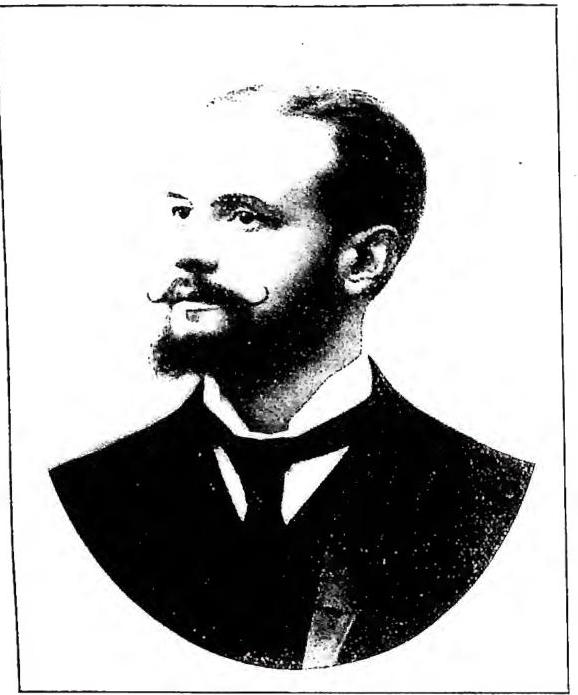
CATHOLIC ACTION – Count Giovanni Acquaderni.
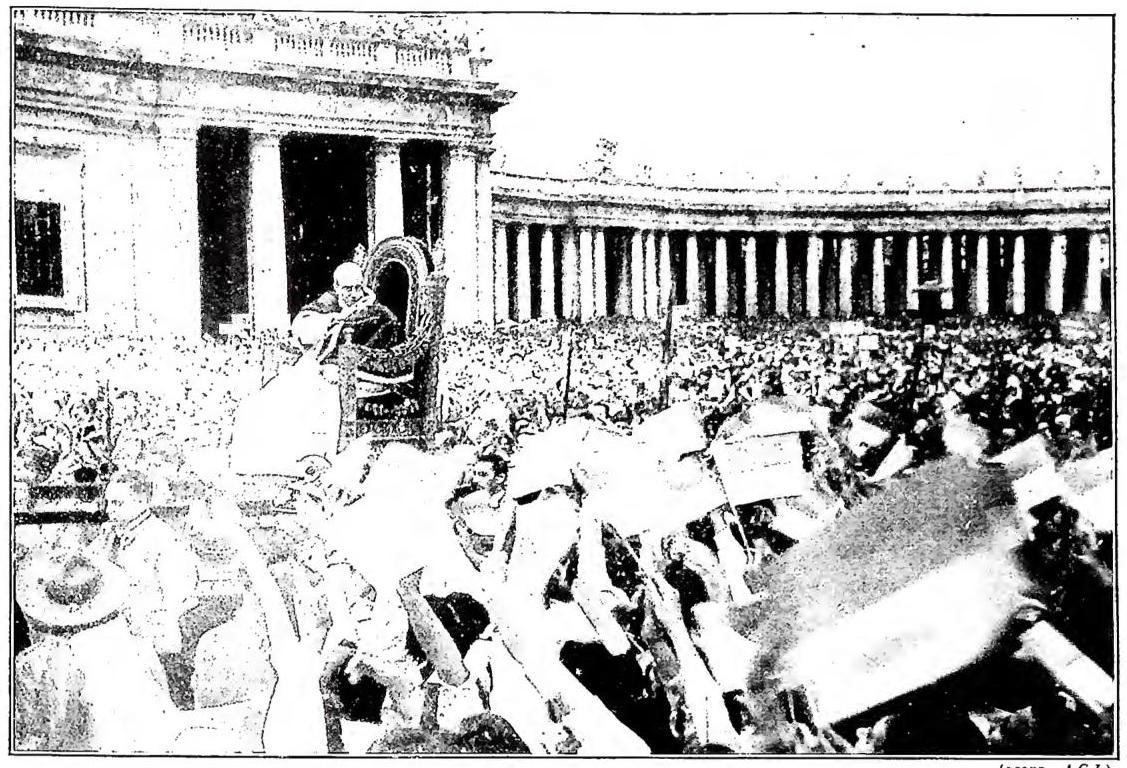
CATHOLIC ACTION – Celebration of the 30th anniversary of the Female Youth of A.C. Papal Audience in St. Peter’s Square (Sept. 1948).
Rerum novarum and the aureole of the “Pope of democracy” that surrounded Leo XIII raised the banner of Christian Democracy (v.), and sought to hasten the time when, with the Non expediti removed, Catholics might have their own representation in legislative bodies. Leo XIII intervened with the encyclical Graves de communi, in which, clearing the ground of the extremist tendencies masked under the names of Christian Socialism and Social Democracy, he defined the action of Christian Democracy as an effort of elevation and aid toward “the humble classes” without encroaching upon the political sphere. The more balanced Christian democrats, such as Toniolo, Meda, Crispolti, Grosoli, welcomed the new encyclical as a justification and confirmation of their work. Some of the younger men, led by Murri, sought to force its meaning and give it a narrow partisan value, accentuating their secessionist and autonomist tendencies even in relation to the Holy See. The crisis reached its peak at the Bologna Congress, when the presidency found itself in the minority against the Murrian majority of the assembly. Bitter and painful polemics ensued among Catholics. Meanwhile Leo XIII died and Pius X was elected, who saw the necessity of radical measures. On 30 July 1904 a letter from the Secretariat of State to the bishops of Italy declared dissolved the Opera dei Congressi and the Catholic Committees, including the Permanent General Committee. A.C. was placed under the full authority of the bishops in each diocese. Pius X’s reform followed almost a year later with the encyclical Il fermo proposito, which served as a guide for a restricted committee to draft new statutes. By these statutes, A.C.I. was organized into four major independent unions: the Popular Union for cultural propaganda; the Economic-Social Union for the direction of the economic-social movement; the Electoral Union for the direction of electoral activity; and the Society of Italian Catholic Youth, with its natural functions and activities.
This organizational formula gave responsibility and scope for growth and apostolate to the individual Unions, but it lacked overall cohesion and thus produced results inadequate to the effort. It must be added that meanwhile new organizations were being formed, such as the Italian Catholic University Federation (F.U.C.I.) in 1892, which in 1896 adhered to the Opera dei Congressi, and the Union of Italian Catholic Women in 1908, which soon spread widely. At the beginning of 1915 Benedict XV wished to create a superior coordinating body, which became the Directive Board of A.C.I., elected within the Directive Council of the Popular Union and of which the presidents of the other organizations were ex officio members. This was followed by the establishment of Diocesan Boards, modeled on the Directive Board of A.C.I., while parish groups had a delegate as their head.
After the end of the war of 1915–18, years of social and political ferment followed. On 18 January 1919 a group of militant Catholics, led by Fr. Luigi Sturzo, Secretary of the Directive Board of A.C.I., issued an appeal to the nation for the founding of the Italian People’s Party (v.). It met with enormous success.
The Holy See declared the Non expediti obsolete and opened the field of political activity to Catholics. This rendered the Catholic Electoral Union superfluous, and it was in fact suppressed in February 1919. The economic-social works dependent on the Economic-Social Union, in the new political climate, took on an autonomous direction and gave rise to the Italian Confederation of Workers, the Cooperative Confederation, and the Confederation of Mutual Aid and Social Security. The Economic-Social Union was therefore dissolved, and only an Economic-Social Secretary remained with the Directive Board. Since the Italian Catholic Female Youth had been founded in 1918 as a branch of the Popular Union and then as an autonomous association, the need arose for coordination among the organized women’s forces, and this was the Italian Catholic Women’s Union (U.F.C.I.), which in 1922 had a third section, namely the female F.U.C.I., separated from the male branch.
A period of attenuation, if not of crisis, for A.C.I. followed. The new political and economic activities had required a large number of leaders from A.C., which had not yet recovered from the losses of war. Moreover, a certain impatience with the patient formative and apostolic work proper to A.C. had taken hold in some quarters.
II. THE NEW ORDER UNDER PIUS XI
Full recovery came with this great Pontiff, who from the beginning of his pontificate wished to make A.C., in Italy and throughout the world, a cornerstone of his program. In his first encyclical, Ubi arcano Dei, he clearly defined the nature, purpose, means, and obligation of A.C., and soon proceeded to reorganize II. There already existed three large, well-defined mass organizations: the Society of Italian Catholic Youth, the Union of Italian Catholic Women, and the Italian Catholic Female Youth, as well as F.U.C.I. The Popular Union was dissolved and the Federation of Italian Catholic Men was established.The coordinating bodies were perfected: the Central Board of A.C., the Diocesan Board, and the Parish Council. Alongside the Central Board, the new statutes provided for the establishment of special offices to study the problems of certain particular sectors of Catholic life, under the name of Secretariats. At first there were two: the Secretariat for Schools and the Secretariat for Morality; later the Secretariat for Culture was added. For economic-social activity, in place of the existing and rather ineffective secretariat of the same name, there arose the Catholic Institute for Social Activities, with a scientific task of studying and evaluating social problems, and a practical task of assisting both A.C. and socio-economic institutions.
Meanwhile, Fascist totalitarianism advanced inexorably and destroyed all organizations that did not submit to absorption. With the dissolution of political parties, free trade unions were also suppressed, including the Italian Confederation of Workers. A.C.I. then established what were called Professional Sections. These had no trade-union aims—jealously guarded by the state-controlled Syndicate—but rather religious, moral, and educational purposes.
This clear and tightly organized structure of Catholic forces was the only bulwark capable of resisting Fascist pressure. Pius XI sought its official recognition in the Concordat and defended it unflinchingly until his death. This at times led to dramatic situations. In 1927, for example, the Italian Catholic Scout Association (A.S.C.I.) had been suppressed for irregularly enrolling boys in the Opera Nazionale Balilla (O.N.B.). Soon after, the Federation of Italian Catholic Sports Associations (F.A.S.C.I.) dissolved itself. Now only the stronghold of A.C. itself remained, and the assault came in May 1931. After a violent press campaign, on the 30th of the month an order of the Public Security bureau dissolved all youth associations of both sexes. Pius XI reacted energetically. He protested in every way and manner, entrusted the care and protection of A.C. in the dioceses to the bishops, and finally issued a solemn letter, “Non abbiamo bisogno” (29 June 1931), in which he fully defended A.C. and exposed the illegality and arrogance of the government’s action.
After difficult negotiations, the government had to yield.
DERO. In the agreement that followed, several changes were introduced into the statutes of A.C.; ecclesiastical and lay leaders would be appointed by ecclesiastical authority rather than elected by the members; the flag of A.C.I. would be the national flag, and the circles would take the name of Associazione di A.C. After this painful interlude, the entire Catholic organization was placed under more direct supervision of ecclesiastical authority; the assistant formed the Presidency with the president, the diocesan character was emphasized by suppressing the Central Board and replacing it with a simple General Office which could convene a Consultation composed of the assistants and the presidents of the national organizations. Shortly afterward (1934), the Italian Catholic Women’s Union (U.F.C.I.) was also suppressed as a liaison body among Catholic women’s organizations, entrusting this function to the Presidency of the General Office. The annual “Social Weeks” were no longer held.
Yet amid such external difficulties, the internal vitality of A.C.I. was impressive. New specialized sections arose, namely the Teachers’ Section and the Graduates’ Section; the Daily Newspaper Office was established, and the Peregrinatio ad Petri Sedem was organized as a permanent body to promote and oversee the influx of pilgrims to Rome.
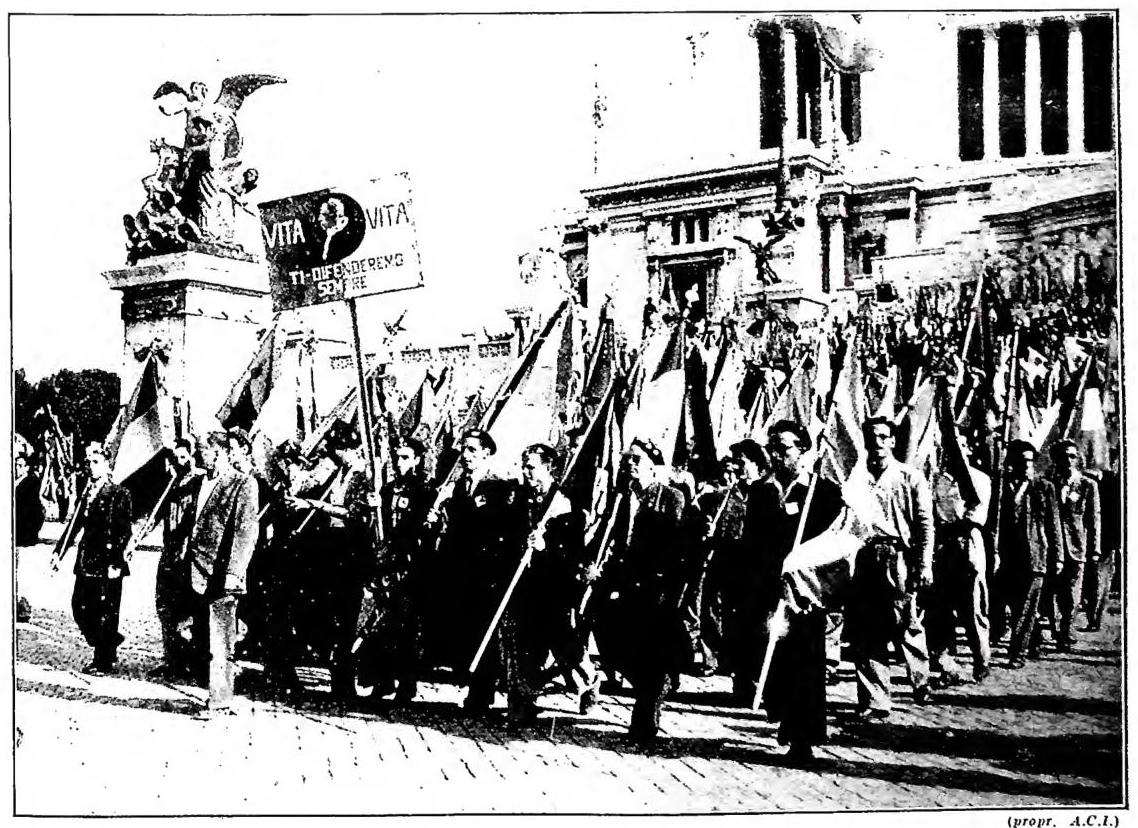
III. Under the Pontificate of Pius XII
A.C.I., as a living and highly sensitive organism, carried out its activities and adapted its statutes and programs to the new possibilities and demands of the moment. From the beginning of his pontificate, Pius XII entrusted the “high direction” of A.C.I. to a Commission composed of three residential cardinal-bishops, namely Cardinal Lavitrano, Archbishop of Palermo, as president, Cardinal Boetto, Archbishop of Genoa, and Cardinal Piazza, Patriarch of Venice, with Monsignor Colli, Bishop of Parma, as secretary, serving as the General Director of A.C.I. and as the General Ecclesiastical Assistant. In the dioceses, too, in place of the Diocesan Boards, and in the parishes in place of the Parish Councils, Diocesan and Parish Consultations were established, presided over respectively by the bishop and the parish priest and their delegates.Meanwhile, the Second World War broke out, and A.C.I.’s activity was entirely absorbed by the effort to resist and survive the storm, as well as by intense charitable work toward all those in need. When the war divided Italy with the Gothic Line, Pius XII appointed an interim director for central-southern Italy, while in the north the bishops established some provisional bodies such as the High Italy Consultation in Milan.
But even before the war had ended, organizations were already being created to adapt to the new climate of freedom and the new possibilities for work. The need to have representation before the state authority that would encompass all organized women, even those in associations outside A.C., led to the creation of the Italian Women’s Center (C.I.F.) with federative and representative functions. The Catholic Scouts re-emerged, resuming their name of Italian Catholic Scout Association (A.S.C.I.). The sports movement was reorganized through the creation of the Italian Sports Center (C.S.I.), while young people were organized into the Federation of Recreational Associations (F.A.R.I.). To the Catholic Film and Radio Center was added the Catholic Theater Center, thus forming, with the three centers, an Entertainment Authority.
Immediately after the liberation of Rome, Italian trade unionism gave rise to the Italian General Confederation of Labor (C.G.I.L.) of a unitary type, i.e., with Catholic workers present in the same trade union as other militants. To remedy the drawbacks of this coexistence, the Christian Associations of Italian Workers (A.C.L.I.) (q.v.) were founded with pre-union and para-union aims, as well as religious-moral ones, and their function remained and expanded even after, due to Communist factionalism, the union unity was broken (July 1948) and the Free General Italian Confederation of Labor (L.C.G.I.L.) was born.
The 1946 Statutes were a further organic update of A.C.I. They had the following characteristics: reaffirmation of the fundamental unity of A.C.I. despite the articulation of its various branches (art. 3); greater responsibility for laypeople in the field of practical direction and in carrying out works of apostolate; extension of A.C.I.’s coordinating function, as the “principal organization” of militant Catholics, to other “Catholic institutions of education, propaganda, charity, credit and in general of social utility, as qualified instruments of its apostolate” (art. 2). The relationships between A.C.I. proper and such Catholic institutions may be ones of dependence, coordination, or even simple adhesion. To coordinate the social apostolate activities of A.C.I. and the Catholic works coordinated with it and possibly the institutions adhering to it, the General Consultation was established at the national center (art. 13), the Diocesan Consultation in the diocese (art. 38), and the Parish Consultation in the parish (art. 55).
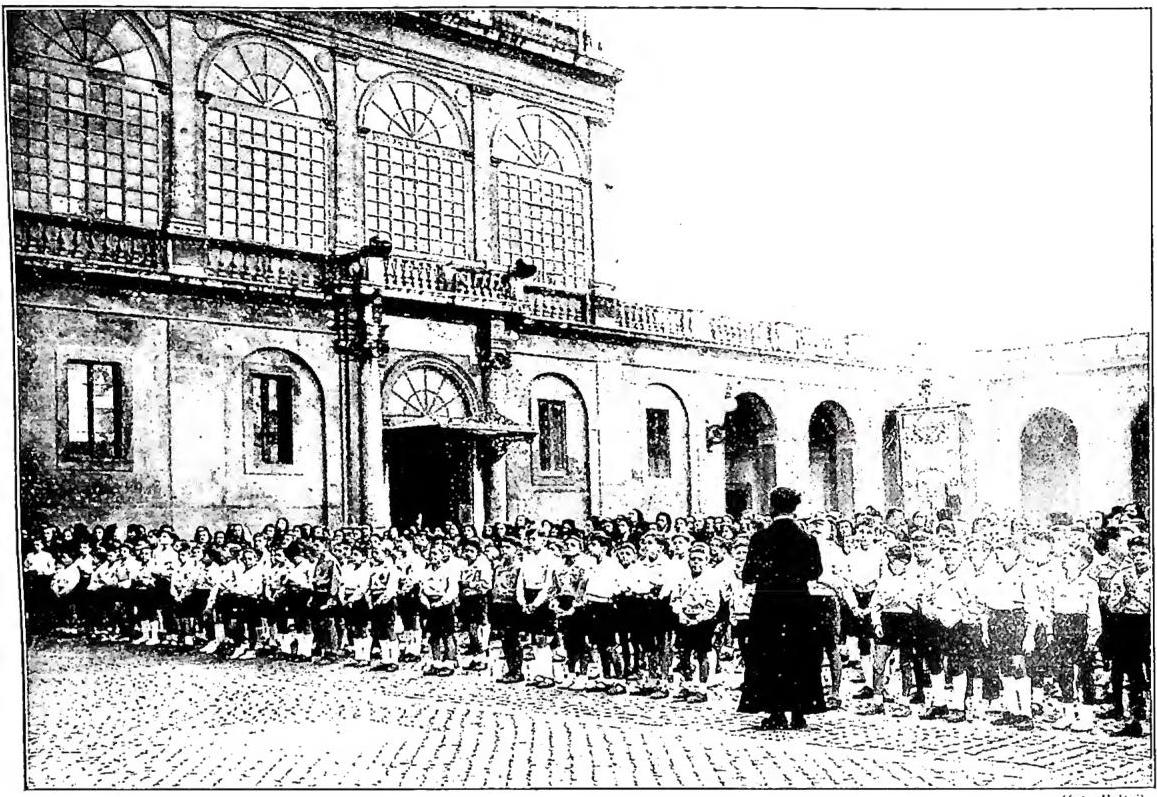
With the Teachers’ and Graduates’ Sections having obtained full legal status as associations, the organizational framework of A.C.I. thus consisted of: the Men’s Union, the Women’s Union, the Male and Female Youth, which are based nationally, diocesanly, and parochially; the Italian Catholic University Federation, the Graduates’ Movement, and the Teachers’ Movement, which are based nationally and diocesanly (art. 3).
Dependence on the ecclesiastical hierarchy was expressed at the national center by an Episcopal Commission and, through it, by the “secretary prelate” of the same Commission, who also served as the “General Ecclesiastical Assistant” (art. 5); in the dioceses by the respective bishop, who had a “delegate for A.C.I.” with the functions of “diocesan assistant of A.C.I.” (art. 34); in the parishes by the respective parish priest (art. 52). At the central Presidency and at the diocesan presidencies, Secretariats are established with advisory and executive tasks for particular sectors of activity, such as morality, education, etc. The new statutes aimed to place A.C. truly at the center of the entire movement for the Christian restoration of individual and social life.
For the press of A.C.I., see STAMPA CATTOLICA ITALIANA. – See Plates XXXVII-XXXVIII.