
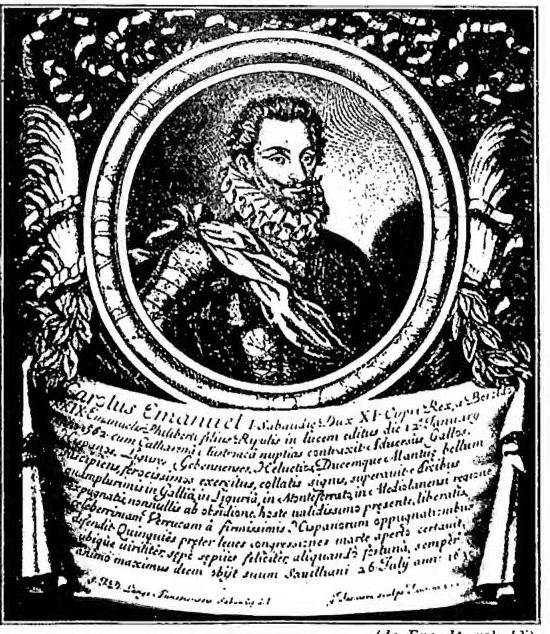
CARLO EMANUELE III of SAVOY, King of SARDINIA. — Born 27 Apr. 1701 at Turin, died there 20 Feb. 1773. Second son of Vittorio Amedeo II, initially little cared for by his father, when he became heir apparent upon the death of his brother Vittorio Amedeo (1715) he received a strict and predominantly military education; yet he was to repay his father’s lack of affection when the latter abdicated (1730) by having him confined in the castles of Rivoli and Moncalieri, while he put his military training to good use in pursuing a policy of advantageous interventions in the War of the Polish and Austrian Successions.
In the War of the Polish Succession he sided with France, occupied Lombardy and Milan, and at the Peace of Vienna (1738) obtained the fief of the Langhe with the provinces of Tortona and Novara. In the War of the Austrian Succession, however, disillusioned by France for failing to support him at the Treaty of Vienna regarding Lombardy, he switched to Austria’s side and by the Treaty of Worms (1743) secured the province of Vigevano, the county of Anghiera, the Oltrepò Pavese, part of the Piacentino with Bobbio, and the territories of the marquisate of Finale. The war then dragged on for four more years with fluctuating fortunes: it saw the revolt of Genoa (1747) against the Austro-Piedmontese and the Battle of the Assietta (1747). The Peace of Aix-la-Chapelle (1748) confirmed the cessions agreed at Worms, except Finale.
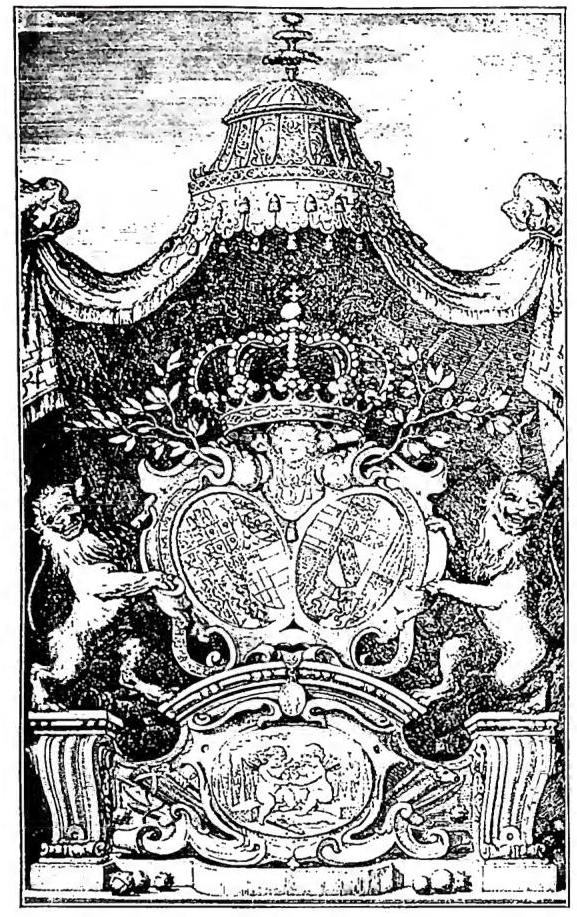
(from La venturina illumination: delle rillè di Torino per l'augusto spessitivo della Bruti Mortita di C. E. re di Sardegna... Turin (CE) Carlo Emanuele III of Savoy, King of Sardinia — The arms of C. E. and of Elisabetta Teresa of Lorraine)
After Aix-la-Chapelle he devoted himself entirely to works of peace, reorganizing the finances, abolishing feudal lordships, and concluding a highly advantageous concordat with Benedict XIV. He took little interest in letters and the sciences. He greatly favoured the army, especially the artillery, and fortified the Alpine passes, earning the reputation that the King of Sardinia held the keys to them; he founded the free port of Nice, opened roads, built churches, and so forth. He had a lofty conception of sovereign dignity and duty, was assiduous in his work, of exemplary morals, and sincerely religious. He died in 1773, mourned by the people.