
CORSINI
Corsini — Portrait of Cardinal Neri C. senior, work by Justus Sustermans — Florence, Corsini Gallery.
Neri C. senior, born in 1624, pursued a career in the Church, first as a cleric of the chamber and later as general treasurer; he was appointed titular archbishop of Damietta on 12 August 1652 and nuncio to France; however, upon arriving in Marseille, he was arrested and prevented from exercising his office by order of the King of France (Pastor, XIV, 1, p. 52; G. Moroni, op. cit., XVII, p. 285). He was created a cardinal by Alexander VII on 16 January 1664, but was published only on 15 February 1666 with the title of SS. Nereus and Achilleus. He served as bishop of Arezzo from 8 February 1672 until 8 March 1677, when he resigned. He died in Florence on 19 September 1678; in the Corsini Chapel of the Lateran Basilica, a fine tomb in the niche opposite that of Clement XII preserves his memory. It is the work of G. B. Maini (1742).
The elevation to the papal see of Cardinal LORENZO, nephew of Cardinal Neri (v. CLEMENTE XII), brought the Corsini family to the height of its splendor; BARTOLOMEO, son of Filippo, brother of the Pope, was appointed commander of the papal cavalry, prince of Sismano (1731), Grandee of Spain, president of the ministers of Charles III, King of Naples, viceroy of Sicily (1737). He was also assistant to the papal throne. He died on 30 September 1747 (Forcella, op. cit., VIII, p. 85, n. 232).
His brother was NERI MARIA junior, born in Florence on 19 May 1685, died in Rome on 6 December 1770. Received very young at the court of Tuscany, he then served as representative of Cosimo III at The Hague, London, Paris, and Cambrai. After the death of that grand duke, he went to Rome to join his uncle Cardinal Lorenzo C. When the latter was elevated to the papacy in 1730 under the name of Clement XII, he decided to enter the ecclesiastical state. Appointed secretary of memorials, he was then created a cardinal on 14 August and published on 11 December 1730 with the deaconry of S. Adriano; he later moved to S. Eustachio and became prefect of the Segnatura di Giustizia. Amiable and disinterested, he did not appear to his contemporaries as the most suitable man for affairs, and in theological controversies he showed little understanding, although he eventually became secretary of the Holy Office; he had an ambition to gather scholars and men of learning around him, but had little direct knowledge as a reader or scholar. Under the supervision of Fuga, he rebuilt the Palazzo Riario alla Lungara on the slopes of the Gianicolo and transferred there the collection of prints, paintings, and the renowned Library (acquired in 1854 by the State and now a section of the Accademia dei Lincei library) that his uncle the Pope had begun to assemble, greatly expanding it and making it available to scholars and artists. He also acted as a patron in the restoration of some churches, such as S. Eustachio and S. Isidoro, and was generous to the hospital of S. Gallicano, of which he was protector. He summoned to Rome Giovanni Gaetano Bottari and Pier Francesco Foggini, who exercised unlimited influence over him as advisors; he was in contact with Cardinal Domenico Passione, who was closely linked to those two by steadfast friendship; and this led the opponents of the Jesuits and the Roman Jansenists to regard him and invoke him as their supporter and protector. This tendency led him to interfere in the affairs of the noted Capuchin father Norberto and the Dutch Jansenists. He enjoyed little favor under Benedict XIV and even less under Clement XIII. He died at the age of 86 and was buried at the Lateran, where he had been archpriest, in the family chapel.
ANDREA C., nephew of Cardinal Neri, born in Rome on 11 June 1735, died there on 19 January 1795. Admitted very young to the papal court, he was created a cardinal deacon of S. Angelo in Pescheria at the age of 24 by Clement XIII on 19 December 1759. He moved to the presbyteral title of S. Matteo in Merulana on 11 September 1769 and became bishop of Sabina on 16 July 1776. He was educated by Bottari and Foggini, who were very close to his uncle. He did not excel in intellect and followed his uncle’s line in his attitude toward the Roman Jansenists. He was very active in procuring the suppression of the Jesuits and proceeded without regard in implementing the suppression. He protected Scipione de’ Ricci and favored his appointment as bishop of Pistoia; but in the end he distanced himself from him. He was prefect of the Segnatura di Giustizia and archpriest of S. Maria Maggiore.
Andrea was the last great prelate of the house, which continued to provide men of government to the Grand Duchy of Tuscany and later to the Kingdom of Italy. Cf. G. B. Picotti, s. V. ENOCH. Ital., XI (1931), p. 525 et seq.
TOMMASO. — Political figure, born in Florence on 7 November 1767, died in Rome on 6 January 1856. Cultured, prudent, and skilled in public affairs, he expanded the splendid library and the valuable collections of prints in Rome and Florence, and played a not insignificant part in the events that characterized the history of the Papal State during the past century.
A member of the courts of the Grand Duke of Tuscany and of Maria Luisa of Bourbon, he carried out diplomatic missions to the Republic (1796) and the First French Empire (1805). Summoned to Paris in 1809, he was appointed by Napoleon senator, chamberlain, count of the Empire, with the task of establishing electoral colleges in Rome and installing the supreme imperial court of jurisdiction in the Palazzo della Cancelleria. For a brief time he was a senator of Rome in the time of Pius VII, then he followed Cardinal Marini in demanding an account from General Welden for the brutal violation of the neutrality of the Roman State (1848).
After Pius IX departed for Gaeta, he participated in the provisional government junta, but later, opposing the convocation of the Constituent Assembly, he was forced to flee to his native Florence. After the restoration, Pius IX included him among the members of the new State Council for finance, and in the few years remaining to him he contributed significantly to the restoration of the treasury and the reorganization of public administration.
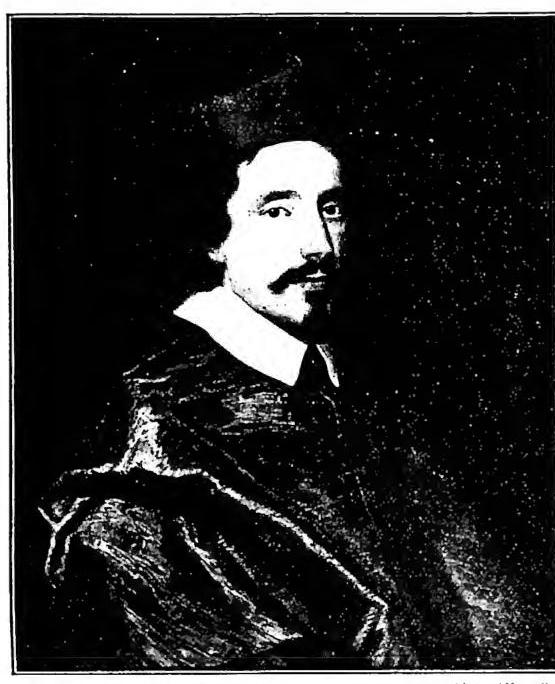
Corsini — Portrait of Cardinal Neri C. junior, work by Justus Sustermans — Florence, Corsini Gallery.
Neri, brother of Tommaso, Tuscan minister, born on 23 November 1771 in Florence, died there on 25 October 1845. After the outbreak of the French Revolution, he was tasked with seeking a modus vivendi with Paris (1796), but failed in this mission. With Tuscany occupied by Napoleon, he was called, above all for his particular financial expertise, to serve on the Council of State in Paris (1809). After the restoration of the forenses, C. became Tuscan plenipotentiary at the Congress of Vienna, conducting himself with such moderation that these qualities did not fail him even at the Congresses of Ljubljana (1821) and Verona (1822), where he also represented his court. Director of the Secretariat of State from 1814, collaborator and successor of Fossombroni, Tuscan politics of the Restoration are largely identified with his name.
The economic and financial measures taken during this period, the staunch resistance to Austrian attempts to interfere in the affairs of the Grand Duchy, in short, that moderate Tuscan policy which shunned both reaction and revolution, is the merit of C.
In its relations with the Holy See, C adhered firmly to the Josephinist theories enshrined in the old Leopoldine legislation. During the pontificates of Pius VII, Leo XII, and Pius VIII, relations between the Holy See and Tuscany were generally cordial, though occasional disputes arose over certain jurisdictional claims by the Florentine authorities. Relations, however, noticeably deteriorated toward the end of the pontificate of Gregory XVI. This was due partly to some governmental measures (such as the prohibition of printing pastoral letters whose text had not been previously approved by the civil authority, etc.), and partly to C’s refusal to extradite individuals requested by the Holy See under a special convention concluded in 1827. *See* pl. XXXIV.