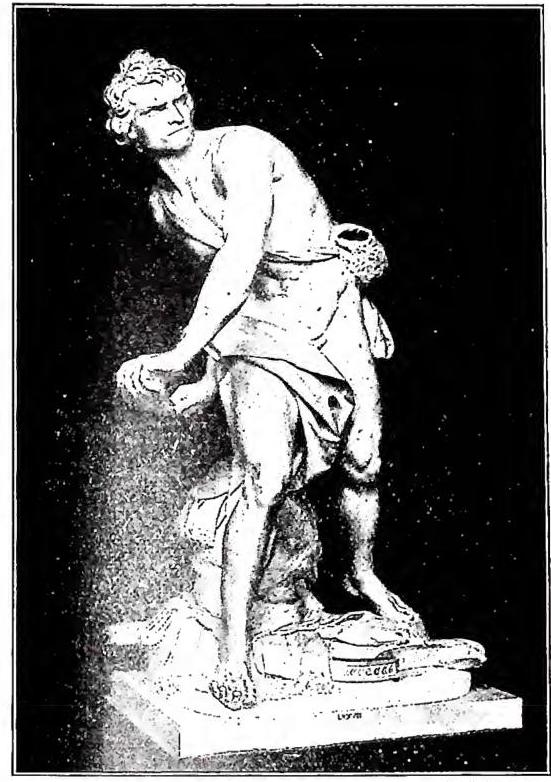
DAVID (Heb. Dávidh, “beloved”). — Second king of the people of Israel (c. 1000–960 B.C.), who brought it to the height of prosperity; in the Bible he remains the ideal of the Yahwist king. No other person in the Bible bears his name; of none, except Jesus, is so much spoken (especially from 1 Sam 16 to 1 Kgs 2; 1 Chr 10–29).
I. HIS LIFE
1. Up to the death of Saul (1 Sam 16–31)
The youngest son of Jesse (Isai), David was a young shepherd when he was secretly anointed king of the people of God by Samuel (see), after Saul’s transgression (1 Sam 16).He lived, perhaps for months or several years, first temporarily as a court musician, then (after the slaying of Goliath) permanently as an officer and son-in-law at Saul’s court, which soon passed from the most enthusiastic love to the most frenzied hatred. Hunted repeatedly and always, by manifest divine aid, escaping unharmed, he finally had to flee. He thought of going to the Philistines, Israel’s powerful enemies, where Saul could not reach him. But the attempt failed, for the memory of Goliath, whom he had slain, was still too vivid. He then took to a wandering life in the desert regions of the south, accompanied by a band of 400–600 men. Pursued even there, he twice had Saul within reach of his sword but spared him. After perhaps a year or more of this life, to free himself from constant persecution, he returned to Philistia a second time and this time was welcomed by Achish (see), king of Gath, together with his band. Considered an outlaw, he was given the village of Ziklag, with the obligation of contributing to the spoils of his raids. For some years he was in Philistine territory when war broke out between the Philistines and Israel; he too had to march with his men against Saul, but, due to justified fears of Achish’s officers, he was sent back. At Gilboa (c. 1000 B.C.) Saul perished with his son Jonathan, David’s intimate friend; David mourned sincerely for the two dead and for the catastrophe of Israel in a famous lament.
2. David king of Judah (2 Sam 2–4)
At Saul’s death David was thirty years old (2 Sam 5:4). To rejoin his people at once, by divine direction he came with his men to Hebron (tribe of Judah), where, being a Judahite by birth and a benefactor of the Judahite groups during the exile, he was enthusiastically received and anointed king: there they had no special reason to remain loyal to the half-destroyed dynasty of Saul, and moreover an authority was now needed.Yet, though king, he continued to hold Ziklag and to show himself a vassal of the Philistines. Nor had these anything to fear from the new small state, which favored their designs of domination over a divided Israel and thus weakened II. In the north, with its seat in Transjordan, a son of Saul, Ishbaal (or Ishbosheth), was king; in name only, however: in fact, for five years the real ruler was his general Abner, who gradually succeeded in driving out the invading Philistines. When Abner, realizing that David would be the victor in the contest, negotiated secretly with him, he was treacherously killed by Joab, David’s nephew, who feared losing his supremacy over the army. After two more years the illegitimate Ishbaal was removed by two of his officers, who went over to David but were immediately put to death as reward for their regicide. David had been king for seven years and six months.
3. David king of all Israel (2 Sam 5 – 1 Kgs 2)
The union of the northern kingdom with that of Judah was peaceful: the initiative came from the north as soon as Ishbaal disappeared, and David gladly accepted it (2 Sam 5:1–5): it was about 993 B.C. The Philistines, wishing to reduce the rebellious vassal to obedience, invaded the territory of Judah several times; but David would not accept battle, contenting himself with skirmishes and inflicting hard blows on the attackers. After two decisive victories over the Philistines in the Valley of Rephaim, Jerusalem was reached, and definitive superiority was gained over the former enemy, who from the Mediterranean Pentapolis had persistently pressed to open a way to the great trade arteries of Damascus and Mesopotamia. It was probably soon after that David carried out his most celebrated exploit, which fully revealed his political shrewdness and strategic skill: he chose as his capital and captured Jerusalem, a most central fortress that had hitherto remained in the hands of a surviving Canaanite group, the Jebusites; there he established his residence, enriching it with buildings and strengthening its walls (2 Sam 5:6–25). Yet the new capital still lacked a religious center for the nation. The Ark of the Covenant was far away, while nearby was the ancient and venerated sanctuary of Gibeon, served by the priest Zadok. A compromise was reached: at Jerusalem a new tabernacle was built and the Ark was brought there, served by the family of Abiathar, the priest who, having escaped the massacre of his family (see ACHIMELEK), had followed David in the desert; the Mosaic tabernacle of Gibeon continued to be served by the family of Zadok—a strange situation (two high priests at once) that would be resolved at Solomon’s accession with the fall of Abiathar: Zadok would go to Jerusalem with the Mosaic furnishings of Gibeon, and that sacred place would fall into disuse.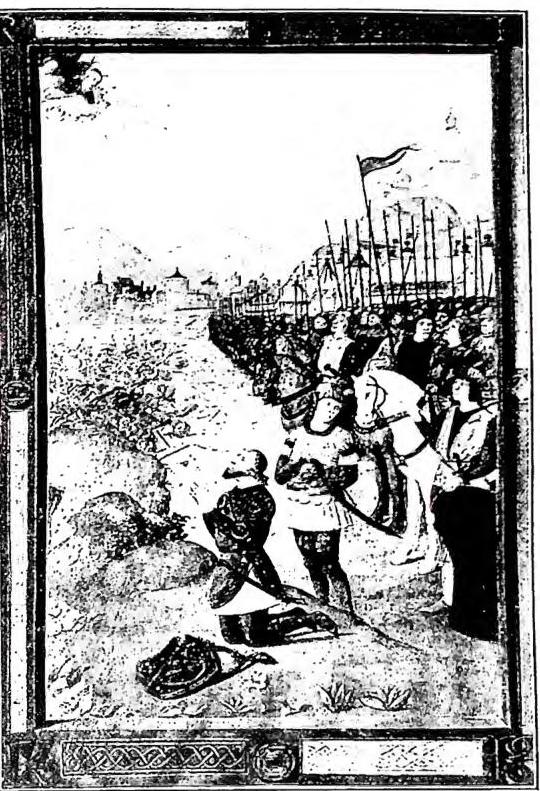
Without chronological order the biblical sources give news of several other wars waged by David against neighboring peoples (2 Sam 8–12; 1 Chr 18–20). As the war with the Philistines led to Israel’s independence in its own land, so these consolidated and extended its power. An offense to his ambassadors gave David the occasion to turn eastward against the Ammonites (see), who had allied themselves with various Aramean chiefs in the north. In two years the campaign ended with the submission of the Ammonite kingdom to tribute. He then turned north against the three Arameans, former allies of Ammon: he defeated them and, besides great spoils of metals and horses, placed an Israelite garrison in Damascus to ensure the annual payment of tribute and his own trade. Other Aramean princes declared themselves his allies, offering gifts. Then came the turn of the Moabites in the southeast, apparently subdued to tribute after severe decimation. The most difficult campaign was perhaps that against the Edomites in the south, also because of the distance from Israelite centers and the desert places: it lasted several months and was a war of extermination. The greatest result was to have a free way—vital for trade and later used by Solomon—to the southern seas (see ASIONGABER). Those peoples were conquered, not subdued; but Israel for the first time touched the borders of the Promised Land fixed by God: from the pass of Hamath to the Brook of Egypt. Having then allied himself with Tyre, Israel obtained the first place among the petty states of Syria.
Having reached such power, David conceived the plan of erecting a sumptuous temple to the Lord: he gathered precious material for this purpose and, it seems, made a detailed plan of the building. But God, through the prophet Nathan, disapproved of this plan, instead promising David an eternal kingdom (a clear prophecy of the Messianic kingdom: 2 Sam 7).
In step with the expansion of the borders, the internal organization of the State was carried out. At the base of this undertaking certainly stands the census (2 Sam. 24), perhaps premature, yet imprudent both from the political and the religious point of view. David’s subjects numbered about four million: but God, indignant, punished him with a violent three-day plague. If the census was carried out without revolt, this proves how much David had achieved on the path of unification: yet the rivalries between the northern and southern tribes were more dulled than extinguished. Besides providing a rational division of taxes, the census enabled David to better organize the army. Saul had already gathered a small standing army, which David increased. He also hired, especially as his personal guard, foreign troops such as the Cherethites and Pelethites, in Hebrew Kērethi and Pēlethi (probably of Mediterranean origin like the Philistines); but the mass of fighters was always summoned ad hoc on the occasion of war. Of the civil organization we have only a few hints in the names of certain court offices, which perhaps correspond to our chancellor, in charge of foreign affairs, overseer of works and tribute, state councillor.
Important too was the regulation of worship, to which David devoted himself twice, once after the Ark had been brought to Jerusalem (1 Chron. 16) and again at the end of his life (1 Chron. 23–26). At Gibeon the daily double sacrifice was to be offered and the rites solemnized by songs entrusted to a body of musicians; other Levites were charged with guarding the doors of the sanctuary. The same was done in Jerusalem. The second time David ordered a general double census of the Levites, after which all those who had reached the age of twenty were registered; the priests were divided into 24 service turns; secondary Levitical groups were instituted to assist the priests; three groups of singers were chosen; others were entrusted with the various tasks of maintenance and oversight of the sacred place. Thus the great plan of Moses began to be realized, though the unity of the place of worship had not yet been achieved. Such a liturgical reform, for the time in which it was carried out, may be called imposing. Great influence on David were exercised by the prophets Samuel, Gad, and especially Nathan: unlike Saul, David always followed their guidance docilely.
Like every oriental king, at a time when polygamy was permitted, David had about twenty wives. After Michal, Saul’s daughter, some served to ally him with foreign princes or to make him a member of strong southern clans even when he was an outlaw (thus the wise Abigail). But the most famous was Bathsheba, whom David took culpably during the Ammonite war from her husband Uriah, who was then treacherously put to death. From the many children, whom David loved to the point of weakness, came troubles; Absalom (q.v.) especially endangered all the great constructive work of the king. Such disturbances occurred in the last three lustrums of David’s life. Absalom had killed his half-brother Amnon at a country feast to avenge Tamar, his uterine sister, whom Amnon had violated two years earlier. Having fled to the king of Geshur, his maternal grandfather, he obtained permission to return after three years, and after two more to be readmitted to the king’s presence. But after four years of most skilful propaganda he proclaimed himself king in Hebron, marched against his father, who hastily abandoned the capital and took refuge in Transjordan, where he managed to form an army: in the clash Absalom was defeated and killed (2 Sam. 13–18). Immediately after, the northern tribes rebelled; but after their leader Sheba was betrayed by his own men, everything was restored. Only the rivalries among his own sons remained. David died of old age, at seventy, after having arranged for Solomon, the son born to him by his beloved Bathsheba, to be consecrated king.
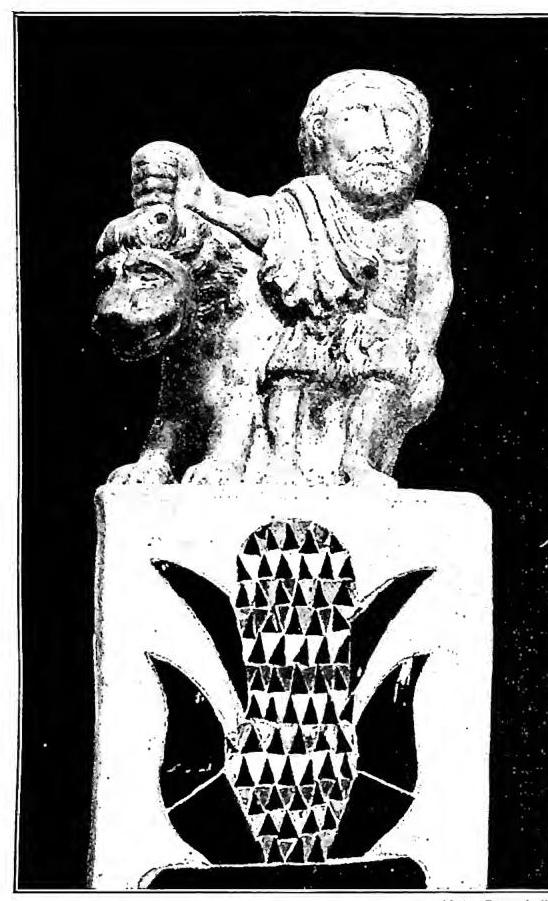
Simultaneously there was a reform of the priesthood (which would later be dissolved at Solomon’s accession with the fall of Abiathar): Zadok went to Jerusalem with the Mosaic furnishings from Gibeon, and that sacred place fell into disuse.
On David’s times (unknown to us) the glory of the kingdom and its pacifying mission were foretold. He predicted of the Messiah attachment to the sublime mission, indescribable sufferings, resurrection from the dead, an eternal throne despite fierce opposition, even divinity itself (Ps. 2; 15; 21; 68; 108). The idea that David and the Messiah were one became so ingrained that Jeremiah and Ezekiel would go so far as to use the name of David as a synonym for the Messiah (Ezek. 34:23, etc.). The act of faith in the messiahship of Jesus (born of Davidic lineage; cf. Matt. 1:1) was expressed in the cry: “Son of David!” (Mark 10:48; 11:10).
The post-Christian rabbinic literature is full of the name and work of David; the Qur’an mentions him several times, assigning him a splendid place in Paradise. The episodes of his life, so rich in moral instruction, often recur in the writings of the Church Fathers. The Jews celebrate his birth and death on the second day of Pentecost; Greeks and Maronites remember him on the Sunday after Christmas; Armenians on Dec. 22; Copts on Dec. 19; Melchites on Dec. 26; the Roman Martyrology on Dec. 29.
III. DAVID’S PSALM OF SELF-COMMENDATION – A short poem of eight verses, which in manuscripts and Greek editions of the Bible is found at the end of the Psalter as Psalm 151. The title contains a curious historical presentation, describing its supposed origin and implicitly marking its extracanonical character: “This psalm was especially written (ἐκόγραπτος) for David, yet outside the number, when he fought alone against Goliath.”
In it David celebrates his election as king, alluding to his early life as a shepherd and stressing God’s mercy, who preferred him to his brothers with better physical qualities. Vv. 7–8 briefly recall the encounter with the giant Goliath (cf. 1 Sam. 17:4ff.). The psalm offers nothing particularly distinctive, since its various details are drawn from biblical texts. As to its origin, only very vague conjectures can be made. It was probably composed between the 2nd century BC and the 1st century AD, the most prolific period for the apocryphal writings. The psalm has been transmitted not only in Greek, perhaps its original language, but also in Syriac, Coptic, Ethiopic, Armenian, and Latin. Vv. 3–4 entered the liturgy (responsory at the 6th lesson of the Sundays 4–11 after Pentecost).
IV. CHRISTIAN ARCHAEOLOGY
In places of worship the earliest representation of DAVID fighting Goliath is in Dura Europos (v.) in Mesopotamia. A painting on the vault of Cubicle III in the catacomb of Domitilla in Rome, dated to the first half of the 3rd century, shows DAVID in an exomis tunic, armed with a sling in his right hand. With regard to its symbolic meaning, this representation is placed by Wilpert among those concerning the invocation to God for assistance for the souls of the departed. “Libera, Domine, animam eius (defuncti) sicut liberasti David de manu regis Saul et de manu Goliath” (from the Ordo commendationis animae). This symbolism is confirmed by certain Christian sarcophagi in Gaul with the scene of the biblical hero fighting Goliath, also depicted in the precious Brescia Lipsanotheca (4th century). A fresco in the presbytery