
ELISHA ('Elisæ' = God saves). — Prophet, successor of Elijah (see). He was the son of Shaphat, a native of Abel-meholah, southeast of Beth-shean (1 Kings 19:16). A wealthy landowner (1 Kings 19:19), he joyfully responded to Elijah’s symbolic gesture by which he was consecrated prophet and his successor in the name of Yahweh (1 Kings 19:19–21). For about six years he served as Elijah’s devoted disciple (2 Kings 3:11; cf. ch. 2), and upon Elijah’s death he received his mantle and two-thirds of his charismatic power (2 Kings 2:9–10 Heb.), that is, the portion that in inheritance law fell to the firstborn (Deut. 21:17). As Elijah’s heir and successor he was immediately recognized by the so-called “sons of the prophets,” who had him as their leader (2 Kings 2:12–15; cf. 6:1–7).
Unlike Elijah, Elisha retained his habits as a well-to-do bourgeois: he dressed regularly (cf. 2 Kings 2:12), lived in cities, had a house in Samaria (2 Kings 2:19–23; 6:8–20, 32; cf. 4:8–10), and was always accompanied by a servant, Gehazi. He was a prophet in the kingdom of Israel under Joram (853–842 B.C.), son of Ahab; Jehu (842–815); Jehoahaz (814–798); and Joash (798–783). He died around 790 B.C.
Elisha energetically cooperated in the fulfillment of Elijah’s prophecies concerning the triumph of Yahwism and the destruction of the dynasty of Ahab. His entire activity demonstrates that salvation comes only from Yahweh, an idea expressed in his very name. He frequently intervened in public life. He encouraged the army before Moab; he saved it from discouragement by the lack of water and predicted its victory (2 Kings 3:9–25). He revealed to Joram the ambushes of Ben-hadad and led the Syrian soldiers sent to capture him to Samaria (2 Kings 6:8–12); he announced the end of the terrible siege of Samaria through Yahweh’s intervention (2 Kings 6:24; 7:20).
He went to Damascus to carry out the mission entrusted by God to Elijah (cf. 1 Kings 19:15). To Hazael he revealed that he would kill the sick king, take the throne, and bring great harm to Israel (2 Kings 8:7–15). In the same way, he chose the opportune moment to anoint, through one of his disciples, Jehu as king of Israel while Joram was wounded and staying in Jezreel (2 Kings 8:25–29). Jehu, reminded of Elijah’s words against the house of Ahab, brutally destroyed all its members and killed all the worshipers of Baal (2 Kings 9–10). Finally, to King Joash, who visited him on his deathbed, Elisha predicted that he would defeat the Arameans three times (2 Kings 13:14–19).
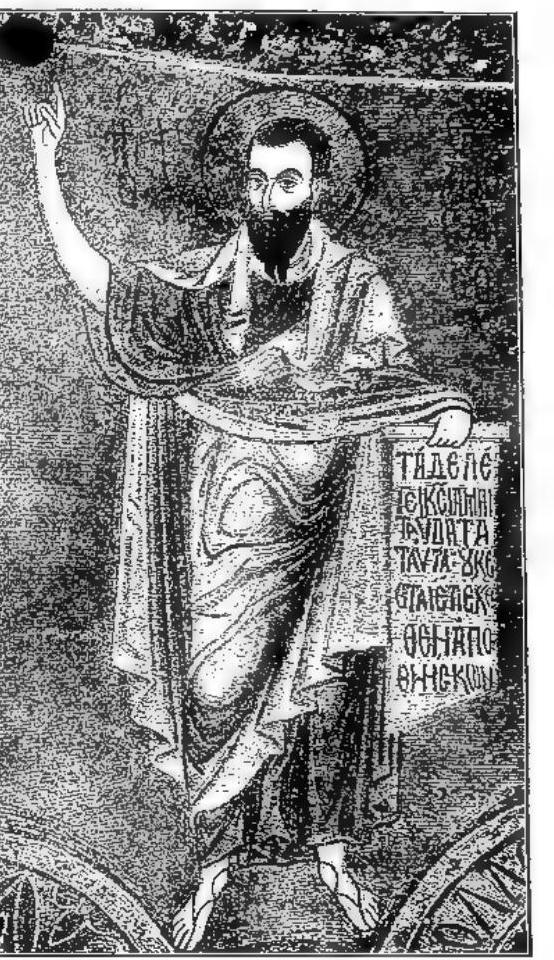
Elisha performed many miracles. He divided the waters of the Jordan with Elijah’s mantle (2 Kings 2:14–15); with salt he made the waters of Jericho wholesome (ibid., 2:19–24). He multiplied the oil of a widow to deliver her from a harsh creditor (2 Kings 4:1–7); he raised to life the son of the Shunammite woman who had sheltered him (ibid., 4:8–37). He cured a poisonous stew (ibid., 4:38–41); he multiplied twenty loaves for a hundred people (ibid., 4:42–44). He healed Naaman the Syrian of leprosy, who became a faithful Yahwist, and punished Gehazi’s greed by transferring to him the leprosy of the former (2 Kings 5). A dead man was revived by contact with Elisha’s bones (2 Kings 13:20–21). Cf. Ecclus. 48:12–14.
St. Jerome mentions Elisha’s tomb near Samaria (In Abdiam: PL 25, 1099). The Church celebrates his feast on June 14.
For iconography see ELIJAH.