
It is believed that the Estonians, who previously lived together with the other Finno-Ugric peoples between the Volga and the Ural Mountains, by the beginning of the Christian era already occupied the territory of present-day Estonia. The first attempts to Christianize Estonia by the Slavs and the Danes date back to the 11th century, but they were unsuccessful. The Estonians, attached to their animistic tradition, warlike and bold pirates, made commerce throughout the Baltic Sea unsafe, extending their raids as far as the cities of Sweden and Denmark. By the end of the 12th century there were still no cities in Estonia, nor had a centralized state system been formed. The chiefs (vannemad) of the small regions only united their forces in times of war.
Pope Alexander III entrusted around 1180 the evangelization of Estonia to the Archbishopric of Lund, and thus to Denmark. No decision, however, was made regarding Livonia and Courland, which later became the center for the Christianization of the Baltic countries. German merchants traveling to the Russian cities via the Latvian river Daugava took with them the Augustinian monk Meinhard of Segeberg. A German from Saxony, he was consecrated the first Bishop of Livonia by the Bishop of Hamburg-Bremen in 1180 with a territory whose borders were not precisely defined and which was subject to the metropolitan of Hamburg-Bremen. After Pope Alexander III’s struggle against Frederick Barbarossa, his successors naturally desired that the mission in the Baltic be considered purely papal. Yet the men of their age believed that whoever abandoned the Christian faith was gravely culpable not only before God but also before men, and they were convinced that such a person had to be forced by arms to remain faithful and likewise protected against the pagans. The successor of the peaceful Meinhard (1186–96), the Cistercian abbot Berthold of Loccum (1196–98), arrived with a band of crusaders but fell in battle. The third bishop, Riga (v.), founded the Order of the Brothers of the Sword and established the fortified center of Riga in 1201. Soon afterward (1207) Albert abandoned the directives of the Pope and swore fealty to the German king Philip of Swabia; the German Empire, taking the form of a purely ecclesiastical state in mission territory, began its policy of expansion there.
As soon as the Livonians and Latvians had been converted, the Brothers of the Sword turned (1207) to the subjugation of Estonia, but due to the tenacious resistance they won the decisive battle only in 1217. They then found themselves compelled to seek the aid of the Danes, who arrived in 1219 under the leadership of Valdemar II in northern Estonia, where they founded the fortress of Reval, present-day Tallinn. By 1224 the country was practically subdued; to conquer the major island of Saaremaa (German Ösel) required a special crusade in 1227.
ESTONIA
Three dioceses were created: Reval (1219), Dorpat (Estonian Tartu, 1224), and Ösel (1227). Over time, monasteries of the Franciscans, Dominicans, Cistercians, and Brigittines arose, already numbering 22 by the 16th century. Even after the Estonians had been baptized, many remained practically pagan, since the parish clergy, demanding the fulfillment of external rites, did not use the difficult language of the neophytes in religious instruction. Moreover, the Estonians, who had once been free, wealthy, and masters of the Baltic Sea, were soon reduced by the new rulers to serfdom, in which they remained for more than 600 years. The crusaders became great feudal lords, and thus the weapon created to propagate the faith did not serve its purpose. Already in 1213 Innocent III admonished the crusaders to remain within the limits of their task; in 1225 Rome was MODERATI (v.) as a special legate to resolve territorial disputes between the Danes and the Germans. In 1343 a bloody revolt broke out in northern Estonia, which was crushed with great cruelty by the Danes, who, after this event, sold their dominion to the Teutonic Order (v. which had already incorporated the weakened Brothers of the Sword in 1237), a move that did not change the situation of the natives. In the face of this, the clergy did not remain inactive: the Archbishop H. Scharfenberg (1424–48) of Riga complained that the Teutonic Order was hindering synodal visitations; the statute issued by the synod of Riga in 1428 excommunicated those who forced peasants to work on Sundays and emphasized the necessity of synodal visitations. The energetic bishops of Ösel, Johannes III Orgies (1451–1515) and Johannes IV Kievel (1515–27), prepared and had printed the first Estonian-language catechism “approved” in Estonian. Finally, the Synod of Romeburg (1521) decided to found a seminary for Estonian priests in Dorpat or Pernau (Estonian Pärnu) to counter the “conspiracy of the vassals.” The Lutheran Reformation prevented the execution of the project; already in 1523 Luther wrote “to the Christians of Riga, Reval, and Dorpat.” The German merchant guilds of Reval accepted the “Gospel” in 1524; this was followed by the destruction of sacred images and the expulsion of religious orders (1525).
In the Livonian War begun in 1558, Tsar Ivan IV the Terrible of Russia defeated the Teutonic Order; the Germans now accepted political domination by the Swedes (who, under Gustavus Adolphus, introduced the Swedish Protestant ecclesiastical system), the Poles (1562–1629), who began the recatholicization, and the Danes who remained on the islands. Records exist of visits by various Swedish Protestant bishops (1585–1700), who resisted the barons’ claim to participate in the synod. From 1692 to 1694 the Swedish ecclesiastical system of 1686 was in force, revised only in 1832.
In 1710 Estonia was conquered by Peter the Great (definitively by the Treaty of Nystad in 1721). The situation of the surviving Estonian peasants worsened due to the concessions made by the Russians to the local barons. Only after an imperial decree for Estonia (1816) was serfdom abolished. The nobility obtained from the Russian Senate the direction of the Estonian Protestant consistory and retained this privilege throughout the entire period of Russian rule. From 1730 onward many proselytes were made among the Germans (see 1730–1735).
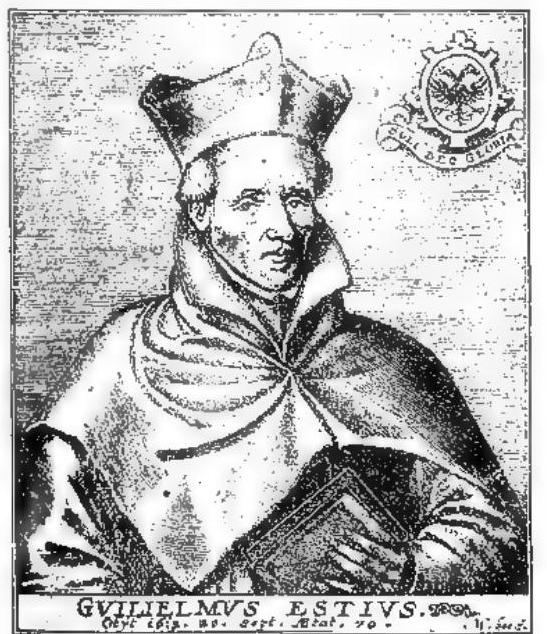
The religious manuals of the Catholic bishop Johannes IV Kievel and the Jesuits Th. Busius, J. A. Weltherus, and W. Buccius (only the Agenda Parva of 1622 has come down to us) and of the Protestants of the 16th–17th centuries were followed by religious and practical manuals of the Protestants (New Testament 1715, Bible 1739). The Estonian folklore, which had assimilated many Germanic elements, is extremely rich and was collected after the impetus given by J. Hurt at the end of the 19th century. The language of the educated class remained German for a long time; only after 1850 did genuine Estonian literary works appear.
After books of Pietist inspiration (influenced by the Herrnhuters) at the beginning of the 17th century, under the influence of the Enlightenment, popular secular literature arose. A romantic current with a historical coloring (which over time became increasingly national) gave a characteristic imprint to the affected culture. Against the backdrop of the Estonian Learned Society (founded in 1835), F. R. Kreutzwald created the Kalevipoeg (1861), an epic poem imitating folk poetry. This work greatly influenced the national awakening and all the literature of the Risorgimento, culminating in the patriotic lyrics of Lydia Koidula. At the end of the century the following distinguished themselves in belles-lettres: Julius Liiv and Anna Haava, while realism asserted itself in prose by Eduard Wilde, Eduard Peterson-Särgava, and August Kitzberg. Around 1905 the poets Gustav Suits and Villem Ridala and the novelist and critic Friedebert Tuglas emerged.
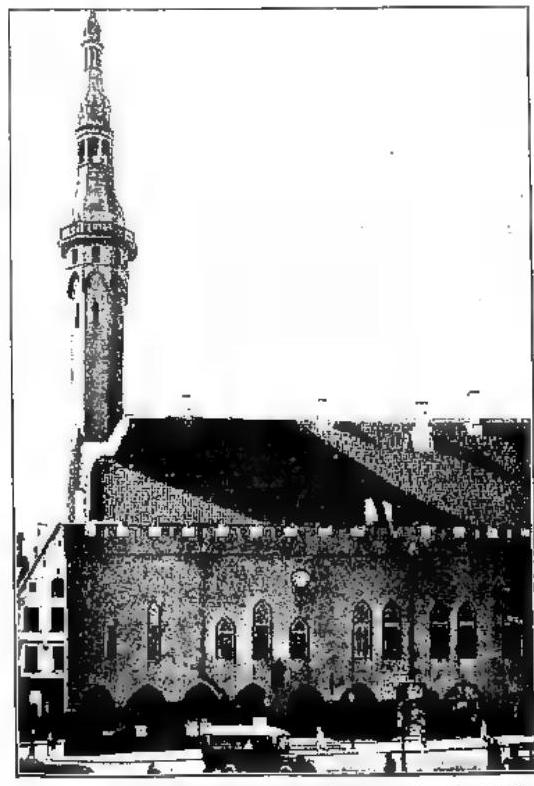
Estonia – Church of St. Olaf in Tallinn (13th century).
Glass, leaders of the Noor Eesti literary-cultural movement (Young Estonia), as well as the poet E. Enno, oriented Estonian culture toward European culture, decisively distancing themselves from narrow nationalistic trends. After 1917, new directions were asserted by the lyricists M. Linder and H. Visnapuu, the writer A. Gailit, and others who rallied around the dynamic Sturu movement.
The independence achieved in 1918 created favorable conditions for the development of a national culture. After a period dominated by Western-influenced lyric poetry, realism and naturalism prevailed, represented by A. Kivikas, H. Raudsepp, O. Luts, A. Jakobson, M. Metsamurke, and the notable A. H. Tammasure; the latter two often addressed religious subjects. Other noteworthy figures include K. A. Hindrey, K. Ristikivi, A. Mälk, and the Finno-Estonian writer Aino Kallas. Among the poets, B. Alber, A. Talvik, and B. Kangro are also cited.
Properly speaking, Estonian figurative art and music began with the national awakening of the 19th century. They are represented by the painters J. Köler, A. Laipman-Laikmaa, P. Burman, K. Raud, N. Triik, K. Mägli, A. Wabbe, E. Ole, E. Wärlat, the sculptors A. L. Weizenberg, A. Adamson, J. Koort, V. Melnik-Mellik, F. Sannaræes, A. Stankopf-Rea, and the composers A. Kapp, R. Tobias, M. Saar, J. Aavik, C. Kreek, H. Eller, E. Aav, and E. Tubin.
With the annexation to the U.S.S.R., Estonian cultural life was subjected to Marxist ideology, while numerous intellectuals continued to uphold the cultural traditions of free Estonia in exile. In Estonia, many intellectuals were deported.