
FELICITY, saint and martyr. — She is commemorated in the Hieronymian Martyrology on 23 November as buried in the cemetery of Maximus on the Via Salaria nova. Pope Boniface I (418–22) had a basilica built over her tomb, which also served as his own burial place. St Gregory the Great delivered a homily in this basilica on the dies natalis of Felicity. The martyr’s tomb is also recorded in all the pilgrim itineraries of the 6th century.
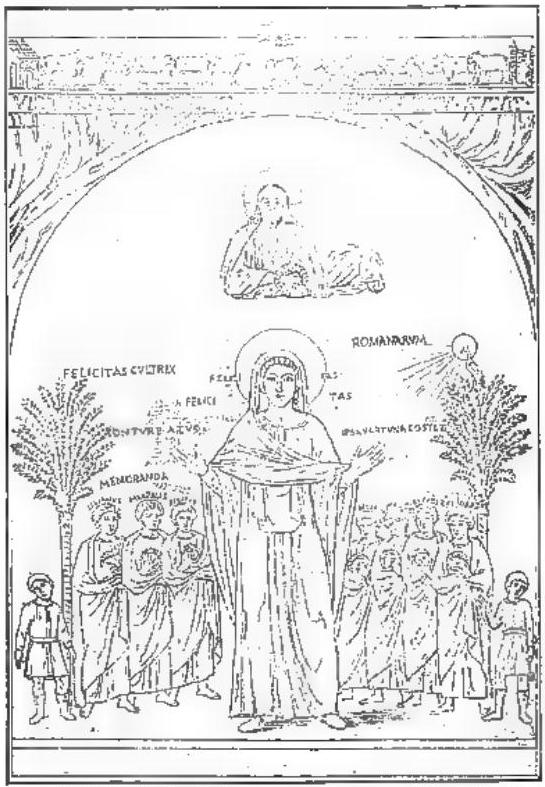
Between the end of the 4th and the beginning of the 5th century, a highly legendary Passio was composed according to which Felicity, during the reign of Marcus Aurelius, was denounced by pagan priests and brought with her seven sons before the prefect’s tribunal in Rome. The prefect tried to persuade them to sacrifice, but they rejected every proposal; indeed Felicity exhorted her sons to remain steadfast in the faith. They were then handed over to different judges, who caused them all to perish in various ways. They were buried in different cemeteries of Rome; Felicity, together with her son Silanus, in that of Maximus. The entire narrative is plainly modelled on the episode of the seven Maccabean brothers (2 Macc 7:1–41) and contains no historical truth. The names of Felicity’s seven sons do in fact appear in the Depositio martyrum under 10 July, but without any indication of kinship among them or with Felicity; this relationship was invented by the hagiographer. Nor is any obstacle presented by the painting discovered by De Rossi in 1883, depicting Felicity with her supposed seven sons, since it depends on the Passio, from which all subsequent hagiographical documents derive.
For the cemetery of Felicity, V. MASSIMO.