
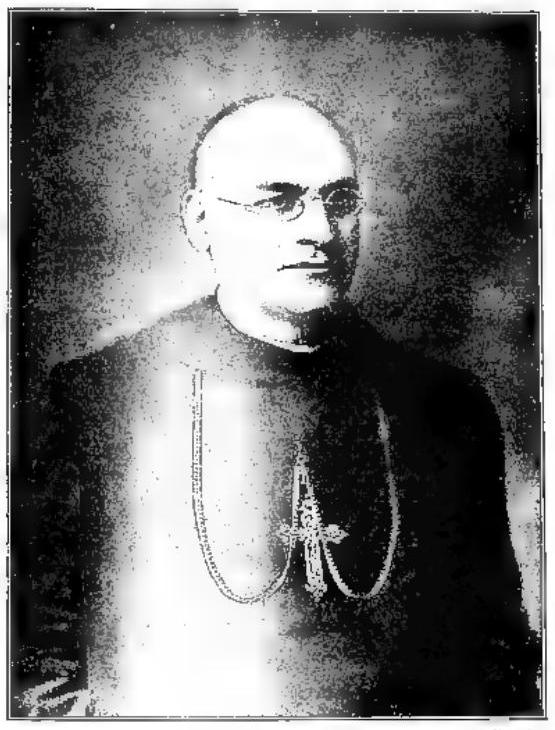
FERRETTI, Paolo Maria
With a passion for numismatics, he expanded the famous collection owned by his family.
FERRI, Ciro
Altare dell'Annunziata — Rome, church of S. Ignazio.
The Sala di Apollo (1660) and he painted the Sala di Saturno (1663–64). In Florence, where he remained until 1665, there survives from him the altarpiece in S. Maria Maddalena dei Pazzi, representing the titular saint of the church in glory with the Virgin. He then went to Bergamo, where he stayed until 1667, frescoing the right nave of S. Maria Maggiore. In 1669 he returned to Rome, where he completed various works left unfinished by Cortona, including the frescoes of the dome of the Cappella Gavotti in S. Niccolò da Tolentino. His last work in Rome was the decoration of the dome of S. Agnese in Piazza Navona, left incomplete at his death and finished by his pupil P. Corbellini. In Rome he also painted in S. Marco, in S. Andrea al Quirinale, in S. Prassede, etc. For the duomo of Monte Porzio he painted S. Antonio and the Child Jesus; for S. Maria della Scala in Siena, S. Teresa and S. Agostino. He made the design for the ciborium of the high altar of the Chiesa Nuova and that for the completion of the high altar of S. Giovanni de’ Fiorentini, begun by Borromini.
In the field of profane painting, besides the works recalled in the Palazzo Pitti, he frescoed in the Villa Falconieri at Frascati the allegories of Spring, Autumn, and Winter, which are perhaps his masterpieces. He also worked on book frontispieces, arms, emblems, etc.
F. was also a sculptor; the Roman guidebook of Titi (1763) already cited as executed from his designs two silver statues in the church of S. Lorenzo in Damaso, representing SS. Lorenzo and Damaso; some years ago four of his statues were placed in the sacristy of the Roman church of the Gesù, representing S. Francesco, S. S. Federico, S. Teresa da Lima, S. Filippo Neri, and S. Ildoro Agricola. In these sculptures the same forms are found as in his paintings, plastically translated. In his major works F. never succeeded in freeing himself from the influence of Cortona; more personal are instead his minor decorative works.