
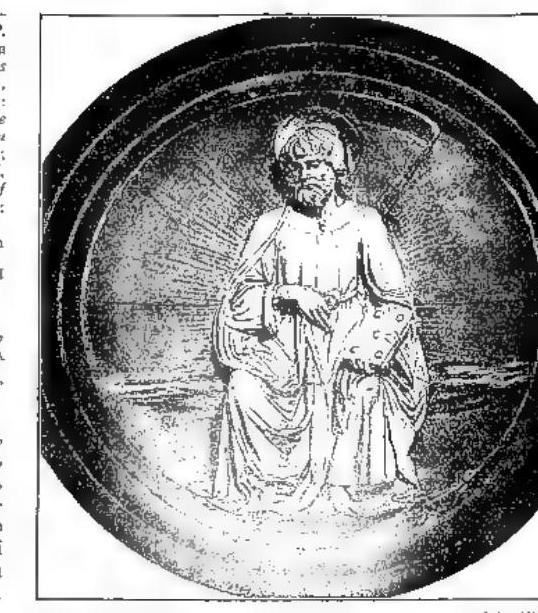
PHILIP, APOSTLE, Saint — S. F. Ap. by Luca della Robbia, Florence, Shrine of S. Croce, Fazzi Chapel.
II, ed. C. R. Aliberty, Stuttgart 1938), written, according to the editor (p. XX), c. 340, presupposes the existence of apocryphal Acts of F. (p. 192, 10; 194, 11).
Edition of the Greek fragments: M. Bonnet, Acta apostolorum apocrifica, II, 11, Leipzig 1903, p. 1 ff. The Syriac recension is in Wright, Apocrifical Acts of the Apostles, I, London 1871, p. 73 ff. (Syriac text), II, 1871, p. 69 ff. (English trans.).
THE GOSPEL OF PHILIP — An apocryphal work used among the Gnostics of Egypt, known to Epiphanius (Haer., 26, 13, 1) who quotes a sentence from II.
As it ascends to heaven, the soul answers each of the higher powers that it would be known “by uprooting its roots,” not producing children for the archon of this age, knowing itself destined for the heights. The idea is clear (cf. also the formula of the Marcosians, in Jerome, I, 21, 3). The soul comes from above; by not producing children it frees itself from this world and can rise again to the heights.
A Coptic translation of this gospel has recently been discovered (J. Doresse, Nouvel apocryphe gnostique copte, in Vigiliae Christianae, 3 [1949], p. 134). Only after the publication of this text will it be possible to judge how much truth there was in hypotheses regarding the influence of the Gospel of Philip on other Coptic apocrypha. Leontius, De sectis act., III, 2 (PG 86, 1, 1213) reports that the Gospel of Philip was read by the Manicheans.