
FRANCESCO II, King of France. — Son of Henry II and Catherine de’ Medici, born at Fontainebleau on 19 Jan. 1544, died on 4 Dec. 1560. Upon the death of his father (10 July 1559) he ascended the throne while still very young. His policy was directed by his uncles, Francis of Lorraine and Cardinal Charles of Lorraine, and was part of the fierce struggle waged by them against Calvinism in France. During his reign, in March 1560, the Conspiracy of Amboise was crushed, in which Calvinists, instigated by the Prince of Condé, had planned to abduct Francis II in order to detach him from the influence of the Catholic nobility. Francis’s uncles, who had at their disposal selected Scottish troops (in 1558 Francis had married Mary Stuart, Queen of Scots), arrested Condé at Orléans and subsequently succeeded in having him condemned to death (26 Nov.): the sudden death of Francis and the conciliatory efforts of Catherine de’ Medici saved the life of Prince Louis of Condé.
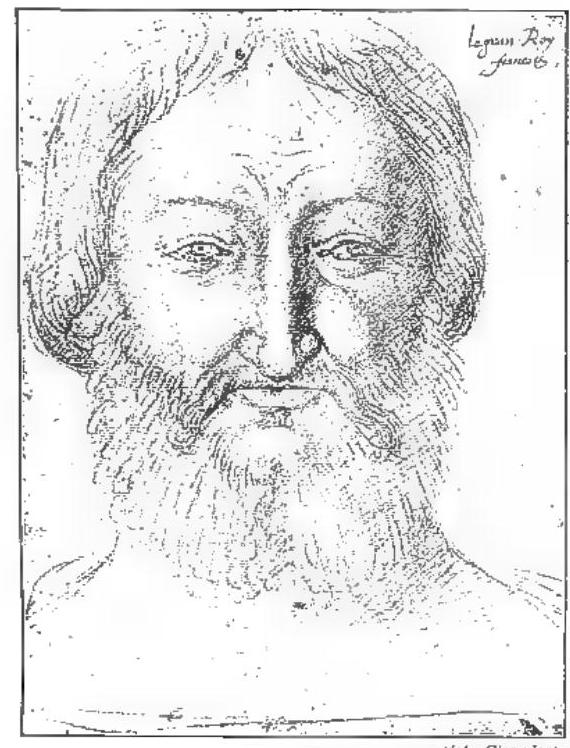
FRANCESCO I of Valois, King of France — Portrait. Pencil drawing. School of Clouet — Chantilly, Musée Condé.
FRANCESCO I of Valois, King of France — He was forced to renounce his aspirations in Italy and Burgundy (Treaty of Madrid, 14 Jan. 1526); but, once freed, he naturally resumed the war, which ended, after further disasters, in the Peace of Cambrai (3 Aug. 1529): through it at least Burgundy was saved. Having secured the alliance of England and Turkey, the king maintained in 1535 the occupation of the Piedmont and Milan; but success was followed by mutual exhaustion, which led to an armistice (July–Nov. 1537).
The following year a ten-year truce was concluded at Nice, with the mediation of Pope Paul III, based on the principle of the status quo ante, and the two rivals, meeting on 14 July at Aigues-Mortes, now seemed disposed to respect II. But in 1541 a single incident sufficed to rekindle hostilities. The shift of England in favour of Charles V (Feb. 1543) decided the outcome of the war in the north and frustrated the advantages gained by the French in the south. The Peace of Crépy (18 Sept. 1544) closed this further phase of the struggle: Francis I was once again compelled to accept the status quo ante, renouncing Nice and, naturally, Milan. Within three years he died at Rambouillet (31 March 1547), while the situation had grown more critical than ever. His son Henry II was to take up the struggle and carry it to the Treaty of Cateau-Cambrésis (1559).
The guiding principle of Francis I’s policy was anti-Habsburg. Against Charles V he found himself in agreement with Clement VII, who in 1533, weary in turn of Spanish tutelage, allied his house with the Valois by giving Catherine de’ Medici in marriage to the Dauphin Henry. Likewise, this policy determined his stance on the question of the Council: the understanding with Rome in 1533 proved useful to the Pope, who wished to postpone its convocation (Francis I was well aware of the political advantages the Council would bring to Charles V, should religious pacification be achieved in Germany). When the Council finally began its sessions at Trent, France (which had opposed