
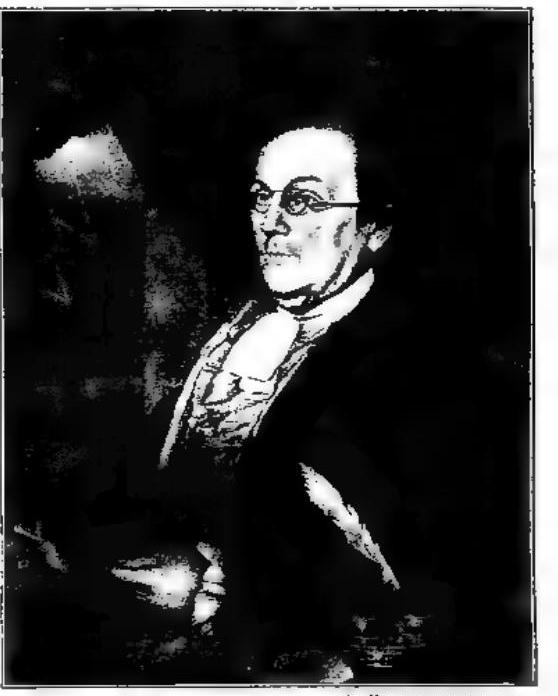
FRANK, JAKOB. — Pseudo-Messiah of the Jews, born in Poland in 1726, died at Offenbach on 10 Dec. 1791. He gave rise to the movement known as “Frankism” from his name. He emigrated to the East and became a follower of Sabbateanism (v. *Sabbethia* Zébin). The soul of the Messiah, taught F., is one and the same; hence the same soul was in King David, in Elijah, in Jesus, in Mohammed, in Sabbatai Zébin, and in himself. Later suspected by the Jews, he returned to Poland and made contact with the various Sabbateans in the countries through which he passed. In his secret discourses he expounded the Sabbatean Trinitarian doctrine: the Godhead consists of the Holy Ancient One (Santo Señor), the Holy King, and the Most High Matrona. F. claimed to be the incarnation of the Santo Señor. His followers began to call themselves Frankists or Zöharists.
The Jews accused F. before the government of propagating Islam and of encouraging emigration to Turkey. The Frankists were later excommunicated by a rabbinical synod, and a ban was pronounced against studying the Zohar and the writings of Cordovero before the age of thirty, and those of Isaac Luria before the age of forty. Bishop Dembowski also became involved in the struggle. A few dozen Frankists then converted to Christianity. The Frankists launched a vigorous campaign against Talmudism; there were trials, arrests, and religious disputes. Condemnations were later passed against the Jews as well. In time even the Christian religious authorities began to regard the Frankists as mere sectaries. In 1750 a great religious disputation took place at Lviv, with the participation of the nobility and the clergy. Later F. was imprisoned; he then obtained his freedom and went to Vienna, where he found friends among the nobility and even at court.
At Offenbach, F. allowed himself to be worshipped as an incarnation of God. After his death the head of the sect was his daughter Eva. Political concerns on the part of the governments of Austria and Russia put an end to Frankist propaganda.