
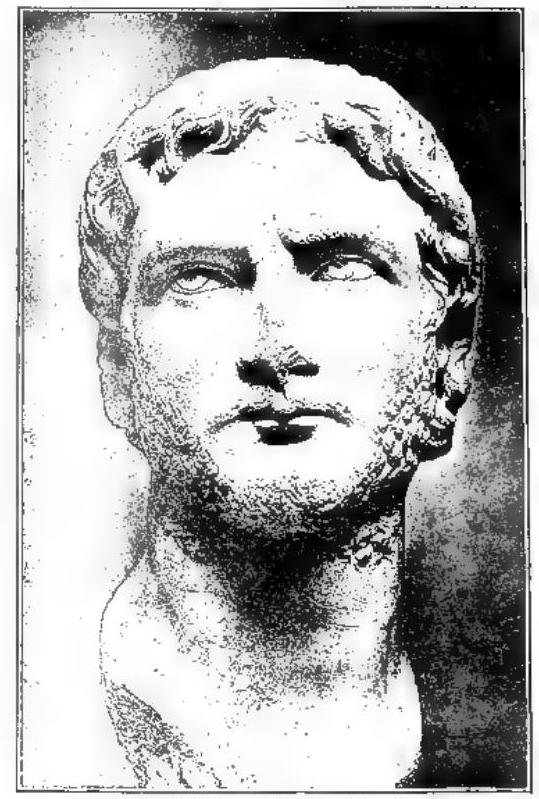
GALLIENUS (Imp. P. Licinius Egnatius Gallienus), ROMAN EMPEROR. – Born c. 218, died in Milan in July 268. Son of Valerian and Egnatia Mariniana, he married Cornelia Salonina by whom he had two sons. In 253 he was associated by his father with the government of the Empire, but until 260 he exercised only military activity, fighting especially against the barbarians who were making incursions into the northern frontiers of the Empire. After the death of his father in 260, he remained sole ruler at a most critical moment for the Empire, torn by internal revolts, epidemics and external barbarian raids. G., however, displayed remarkable energy: he reformed the army, fought successfully against usurpers and enemies, protected the arts and culture, promoting Hellenism and the mystery religions through which he hoped to withdraw the masses from the influence of Christianity. Toward Christianity, however, whether because of the disastrous experience of his father or under the influence of his wife, a great admirer of Christians, he showed himself rather benevolent, so much so that he was described by Dionysius of Alexandria as most religious and God-loving. He indeed suspended the edict of persecution issued by his father, giving bishops wide latitude to exercise their office freely; he also ordered that churches and cemeteries confiscated from the communities be restored, entrusting this task to the procurator Aurelius Celerius. Nevertheless, because of the anarchy reigning in the Empire, which under him gave rise to the so-called period of the “Thirty Tyrants,” the benefits of this religious policy were not felt everywhere, and there were no lack of martyrs, such as Marinus at Caesarea in Palestine. It must be said, however, that G. was in no way to blame for this, since it was officials and popular uprisings that caused these disorders. G. was put to death in Milan by a conspiracy of generals while he was preparing to fight the usurper Aureolus.
GALLIENUS, Love